

Trustworthy Auto Shop in Parker for Clear Repair Pricing
You don’t always need an appointment to visit an auto shop in Parker, but booking ahead is a practical choice for diagnostics or repairs that may take substantial shop time. A straightforward visit may be possible as a walk-in if the shop has room. If you’re looking for a trustworthy auto shop in Parker, clear expectations about scheduling are part of a good repair experience.
It’s reasonable to want to know what happens before handing over your keys: what the shop will inspect, how it will identify the cause, and how it will explain pricing. A diagnosis should narrow down the problem before repair work begins, so you can understand what your vehicle needs instead of guessing from a symptom alone.
This guide explains what services Parker auto shops may provide, what to expect from diagnostics, and which factors shape a repair quote. You’ll also learn when an appointment makes sense, what information to have ready, and how to approach the next step with a clearer picture of the process.
Key Takeaways
- Plan an appointment when your concern may need extended testing or repair, and know what details about the symptoms will help the shop prepare.
- Learn which brake, engine, battery, and suspension concerns a shop may inspect, and how the affected system shapes the repair process.
- Understand how diagnostic testing narrows down possible causes before parts are replaced.
- Compare repair quotes by looking at the diagnosis, recommended work, and how clearly the shop explains its pricing.
- See what customer feedback can tell you about communication and service, while keeping individual experiences in perspective.
Brake, engine, battery, and suspension service
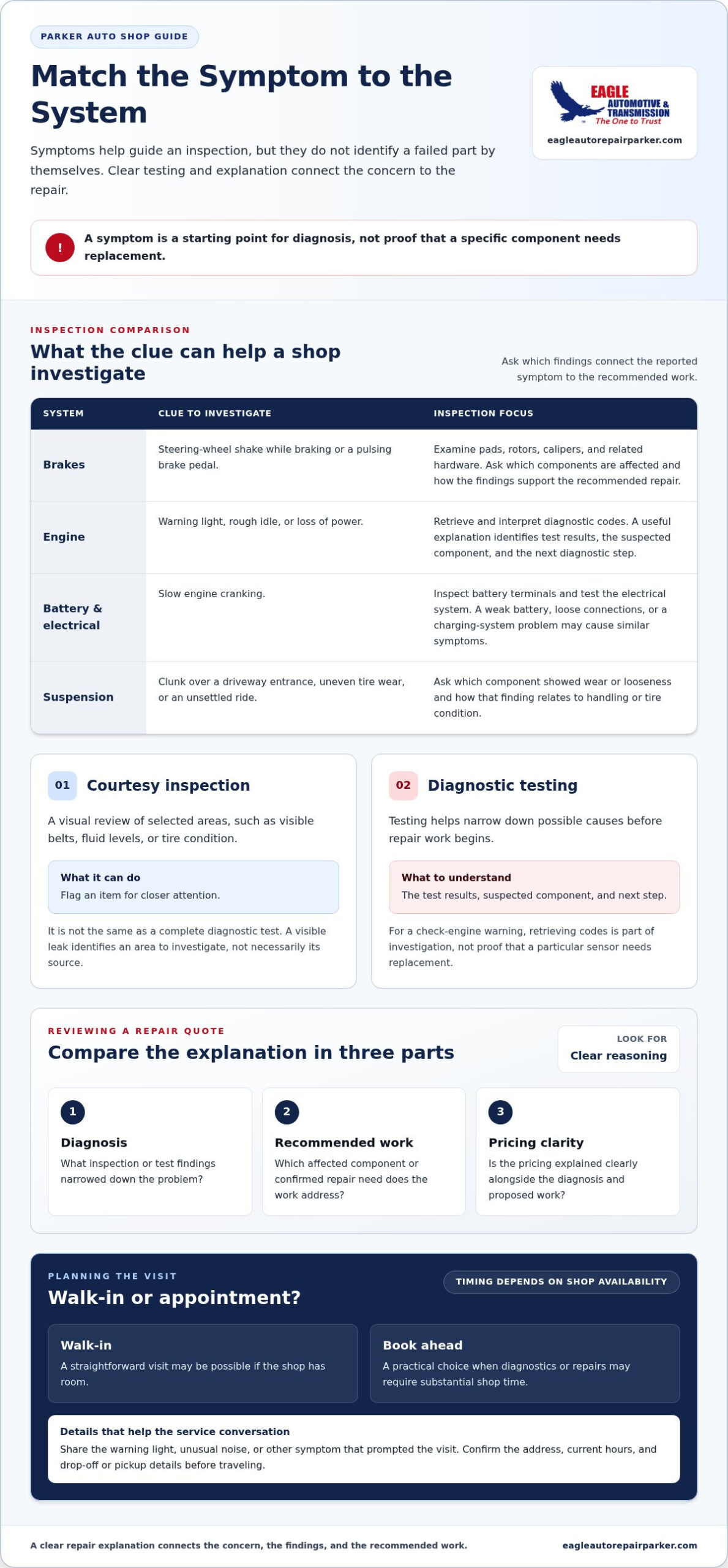
A repair shop’s service range matters because similar symptoms can involve different systems. A steering-wheel shake while braking, for example, points technicians toward the brakes and suspension. A slow crank may involve the battery, starter, or charging system. Clear explanations connect each inspection step to the reported symptom instead of treating every noise or warning light as the same problem.
Brake service can involve examining pads, rotors, calipers, and related hardware. A pulsing brake pedal gives technicians a symptom to investigate, but doesn’t identify a failed part on its own. Ask for the inspection findings and recommended repair, including which components are affected. That distinction helps you understand whether the proposed work addresses the cause or only one visible sign.
Engine service also starts with evidence. A warning light, rough idle, or loss of power can have several possible causes. A useful repair explanation identifies the test results, suspected component, and next diagnostic step. A check-engine warning, for example, is a reason to retrieve and interpret diagnostic codes, not proof that a particular sensor needs replacement.
Battery concerns need a similar system-wide approach. If the engine cranks slowly, the battery may be weak, but loose connections or a charging-system problem can cause similar symptoms. A technician can inspect the terminals and test the electrical system before recommending a replacement. This helps distinguish a failing battery from a problem affecting how it receives or delivers power.
Suspension checks focus on parts that support the vehicle and control wheel movement. A clunk over a driveway entrance, uneven tire wear, or an unsettled ride can guide the inspection, but none confirms a diagnosis. Ask which component showed wear or looseness and how that finding relates to the vehicle’s handling or tire condition.
A courtesy inspection is a visual review of selected vehicle areas, such as visible belts, fluid levels, or tire condition. It can flag an item for closer attention, but it isn’t the same as a complete diagnostic test. Ask which concerns were observed and which repair needs were confirmed. A visible leak, for example, identifies an area to investigate, not necessarily its source.
A complimentary local shuttle service means transportation between the shop and nearby destinations while your vehicle is being serviced. Practical details include the pickup area, operating schedule, and whether the service fits the repair’s timing. These details affect whether a shuttle works for a workday or an errand. A courtesy ride is separate from the mechanical inspection and repair decision.
Aftermarket warranty service involves repair coverage arranged through a warranty company rather than the vehicle manufacturer. The contract governs covered components, documentation, and authorization steps. Keep the contract and claim details available, then follow its approval process before covered work begins. For a transmission concern, the repair findings and requested documentation can help connect the diagnosis to the contract’s requirements.
Shop locations and hours
Use the shop’s exact address and current hours to plan your visit in Parker, Colorado. Check both before leaving, especially when arranging a ride or drop-off.
Shop Locations
A shop location is more than a name on a map. Confirm the street address, entrance, and parking instructions before setting out. A navigation pin, for example, may lead to a rear lot or neighboring business, so compare the displayed address with the shop’s listing. When choosing a location, consider which one fits your route and how long you can leave your vehicle.
Plan your trip around the visit. Enter the shop’s full address into your navigation app, then review the route from home, work, or school. Parker traffic and road conditions can affect arrival time, so allow time to find the right entrance and speak with the service desk. If someone else is dropping off the vehicle, send them the address and appointment details directly.
Before choosing a facility, match its location to the repair plan. A brief inspection may require a different visit from work that means leaving the vehicle at the shop. Ask how drop-off and pickup work, then arrange transportation to suit. This practical comparison can help you choose a facility that fits your route and schedule.
Shop Hours
Shop hours tell you when staff are available for vehicle intake and customer communication. Read the current posted schedule before driving over, and note the opening and closing times. The schedule may not explain every drop-off or pickup detail. For example, leaving a vehicle near closing could require separate instructions for key handoff and service paperwork.
Plan the timing in a simple sequence: check the listed hours, schedule the visit, and confirm your expected arrival time. If you need to leave the vehicle before work, ask about the drop-off procedure when arranging the appointment. If you plan to collect it later, clarify the pickup window before organizing your ride. These steps reduce avoidable confusion on service day.
Check the schedule again on the day of your visit, particularly if you’re traveling from outside central Parker. Save the shop’s address and hours in your phone, and keep the appointment details handy. When booking, mention any warning light or unusual noise that prompted the visit. The service desk can then understand why you’re coming and prepare for the conversation.
Customer satisfaction and third-party recognition
To assess ASE credentials at a Parker auto shop, look for the technician’s name and specific certification area. ASE certification applies to individual technicians, so a shop’s general description alone doesn’t establish which employees hold credentials.
Customer Satisfaction
Customer feedback can help you assess how a shop handles the parts of service that matter during a stressful repair. Read comments about follow-up, how concerns were handled, and whether customers felt listened to. A detailed review about resolving a misunderstanding, for example, may reveal more about communication than a short rating without an explanation.
Consider the context behind each review. A comment about routine maintenance may say little about a complicated engine concern. Look for accounts involving a similar type of visit, and consider whether the reviewer explains what happened before, during, and after service. That context makes an individual account more useful when judging whether the shop’s approach matches your expectations.
Third-party recognition can offer another perspective, but its meaning depends on the organization and its criteria. Check whether recognition names a specific technician, applies to the business, or reflects customer voting. The distinctions matter: an award for customer service doesn’t establish technical certification, while a technician credential doesn’t measure every part of the customer experience.
ASE-Certified Technicians
To evaluate a Parker shop’s ASE credentials, look for the technician’s name and specific certification area. A shop may employ certified technicians without every employee holding the same credentials. For an engine issue, a credential in an unrelated specialty may not answer questions about the person assigned to inspect that system.
Ask which technician is expected to handle the work and whether that person holds a relevant ASE certification. Then consider the credential alongside the diagnosis, explanation, and repair plan. Certification can indicate specialized training, but it doesn’t replace vehicle-specific testing or explain what caused a particular symptom.
Keep the two forms of evidence separate. Reviews can help you understand communication and customer experience; credentials speak to an individual technician’s qualifications. Neither alone establishes that a proposed repair is correct. Make a useful decision by weighing relevant qualifications against the technician’s explanation of the vehicle’s condition and the evidence supporting the recommended work.
Vehicle diagnostics and testing
For a specific make and model, look for a Parker shop familiar with its systems and diagnostic requirements. Ask whether the technicians regularly work on vehicles like yours, especially if it has specialized engine, electrical, or emissions controls.
Free diagnostics, inspections, and second opinions depend on what each offer includes. A basic code scan can identify stored trouble codes, while finding the underlying fault may require additional tests.
Give the shop details that can help reproduce the issue. Describe the conditions, such as whether a vibration appears only at highway speed or a warning comes on after a cold start. Share recent repairs and when the problem began. A clear symptom timeline helps technicians choose relevant tests instead of chasing unrelated faults.
Diagnostics generally move from confirming the concern to checking likely systems. A technician may inspect visible connections, scan computer data, and test components related to the symptom. An intermittent charging concern, for example, may call for checking voltage under different operating conditions rather than relying on one reading with the engine off.
A useful testing sequence includes:
- Confirm the symptom: Compare your description with what the vehicle does during inspection.
- Review system data: Check stored codes and available operating information for clues.
- Test likely causes: Examine related circuits or components using tests suited to the vehicle.
- Verify the result: Recheck operation after testing or repair to see whether the concern remains.
Diagnostic trouble codes narrow the search, but don’t identify a failed part on their own. A sensor-related code, for instance, can reflect a sensor fault, wiring damage, or another condition affecting its reading. Ask which test can distinguish those possibilities and what evidence supports the recommended repair.
For a second opinion, bring the first inspection report and any scan results. Ask the next technician to explain where their findings agree or differ. A useful comparison identifies the test results and affected components, rather than simply approving or rejecting another shop’s recommendation.
Before agreeing to diagnostic work, clarify which tests are planned and what their findings can establish. A visual check, computer scan, and hands-on component test answer different questions. Understanding what each step covers helps you judge whether the diagnosis addresses the original symptom or further investigation is still needed.
Christian Brothers Automotive Parker says a vehicle has over 30,000 parts, underscoring why a confirmed symptom and a methodical testing sequence can help narrow diagnostic work.
Transparent pricing and customer communication
Clear pricing starts with a diagnosis, a defined repair scope, and your approval before work begins. Good communication keeps those steps visible, so you can understand what the shop recommends and why.
Written estimates, warranty terms, and policies on old parts vary by shop and repair. Ask for the estimate and applicable warranty terms in writing, and request any old parts you want returned before work starts.
Transparent Pricing
A clear quote connects the reported problem to the recommended work. It should separate diagnostic findings from the proposed repair and identify the parts and labor involved. If a water pump is leaking, for example, ask which finding confirms the leak and what work the quote includes. That makes it easier to compare the same repair scope across shops. This standard of transparency applies to specialized vehicle services as well, whether you are evaluating mechanical work locally or reviewing estimates from auto glass specialists like Pinnacle Auto Glass.
The price depends on the vehicle, diagnosis, parts required, and repair scope, and is provided after a quote request. An Eagle Automotive customer reported getting quotes from about five shops in Parker for a water-pump repair. That example shows why comparing written details matters more than comparing totals alone. Quotes may cover different parts or labor.
Before authorizing work, use a short approval checklist:
- Confirm the listed repair addresses the documented fault.
- Review parts, labor, and any additional recommended work separately.
- Ask how the shop will communicate if inspection reveals another issue.
- Approve or decline added work before it begins.
Keep the original estimate distinct from any newly discovered work. If an inspection finds a worn hose during a water-pump repair, for example, ask for the additional work and revised total before authorizing it. A clear explanation should state what changed and why the new work is recommended.
Written Estimates
A written estimate records the proposed repair and its expected scope. Check the vehicle identification, parts, labor, and any diagnostic charge. If the document says “engine repair” without describing the work, ask for the specific task, such as replacing a named component or repairing a confirmed leak. Clear wording gives you a useful record.
Keep the estimate, approval, and final invoice together. Compare the completed work with the approved scope, particularly if the shop contacted you about an additional repair. Any difference should have an explanation, such as a newly identified fault or a change in parts. Written records make that conversation specific instead of relying on memory.
Warranty coverage is governed by its written terms, including which repairs or parts it covers. Ask for those terms with the estimate, and keep them with the invoice. If you want old parts returned, request them before the repair starts; removed parts may not remain available afterward.
Eagle Automotive: Check Engine Light
Eagle Automotive helps Parker drivers address check-engine warnings with diagnostics and engine repair when needed. A warning light can point to several possible issues, so testing helps identify the cause before repair decisions are made. Share when the light appeared, whether it stays on or flashes, and any changes in how the engine runs.
For engine concerns, Eagle Automotive also provides Engine Repair & Service and Head Gasket Repair. Brake Repair and Transmissions address other major vehicle systems. Clear findings and an explained estimate can help you understand the recommended work and decide how to proceed.
Contact Eagle Automotive or visit eagleautorepairparker.com to discuss your vehicle concern.
Make your next repair decision with confidence
A repair visit can start with a simple, useful step: describe what changed and when you noticed it. That gives the service team a clearer starting point and helps you explain what you need from the visit. Keep any recent inspection notes or repair records nearby, too. They can help connect today’s concern with work already performed.
Choosing a trustworthy auto shop in Parker is about more than finding an open appointment. It means having a clear conversation, understanding the proposed next step, and feeling comfortable making an informed decision. You don’t need to know the technical answer before asking for help. Start with the symptom, then take the repair process one decision at a time.
If you’re ready to discuss a vehicle concern, contact Eagle Automotive. Bring your questions and the details you’ve observed, and take the next step toward getting your vehicle assessed.
Frequently Asked Questions
Do I Need to Make an Appointment in Advance?
Booking ahead is the best way to plan a diagnostic visit, especially if you need your vehicle checked on a particular day. Before calling, write down the warning lights, sounds, or changes you’ve noticed and when they occur. Mention whether the vehicle is safe to drive to the shop. This helps the service team understand the concern and makes your first conversation more focused.
What are the highest-rated trustworthy auto repair shops in Parker, Colorado?
No single rating establishes which Parker shop is right for every vehicle or repair. Ratings can change, so consider the date of reviews and whether praise or criticism appears consistently over time. A cluster of similar comments may reveal a pattern more clearly than one unusually positive or negative review. Use ratings as one input, then consider whether the shop’s capabilities fit your vehicle’s needs.
What do customer reviews say about auto repair shops in Parker, CO?
Customer reviews are individual accounts, not a guarantee of what your visit will be like. Look at how reviewers describe the whole experience, including whether the finished work resolved their concern and whether follow-up was needed. A detailed account can help you spot issues relevant to your situation. Someone bringing in a vehicle with an intermittent problem, for example, may value feedback about how a shop handled repeat visits.
What are typical prices for common auto repairs in Parker, Colorado?
There isn’t one typical price that applies to every vehicle or repair. The price depends on the case and is provided after a quote request; factors include the vehicle, diagnostic findings, parts, labor, and repair scope. A repair name alone, such as “brake work,” doesn’t define the job. For a useful estimate, describe your vehicle and concern, then review the proposed work for that specific case.
What questions should I ask before choosing an auto repair shop in Parker?
Ask how the shop distinguishes the main fault from unrelated wear found during inspection. You can also ask how it handles a concern that appears only under certain driving conditions, such as a noise during turns or hesitation after a cold start. These questions reveal whether the discussion stays focused on your reported issue and whether the explanation helps you understand the next decision.