

Transmission Fluid Service in Parker, CO: When to Change It
A transmission fluid flush isn’t automatically the right move just because your odometer hits a familiar number. Most automatic transmissions need fluid service every 30,000 to 60,000 miles, but the right interval depends on your vehicle and driving conditions. If you’re considering a transmission fluid flush in Parker, CO, the first step is matching the service to your transmission’s design and condition.
It makes sense to want a clear schedule, especially when transmission trouble can be stressful. This guide explains what affects transmission fluid flush timing in Parker, CO, and how a flush differs from a drain and fill, so you can understand which service may suit your vehicle.
You’ll also learn which warning signs deserve prompt attention and why transmission type matters, including a CVT’s fluid requirements. With the right information, you can make a practical maintenance decision without assuming every vehicle needs the same service.
Key Takeaways
- Most automatic transmissions need fluid service every 30,000 to 60,000 miles, but the right interval depends on the vehicle and driving conditions.
- A drain and fill replaces part of the fluid; a full exchange replaces nearly all of it. The transmission’s condition helps determine the appropriate approach.
- CVTs require the correct transmission fluid, so fluid type matters as much as the service method.
- Grinding, slipping, fluid leaks, or jumping out of gear are warning signs that call for prompt attention.
- On a high-mileage vehicle, an inspection can help distinguish overdue maintenance from wear that old fluid may have been masking.
Transmission Service Parker, CO | Flush or Drain and Fill?
Most automatic transmissions need fluid service every 30,000 to 60,000 miles, depending on the vehicle and driving conditions. That range is a planning guide, not a universal interval. The owner’s manual and transmission type help determine when service is due and whether a flush or drain and fill fits.
A typical automatic transmission service drains fluid from the pan, replaces the filter and pan gasket, then refills the system with fresh fluid. A drain and fill replaces only part of the fluid; a full exchange replaces nearly all of it. Inspection matters: a vehicle with shifting problems may need diagnosis before routine maintenance.
Fluid type matters, too. A CVT requires fluid made for that transmission design, and the wrong fluid can cause damage. Manual transmission service also follows vehicle-specific requirements. Its interval depends on the model and use, so follow the schedule in the owner’s manual rather than applying an automatic-transmission range.
In Parker, Colorado, the service interval depends on vehicle design, driving conditions, and the manufacturer’s maintenance schedule. Preventative service can also include differential fluid, which serves a separate drivetrain component. Keeping these services distinct helps ensure the correct fluid and procedure are used for each system.
Shuttle service is a transportation convenience, not a transmission procedure. A fluid service may require leaving your vehicle at the shop, so plan how you’ll get around during the appointment. The service method and interval still depend on the vehicle’s condition and requirements.
Searching for transmission flush coupons in Parker? A coupon is an offer, not a maintenance recommendation; the vehicle’s needs and inspection should determine the service. Review any offer’s written terms before relying on it.
A transmission fluid flush doesn’t automatically include a warranty or service guarantee. Coverage depends on the written terms for the specific service, so don’t assume a flush itself guarantees future performance.
For symptoms such as slipping, harsh shifts, or delayed engagement, maintenance alone may not address the cause. Diagnosis can help distinguish a fluid-service need from a transmission problem. An inspection that considers transmission type, fluid condition, and symptoms together can guide the next step.
Transmission fluid change versus flush
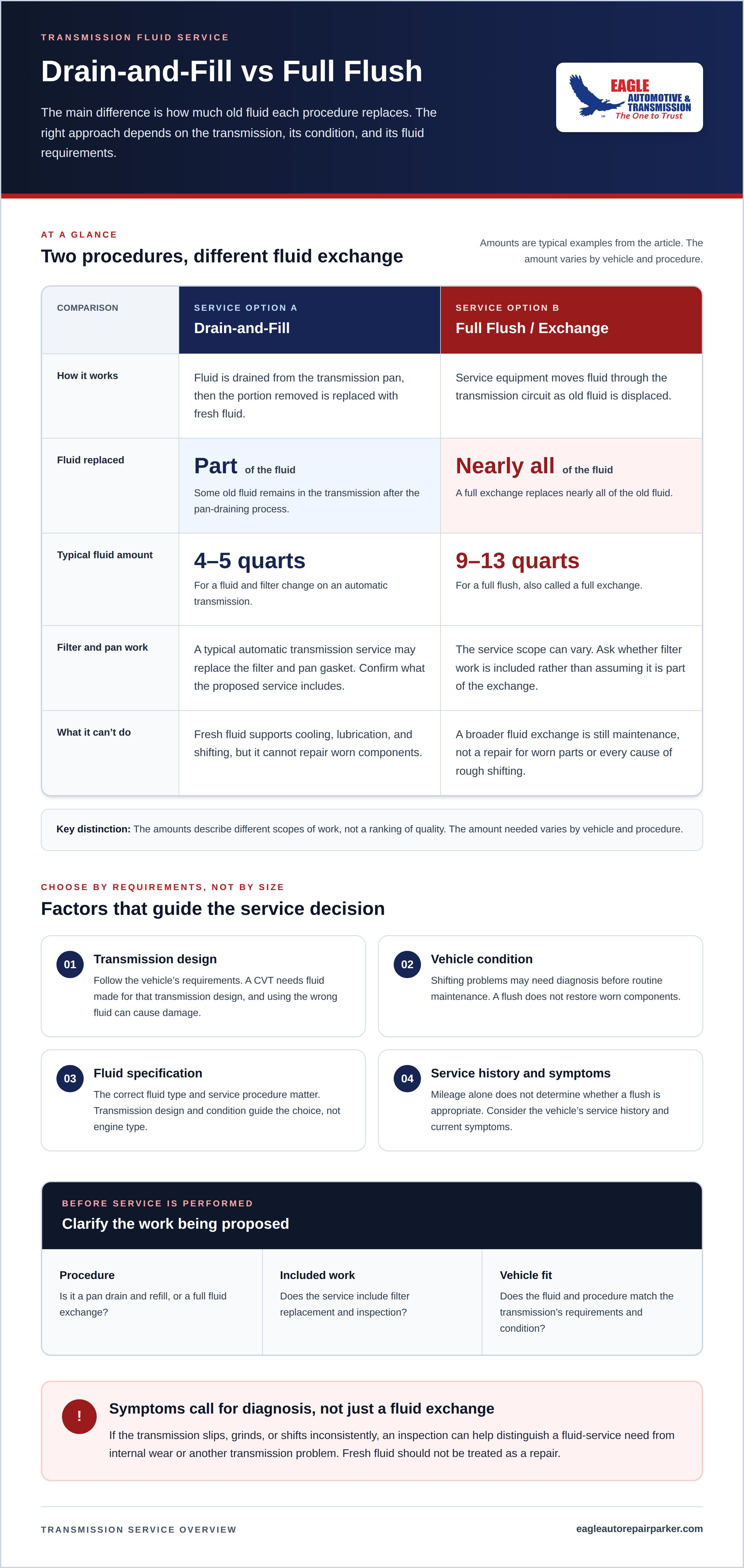
The difference between a transmission fluid change and a flush is how much old fluid the procedure replaces. The right choice depends on the service method, transmission condition, and fluid requirements. A transmission fluid flush in Parker, CO, should match your vehicle’s needs, not simply involve the largest fluid exchange.
Fluid Change and Flush Comparison
A fluid change commonly means draining fluid from the transmission pan and refilling it. A fluid and filter change typically replaces four to five quarts of automatic transmission fluid. A full flush, also called a full exchange, typically replaces nine to thirteen quarts.
Those amounts describe different scopes of work, not a ranking of quality. The amount required varies by vehicle and procedure. Consider what the service includes, whether the filter is replaced, and whether symptoms call for diagnosis before maintenance.
Fresh fluid helps cool and lubricate transmission components and supports shifting. It can’t repair worn parts or correct every cause of rough gear changes. If shifting is already harsh or delayed, an inspection can help distinguish a fluid-service need from a transmission repair concern.
Flush and Drain-and-Fill Differences
A drain and fill removes the fluid that comes out during the pan-draining process, then replaces that portion. Some old fluid remains in the transmission. A full exchange replaces nearly all the fluid, so the key difference is how much old fluid is removed.
Neither method is automatically right for every vehicle. The correct fluid specification and procedure matter, especially for a CVT, which requires specific fluid. Using the wrong type can cause damage. The engine doesn’t determine whether the transmission needs a flush; transmission design and condition do.
Clarify what the proposed procedure includes, such as fluid replacement, filter work, and inspection. A smooth shift afterward isn’t the only measure of suitable service. Matching the procedure to the vehicle’s requirements matters more than choosing the most extensive option by default.
High-Mileage Flush Risks
High mileage alone doesn’t establish that a flush will cause damage. Whether fluid service is appropriate depends on the transmission’s condition and the vehicle’s fluid requirements.
This distinction matters if the vehicle already slips, grinds, or shifts inconsistently. A flush doesn’t restore worn components, and fresh fluid shouldn’t be treated as a repair. Diagnosis helps determine whether symptoms point to internal wear or another transmission problem.
For a transmission fluid flush in Parker, CO, service history and current symptoms help inform the decision alongside mileage. An inspection can distinguish overdue maintenance from wear that needs repair, so the procedure addresses the vehicle’s actual condition.
Transmission fluid flushes
A flush is a fluid-replacement procedure, not a repair for worn transmission components. Its purpose is to exchange old fluid throughout more of the transmission system than a pan drain alone reaches. The vehicle’s design and service history help determine whether that broader exchange is suitable.
What a Flush Does
During a full exchange, service equipment moves fluid through the transmission’s fluid circuit as old fluid is displaced. The goal is to replace fluid beyond what drains from the pan. The exact procedure can vary by vehicle, so the technician needs to follow the correct process for that transmission.
Fluid serves several working parts, including the transmission’s internal components and hydraulic passages. Clean, correctly specified fluid supports lubrication, cooling, and shifting. A flush does not restore worn clutches, repair a leak, or correct a slipping transmission by itself.
The engine and transmission use different fluids and have separate service procedures. An engine oil change does not replace transmission fluid, even if both services appear on the same maintenance schedule. Identifying the system first helps prevent applying the wrong fluid or service.
Choosing the Correct Fluid and Procedure
The manufacturer’s specifications guide fluid selection and service requirements for each vehicle. Matching the fluid matters because transmission designs have different operating needs. A technician should identify the vehicle and transmission before selecting fluid or setting up the exchange.
Service records also help shape the decision. A documented history can show whether fluid replacement has been regular or missed, while symptoms such as slipping point to a diagnostic concern. A flush may address fluid maintenance, but it should not replace investigation of a shifting problem.
Ask what the proposed procedure includes. For example, clarify whether the service is a full exchange or a pan-based service, and whether filter replacement is included. Those details explain what work will be performed, rather than relying on the word “flush” alone.
When Inspection Matters
Fluid that appears dark or smells burnt deserves attention, especially alongside slipping or poor shifting. Those signs don’t identify a failed component by themselves. An inspection can consider fluid condition, leaks, service history, and transmission behavior before a maintenance procedure is chosen.
Contaminated or low fluid can contribute to overheating, poor shifts, and internal damage. A flush cannot correct the cause of a leak or replace damaged parts. If inspection finds a mechanical fault, transmission repair addresses a different need than fluid exchange.
For a vehicle that shifts normally and needs scheduled maintenance, the correct flush procedure can replace old fluid without treating the service as a cure-all. For a vehicle with symptoms, diagnosis comes first. That distinction keeps fluid maintenance focused on the transmission’s actual condition.
Transmission warning signs
Transmission trouble can show up in the fluid, during shifting, or beneath the vehicle. Healthy transmission fluid is bright red or pink; dark brown or black fluid with a burnt smell should be checked right away. Color alone doesn’t identify a failed component, but it gives technicians a reason to inspect the fluid and transmission condition.
Pay attention to how the vehicle moves through its gears. Slipping can feel like the engine revs without the vehicle responding as expected, while grinding may sound or feel rough during a gear change. These symptoms can have more than one cause, so a warning sign calls for diagnosis, not an automatic assumption that a flush will fix it.
A fluid leak is another reason to act promptly. Transmission fluid under a parked vehicle may point to a leak that needs attention, and driving with low or contaminated fluid can cause overheating, poor shifting, and long-term damage to internal components. Parker drivers should bring in a vehicle promptly if it grinds, slips, leaks fluid, or jumps out of gear.
A useful diagnostic appointment starts with the symptoms and service history. Note when slipping or grinding occurs, whether it happens during a particular shift, and whether the issue changes as the vehicle warms up. Those details help technicians focus their inspection instead of treating every warning as a routine fluid-service request.
During inspection, technicians can assess fluid condition, look for leaks, and evaluate the reported shifting behavior. A diagnostic process should distinguish a maintenance need from a mechanical problem. For example, dark fluid without shifting symptoms presents a different picture from slipping combined with a leak or burnt-smelling fluid.
Transmission service is appropriate for scheduled maintenance, but symptoms may call for repair instead. A flush replaces fluid; it doesn’t repair damaged components or stop a leak. If harsh shifting or delayed engagement also occurs, diagnosis can help determine whether maintenance or mechanical repair is the appropriate next step.
Arrange a prompt appointment for grinding, slipping, leaking, or jumping out of gear, rather than waiting for the next routine service. Tell the technician what you noticed and when it happens. That clear account, combined with fluid inspection and diagnostic findings, helps determine whether the next step is fluid service, transmission repair, or further investigation.
Transmission fluid flush risks for high mileage vehicles
A high odometer reading alone doesn’t prove a transmission flush is risky. The key question is whether the transmission is healthy or already showing wear. Whether fluid service is appropriate depends on the transmission’s condition, service history, and the recommended procedure.
That distinction matters more than mileage by itself. A vehicle with a long service history and normal shifting presents a different picture from one with slipping, grinding, or delayed engagement. Those symptoms can indicate existing trouble, so diagnosing them before fluid service helps avoid treating a mechanical concern as routine maintenance.
Service records provide useful context. They can show whether fluid changes were performed regularly or whether the vehicle’s maintenance history has gaps. If records are incomplete, report that clearly during the inspection. Technicians can then consider the transmission’s behavior and fluid condition alongside its history, rather than relying on the odometer alone.
Watch for changes the vehicle already displays. Slipping, harsh shifts, fluid leaks, or a burnt smell deserve attention before choosing a flush. Dark brown or black fluid with a burnt odor should be checked right away. These clues don’t identify a specific failed part, but they help determine whether diagnosis should come before fluid replacement.
A flush replaces fluid; it doesn’t repair worn internal components or fix a leak. If the transmission is already struggling, fresh fluid cannot restore damaged parts. An inspection can help distinguish a maintenance need from a problem that calls for transmission repair. That assessment keeps the service choice tied to the vehicle’s condition.
Before approving service, make sure the proposed procedure matches the transmission and its required fluid. A CVT, for example, needs specific fluid, and the wrong type can cause damage. The service plan should account for transmission design, current symptoms, fluid condition, and available maintenance records. No single factor, including mileage, tells the whole story.
If a high-mileage vehicle shifts normally, its odometer alone isn’t a reason to rule out fluid service. If it slips, grinds, leaks, or shifts harshly, ask for diagnosis before treating a flush as the fix. A careful inspection helps separate overdue maintenance from wear that needs repair, so the next step addresses the actual condition.
Eagle Automotive: Transmissions
Eagle Automotive can assess your transmission concerns and help determine whether fluid service or repair fits your vehicle. Bring up symptoms such as slipping, grinding, leaks, or harsh shifting, along with any service records you have. That context helps guide the next step.
If the transmission shifts normally, service can be considered according to the vehicle’s requirements and condition. If warning signs are present, an inspection should guide the next step rather than treating a flush as a repair. Eagle Automotive also handles Check Engine Light concerns when a warning light accompanies drivability symptoms.
Contact Eagle Automotive to discuss your transmission concerns and arrange a service appointment.
Make Your Next Service Decision With Confidence
Your next step is to connect the maintenance decision to how your vehicle is behaving now. Keep any transmission service records handy and describe changes you’ve noticed; that context can help guide a focused inspection. A transmission fluid flush in Parker, CO, should fit the vehicle’s condition and service needs.
If a dashboard warning or another mechanical concern is also present, Eagle Automotive handles Check Engine Light, Engine Repair & Service, and Brake Repair. Share the concerns you want addressed so the next steps stay clear and relevant.
Contact Eagle Automotive to discuss your vehicle’s needs and arrange a next step. A clear plan starts with the right questions, and you can move forward with confidence.
Frequently Asked Questions
How often should transmission fluid be changed?
Most automatic transmissions need fluid service every 30,000 to 60,000 miles, depending on the vehicle and driving conditions. The owner’s maintenance schedule is the better guide for a specific make and model. For example, frequent demanding driving may affect service timing, so don’t rely on another vehicle’s interval. Manual transmissions also have vehicle-specific schedules; their service timing shouldn’t be assumed to match an automatic.
Is It Just a Fluid Service, or Something More?
It’s a fluid service when maintenance is due and the transmission isn’t showing signs of trouble. Slipping, grinding, or a fluid leak may point to a diagnostic need instead. For example, a vehicle that hesitates during gear changes needs its symptoms evaluated, not simply a fluid exchange. A technician can assess whether maintenance fits or whether the transmission needs further diagnosis.
What happens if I never flush my car’s fluids?
Neglecting transmission fluid service can leave fluid low or contaminated, which can contribute to overheating, poor shifting, and long-term damage to internal components. A flush isn’t a universal service for every fluid in a vehicle; each system has its own maintenance needs. For example, a transmission concern should be assessed as a transmission issue, rather than assuming one all-fluid service addresses it.
Transmission fluid change vs. flush: which is better?
Neither method is automatically better for every vehicle. A drain and fill replaces part of the fluid, while a full exchange replaces nearly all of it. The useful question is which procedure fits the vehicle’s condition and service requirements. If the transmission already slips or shifts poorly, diagnosis should guide the decision instead of choosing a flush simply because it replaces more fluid.
Where can I find transmission flush service near Parker, Colorado?
Eagle Automotive in Parker handles transmission service and offers free computer diagnostics. That can help when a vehicle shows symptoms alongside a fluid-service concern, such as a warning light or shifting change. Bring the vehicle’s service history and describe when the symptom occurs. A clear account helps technicians assess whether the concern points to routine maintenance or needs further diagnosis.
What types of transmission fluid flush are available, and what’s included?
Common approaches include a pan-based drain and fill or a full fluid exchange. A typical automatic transmission service can drain fluid from the pan, replace the filter and pan gasket, then refill with fresh fluid. A full exchange typically replaces nine to thirteen quarts. The exact procedure and fluid must suit the vehicle, especially a CVT that requires specific fluid.
How often should transmission fluid be flushed according to the vehicle manufacturer?
There isn’t one manufacturer interval that fits every vehicle. Automatic transmission service is commonly needed every 30,000 to 60,000 miles, while manufacturer schedules vary by vehicle and driving conditions. Some manufacturers recommend fluid changes every several years. Use the maintenance schedule for the exact model and transmission, rather than applying a mileage interval from a different vehicle.
What are signs a car needs transmission fluid service?
Dark brown or black fluid with a burnt smell should be checked promptly. Other warning signs include grinding, slipping, leaking fluid, or jumping out of gear. These symptoms don’t prove that fluid service alone will solve the problem. For example, a leak can lower fluid level while also pointing to a fault that needs diagnosis. A technician can assess the fluid and transmission condition together.