

Subaru Check Engine Light: Is It Safe to Drive
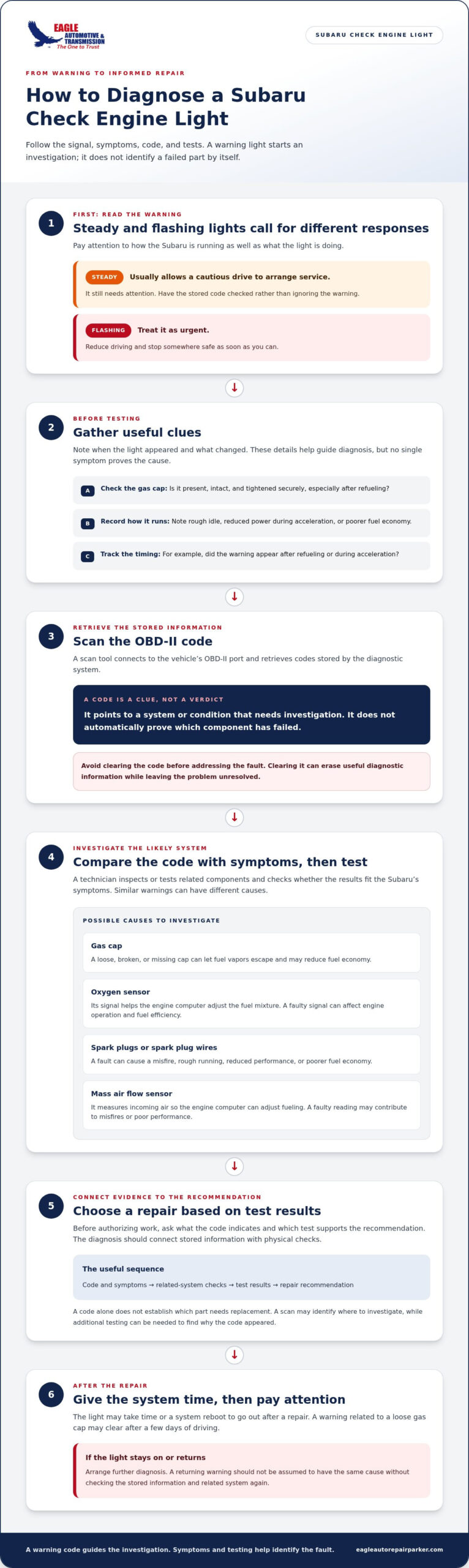
A steady Subaru check engine light usually allows a cautious drive to arrange service, but it shouldn’t be ignored. A flashing light signals an urgent problem, so stop driving as soon as it’s safe and have the issue addressed promptly. A Subaru check engine light expert in Parker can read the diagnostic code and investigate the cause instead of guessing from the warning alone.
It’s understandable to worry that the light means a major repair is needed. Sometimes the cause is as simple as a loose gas cap; other times, a sensor or engine misfire needs attention. The warning light alone can’t tell you which issue is responsible.
This guide explains common causes, which symptoms may make driving unsafe, and why clearing the warning isn’t a substitute for fixing the fault. You’ll also learn when the light may turn off after a repair and what to do if it stays on.
Key Takeaways
- A steady warning light and a flashing one call for different responses; pay attention to how the Subaru runs as well as what the light does.
- A loose gas cap is one possible cause, but sensors, spark plugs, and airflow issues can also trigger the warning.
- A diagnostic code helps point to the system involved, but the code alone does not prove which part needs replacement.
- Fix the underlying problem before clearing the warning, or the issue may remain unresolved.
- After a repair, the light may need time or a system reboot to go out; if it stays on, further diagnosis can help identify why.
What Does the Check Engine Light Mean?
On a Subaru, the check engine light means the onboard diagnostic system detected a problem and stored a code. That code points to a system or condition, but doesn’t automatically identify the failed part.
Subaru Check Engine Diagnosis and Service
Diagnosis involves retrieving the stored code, reviewing symptoms, and testing the suspected system before choosing a repair. This matters because several faults can trigger similar warnings, and replacing a part based only on the light may miss the cause.
A Subaru service-center diagnostic process commonly starts by connecting a scan tool to the vehicle’s OBD-II port. The technician reviews the code and symptoms, then inspects or tests related components. For example, a loose gas cap may trigger a warning, but further checks help determine whether it explains the code.
OBD-II Diagnostic Codes
OBD-II codes are messages stored by the vehicle’s diagnostic system when it detects a problem that can trigger the check engine light. A scan tool retrieves them to show which system or condition needs investigation.
A code is a clue, not proof that a particular component has failed. The next step is to compare it with the Subaru’s symptoms and test the related system. Clearing the code before addressing the fault can erase useful diagnostic information while leaving the problem unresolved.
Independent Subaru repair shops and dealerships can both diagnose and repair check engine faults. Compare the explanation of the code, the tests performed, and the proposed repair options. A code alone doesn’t establish which part needs replacement, so the diagnosis should connect test results to the recommended work.
Some service centers may offer a diagnostic-code scan at no charge, but a scan isn’t always a complete diagnosis. Additional testing may be needed to find why the code appeared. Diagnostic and repair pricing depends on the case and is provided after a quote request; relevant factors include the fault, testing needed, and repair scope.
A steady light without noticeable changes in how the Subaru runs still calls for checking the stored code. A loose, broken, or missing gas cap is one possible cause, but inspection can determine whether another system needs attention. The warning may clear after a few days of driving, but a returning light warrants further diagnosis.
Before authorizing a repair, ask what the code indicates and which test supports the recommendation. A sound diagnosis connects the Subaru’s stored information with physical checks, helping distinguish a simple adjustment from a component fault. That evidence gives you a clearer basis for deciding on the next repair.
Common causes of a Subaru check engine light
A Subaru check engine light can point to a fuel-vapor leak, a sensor fault, or an engine misfire. The warning doesn’t identify the failed part by itself, so symptoms and diagnostic results matter. A loose gas cap is a common cause, but other problems can affect fuel delivery, engine performance, and emissions. The same warning can therefore lead to different checks and repairs.
Loose or damaged gas cap: A cap that’s loose, broken, or missing can let fuel vapors escape and reduce fuel economy. After refueling, check that the cap is present, intact, and tightened securely. If the warning remains or returns, don’t assume the cap explains everything. A Subaru check engine light expert in Parker can use the stored code and related checks to investigate other possible faults.
Faulty oxygen sensor: This sensor helps the engine computer adjust the fuel mixture. If its signal is faulty, the computer may supply too much or too little fuel. That imbalance can affect engine operation and fuel efficiency. A sensor-related code is a useful lead, but the code alone doesn’t prove the sensor itself needs replacement.
Faulty spark plugs or spark plug wires: Spark plugs ignite the air-fuel mixture, while wires carry the electrical charge to the plugs. A fault in either can cause an engine misfire, meaning a cylinder doesn’t fire properly. Rough running, reduced performance, or poorer fuel economy may follow. Those symptoms can guide testing, but don’t identify a specific failed part on their own.
Mass air flow sensor problem: This sensor measures incoming air so the engine computer can adjust fueling. A faulty reading may contribute to misfires, poor fuel economy, or poor performance. Those signs can overlap with ignition or oxygen-sensor problems, so a technician needs to consider the code alongside how the Subaru runs.
Track what happens before and after the warning appears. For example, note whether the Subaru runs roughly at idle, loses power during acceleration, or shows reduced fuel economy. The timing and combination of symptoms help guide diagnosis, but one symptom alone can’t identify the cause. A Subaru check engine light expert in Parker can evaluate your observations alongside the diagnostic results.
- Check whether the gas cap is present, intact, and tightened.
- Note rough running, misfires, or changes in fuel economy and performance.
- Record when the warning appears, such as after refueling or during acceleration.
If tightening the cap doesn’t resolve the warning, arrange a diagnostic inspection instead of replacing parts based only on symptoms. A Subaru check engine light expert in Parker can use the code as a starting point, then test related components to identify the fault before recommending a repair.
Driving with the check engine light on
A steady check engine light on a Subaru usually allows a cautious drive to arrange service, but it still needs prompt attention. A flashing light is different: treat it as urgent, reduce driving, and stop somewhere safe. The light’s behavior, engine performance, and other dashboard warnings help determine your next move.
With a steady light, arrange service as soon as possible, even if the Subaru seems to run normally. A steady warning isn’t an emergency by itself, but the underlying fault can affect performance and efficiency. Don’t treat normal-feeling operation as proof that the vehicle is trouble-free.
A flashing check engine light calls for immediate attention. Pull over when it’s safe rather than continuing a routine trip. If the engine shakes, loses power, or responds unpredictably while the light flashes, don’t push on to your destination. Those changes are useful details to report during diagnosis.
An intermittent light also deserves attention. If it appears and disappears, note whether the Subaru’s performance changes at the same time. Drive as little as possible while the light is on if the engine runs differently, such as stumbling during acceleration or struggling to maintain power. The pattern can help narrow down what needs testing.
Watch for a consistent drop in performance. A Subaru may enter limp mode, a reduced-operation state intended to help prevent additional damage. The car may feel sluggish or respond poorly when you press the accelerator. Don’t try to overcome the loss of power by accelerating harder; arrange service and limit further driving.
- Steady light, normal operation: Arrange service soon, and avoid unnecessary trips.
- Flashing light: Treat the warning as urgent and stop when safe.
- Changed performance: Minimize driving, especially if the warning is intermittent.
- Reduced power: Consider limp mode and don’t force the Subaru to keep working.
Don’t clear the Subaru’s warning before addressing the fault. Erasing the light doesn’t repair the cause, and it may remove useful diagnostic information. A scan and follow-up tests can help identify the issue while its stored data is available.
Also distinguish the check engine light from a coolant-temperature warning. If the Subaru’s coolant-temperature light remains solid red or flashes red for more than 2 seconds after ignition, it may indicate a malfunction. Don’t treat that separate warning as permission to keep driving; stop safely and arrange an assessment.
When arranging service, describe whether the light was steady, flashing, or intermittent, and mention any changes in power, smoothness, or acceleration. Those observations help a technician assess urgency and investigate the right systems without relying on the warning light alone.
Clearing the light after repairs
After the cause of a Subaru check engine light is repaired, the warning may not switch off immediately. The system may need a reboot, or the vehicle may need to be driven for a few days before the light clears on its own. The key is fixing the fault first, not simply trying to make the dashboard warning disappear.
Start by confirming that the repair addressed the problem that triggered the light. For example, tightening a loose gas cap may address a fuel-vapor leak, but it won’t fix a faulty oxygen sensor or an engine misfire. If the original fault remains, the warning can stay on or return after it clears.
Don’t clear the check engine light before diagnosing and repairing the cause. Erasing a stored code does not correct the underlying problem and can remove information useful for diagnosis. A technician can review the code, complete the repair, then check whether the Subaru’s system continues to detect the fault.
Once the repair is complete, normal driving for a few days may allow the light to turn off. The system may also need a reboot. If the Subaru runs normally but the light remains, note when it appeared and whether it is steady or flashing. That detail helps distinguish a persistent warning from a new or returning fault.
If the warning doesn’t clear, the research material suggests cycling the ignition on and off several times, waiting a second or two each time. Treat that as a possible reset step after the underlying issue has been repaired, not as a substitute for diagnosis. Don’t use ignition cycling to hide a warning that returns or remains active.
- Repair first: Address the fault that triggered the Subaru’s warning.
- Allow time: The light may clear after driving for a few days.
- Check for a return: A warning that comes back points to a need for further diagnosis.
- Record symptoms: Note changes in engine performance or whether the warning flashes.
A cleared dashboard light alone doesn’t show that the repair solved the cause. Pay attention to whether the warning returns and whether the Subaru’s engine runs smoothly. If the light stays on after repair or appears again, have the stored fault reviewed and the related system checked rather than repeatedly resetting the warning.
If the gas cap was tightened and the light later goes out, monitor the dashboard during normal trips. If the warning returns, the cap may not have been the only issue. A persistent light after an oxygen-sensor repair also calls for a fresh check of the stored fault and related components, not another automatic parts replacement.
What Subaru diagnostic tools and expertise should a check engine light specialist have?
A capable Subaru diagnostic process needs an OBD-II scan tool and careful follow-up testing. The tool retrieves stored codes, but the technician must connect each code to the vehicle’s symptoms and verify the suspected fault. That distinction helps prevent replacing a sensor or ignition part based on a code alone.
Start with the Subaru’s stored diagnostic information. A scan tool identifies the system or condition that triggered the warning, such as an oxygen-sensor or misfire-related fault. The technician should record the code and consider when the light appeared, whether it flashes, and whether engine performance changed.
Next, inspect the parts and systems connected to that code. For a fuel-vapor warning, this can include checking whether the gas cap is loose, damaged, or missing. For a misfire, the investigation may include spark plugs or spark plug wires, alongside other possible causes. A code narrows the search; testing helps identify the actual failure.
Good diagnostic work also means comparing the Subaru’s symptoms with the scan tool’s report. A faulty mass air flow sensor, for example, can be associated with misfires, poor fuel economy, or poor performance. Those symptoms can overlap with other faults, so the technician should check the relevant system instead of treating one symptom as proof.
Ask for a clear explanation of three things: the stored code, the test that supports the diagnosis, and the recommended repair. If the code points toward an oxygen sensor, the explanation should connect that result with the sensor’s role in fuel control. If the Subaru runs roughly, the diagnosis should also explain how that symptom fits the findings.
- Code retrieval: The scan tool reads the Subaru’s stored diagnostic information.
- Symptom review: The technician notes when the warning appeared and how the engine behaved.
- Component checks: Inspection or testing evaluates parts related to the code.
- Repair verification: The original fault should be addressed before the warning is cleared.
Tools matter, but sound judgment matters just as much. A code reader can show a possible issue; it cannot, by itself, prove which component failed. For example, a code associated with an oxygen sensor calls for diagnosing that circuit and related conditions before replacing the sensor.
Choose a Subaru specialist who can explain the diagnostic process in plain language and tie recommendations to evidence. If the check engine light is on, arrange a diagnostic assessment and share any changes in engine performance. That gives the technician useful information to pair with the scan results and helps focus the next tests.
Eagle Automotive: Check Engine Light
Eagle Automotive can investigate a Subaru check engine light and determine what repair the diagnosis supports. Turn to its Check Engine Light service when the warning stays on, returns after repair, or appears alongside changes in engine performance.
Share any symptoms and describe how the warning behaves. If testing points to an engine fault, Engine Repair & Service can address the underlying problem. Learn about full-service automotive repair in Parker.
For a Subaru warning light that needs professional attention, contact Eagle Automotive in Parker to discuss the next step.
Make the next drive a considered decision
A warning light can make every trip feel uncertain. Use the information it gives you to choose a practical next move: arrange a diagnosis before the issue becomes harder to understand. A Subaru check engine light expert in Parker can connect the warning to the fault and explain what repair follows from the findings.
Keep track of any new changes in how your Subaru starts, idles, or responds on the road. Sharing those observations gives the technician useful context beyond the dashboard signal and helps you make an informed decision about what your car needs next.
If you’re ready to have the warning assessed, contact Eagle Automotive for help. Take the next step with clear information and a plan for your Subaru.
Frequently Asked Questions
Is it Safe to Drive my Subaru with the Light on?
A brief, cautious drive to reach a safe place or arrange service may be reasonable if the light is steady and the Subaru behaves normally. Before setting out, note whether another dashboard warning is illuminated and whether the engine sounds or feels different. If the warning starts flashing or the car’s behavior changes, stop somewhere safe instead of continuing.
Which auto repair shops in Parker, Colorado specialize in Subaru check engine light diagnostics?
Eagle Automotive & Transmission in Parker handles check engine light diagnostics for all makes and models, including Subaru. Its free computer diagnostics can retrieve the vehicle’s stored information. When arranging service, describe the Subaru’s model and symptoms, and bring any code you’ve recorded. This context helps connect the scan results with the concern you want addressed.
What do Subaru check engine light diagnostic services cost in Parker, Colorado?
Eagle Automotive & Transmission provides free computer diagnostics. Further testing and repairs depend on what the scan and inspection uncover, so the work varies from one Subaru to another. Ask for an estimate covering the recommended diagnostic work and repair before authorizing it. The scope may differ between investigating a sensor circuit and repairing a mechanical engine fault.
What are common causes of a check engine light in Subaru models?
Possible causes include a loose or damaged gas cap, a faulty oxygen sensor, spark plug or wire problems, and a mass air flow sensor fault. If the warning appeared shortly after refueling, mention that timing. Also note changes in idle, acceleration, or fuel economy. These observations give the technician useful context without assuming one symptom identifies the failed component.
Can I drive my Subaru with the check engine light on, and when is it unsafe?
Base your decision on the warning and how the Subaru responds, not simply on whether it still starts. If engine behavior changes during a trip, pull over safely and avoid continuing unnecessarily. Tell the technician whether the problem began at idle, under acceleration, or after refueling. These details help describe the conditions surrounding the warning.
What does a flashing Subaru check engine light mean?
A flashing check engine light indicates an urgent problem. Stop driving as soon as you can do so safely, and arrange prompt attention rather than continuing a normal trip. Note whether the Subaru also shakes, loses power, or runs unevenly. If another warning appears, record which one; that distinction can help the technician understand what happened.
How do I read Subaru check engine trouble codes before visiting a mechanic?
Use an OBD-II scan tool to retrieve the stored code, then save its exact characters or take a clear photo of the display. Record when the warning appeared and what the Subaru was doing at the time. Share those details during diagnosis. A code identifies a condition or system for investigation, so use it as information, not as a parts order.