

Rough Idle Repair Costs in Parker, CO
The rough idle repair cost in Parker, CO, depends on what is causing the problem, which parts are involved, and how much work is needed. There is no single price for every vehicle: an estimate follows diagnosis and reflects the specific repair. An accessible component may require a different plan from a fault that needs deeper engine testing or more involved labor.
An uneven idle can make a routine stoplight feel like a warning sign, but a shaking engine does not point to one failed part. Start by noting when it happens: during a cold start, with a warm engine, or after switching on an accessory.
This guide explains how technicians narrow down rough-running causes, from ignition and airflow to fuel delivery and idle control. You’ll learn what diagnostic findings can show, why a trouble code may need follow-up testing, and which details shape a repair estimate. That context helps you understand the recommended work and choose a practical next step.
Key Takeaways
- A rough idle can stem from several engine systems, so identifying the cause matters more than guessing which part to replace.
- Diagnosis may involve checking fault codes, inspecting components, and comparing how the engine behaves under different conditions.
- Worn spark plugs and failing ignition coils can disrupt smooth combustion, but other issues may create similar symptoms.
- Repair costs depend on the fault, parts involved, and labor needed to diagnose and fix it.
- Throttle body or idle air control problems can affect engine speed at a stop, making targeted inspection useful before repairs begin.
Possible causes and diagnostic process for rough idle
A rough idle can come from ignition, fuel, air intake, sensor, or internal engine problems. In Parker, nearly 6,000 feet above sea level, thinner air affects combustion, but altitude alone doesn’t identify the fault. The same shaking may come from an air leak or a misfire, so diagnosis starts with symptoms and test results, not a guess. Note whether the engine stumbles cold, after warming up, or with accessories running. That pattern gives the technician a useful starting point.
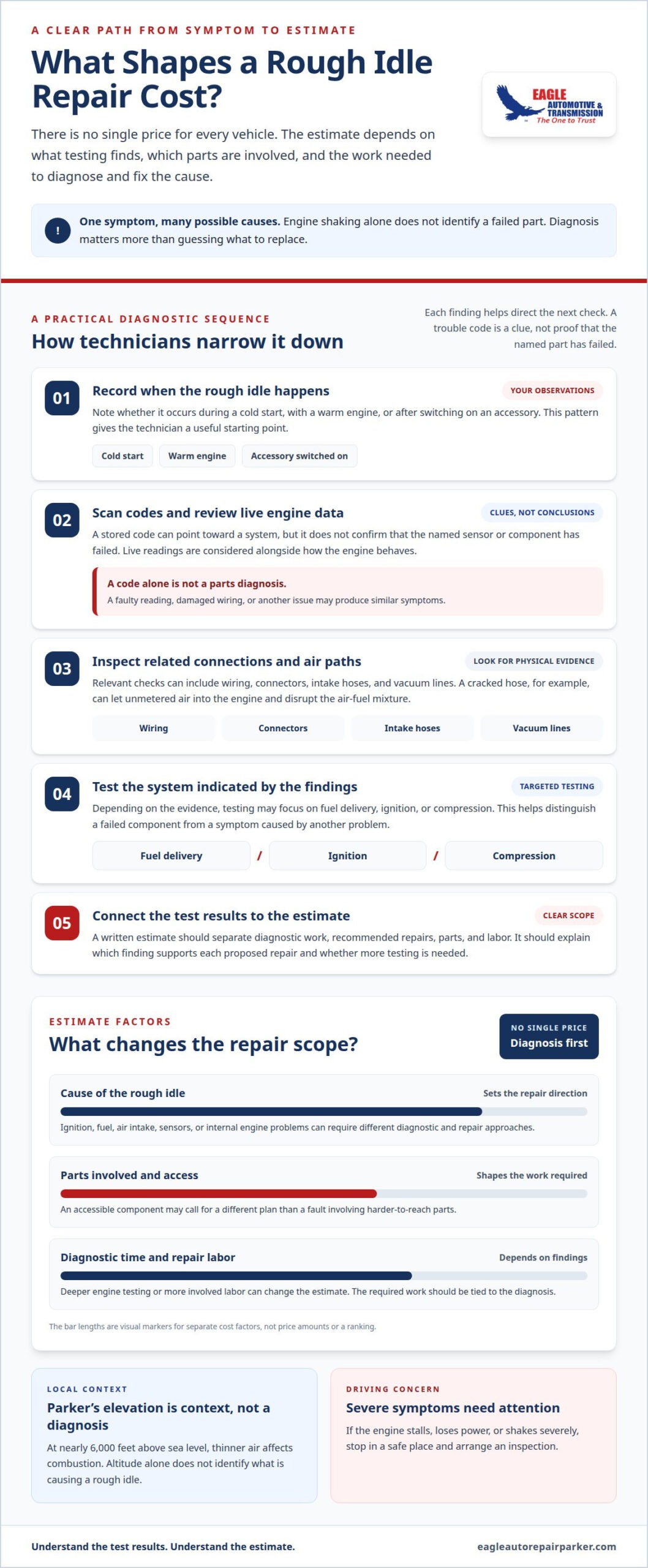
A practical diagnostic sequence starts with a scan for stored trouble codes and a review of live engine data. A code can point to a system, but it does not prove that the named sensor or part has failed. Next, a technician can inspect relevant wiring, connectors, intake hoses, and vacuum lines. For example, a cracked hose can allow unmetered air into the engine and disrupt the air-fuel mixture. Based on the findings, testing may then focus on fuel delivery, ignition, or compression. This root-cause approach helps distinguish a failed component from a symptom it may have caused.
Ford diagnostics also depend on the engine and its behavior. A rough start in a Ford EcoBoost may warrant testing for coolant entering a cylinder, including the 1.5L and 2.0L EcoBoost engines identified with coolant intrusion concerns. Older Ford 3.5L and 5.4L V6 and V8 engines can experience timing-chain wear. These possibilities don’t establish a diagnosis for every Ford. A technician should connect the vehicle’s symptoms, scan data, and targeted mechanical tests before recommending engine repair.
Mass airflow and oxygen sensors also need evidence-based checks. The mass airflow sensor measures incoming air, while oxygen sensors report exhaust oxygen levels to help the engine control fuel delivery. A technician can compare live readings with engine behavior, inspect connectors, and check for intake leaks that could distort the readings. A faulty reading and a damaged wire, for example, can produce similar scan symptoms. Replacing a sensor based on a code alone may miss the actual cause.
Before approving repairs, ask for a written estimate that separates diagnostic work, recommended repairs, parts, and labor. It should explain which test result supports each proposed fix and whether additional testing is needed. The rough idle repair cost in Parker, CO, depends on the cause, parts access, and diagnostic time, so the estimate should reflect those findings. Is it safe to drive with a rough idle? If the engine stalls, loses power, or shakes severely, stop in a safe place and arrange an inspection. Delaying diagnosis can allow the underlying engine problem to worsen.
Worn spark plugs and failing ignition coils
Spark plugs fire repeatedly while the engine runs, so changes in their condition can affect how evenly each cylinder contributes. A worn electrode, cracked insulator, or heavy deposit can weaken ignition. The engine may stumble at idle, hesitate as you pull away, or feel less smooth under load. These signs make the plugs worth inspecting, but they do not establish that plugs are the only cause.
Notice whether the roughness is steady or comes and goes. An intermittent cylinder misfire may cause a brief shudder, while a persistent fault can make the engine feel consistently uneven. Note whether the symptom appears after a cold start, during acceleration, or once the engine is warm. These observations help technicians reproduce the problem and choose relevant checks.
Plug inspection can reveal clues beyond ordinary wear. Deposits may indicate oil or fuel reaching the combustion area, while a cracked insulator can point to physical damage. Consider the plug’s condition alongside cylinder test results and the vehicle’s service information. Replacing a fouled plug without addressing what caused the deposits, for example, may only change the symptom temporarily.
Ignition coils and their boots also need close attention. A coil may weaken internally, while a boot can crack or let spark escape. Technicians can inspect the coil body, boot, connector, and wiring, then compare test results with the affected cylinder. A loose or corroded connector can imitate a failed coil, so replacing the coil without checking its circuit may miss the fault.
Repair scope depends on what testing finds. One worn plug may call for a different recommendation than several plugs showing similar wear or a coil with visible damage. Ask whether the estimate covers the diagnosed part, related labor, and any inspection needed to understand why it failed. Colorado drivers can also use the vehicle’s maintenance records to show when ignition components were last serviced.
Don’t assume every coil needs replacement because one cylinder misfires. Coil condition can vary across the engine, and the vehicle maker’s service procedure helps determine what work is appropriate. A clear explanation should connect the observed plug or coil condition to the symptom and recommended repair. That gives you a practical basis for reviewing the estimate without guessing or replacing parts by trial and error.
Next Auto Care says replacing spark plugs and seeing whether that fixes rough idle is wrong about half the time. A change after replacement is not proof that plugs were the root cause; testing still matters.
Use the replacement interval in your vehicle owner’s manual for scheduled spark plug maintenance. Keep that routine service separate from repairs recommended after diagnosis.
Common causes of rough running
Several less obvious systems can make an engine run unevenly, even when ignition parts appear sound. A coolant temperature sensor that reports inaccurate information may affect how the engine adjusts during warm-up. A thermostat stuck open can also prevent the engine from reaching its usual operating temperature. Both conditions need testing because similar symptoms can come from unrelated faults.
The evaporative emissions system can be another source. Its purge valve controls fuel vapors moving from the charcoal canister into the engine. If the valve stays open at the wrong time, the engine may run unevenly, particularly after refueling or at idle. These circumstances are useful clues, not proof. Inspection should evaluate the valve and its control circuit before recommending a repair.
Some roughness appears only when electrical or mechanical loads change. Switching on the air conditioning, headlights, or rear defroster adds demand that the engine and charging system must manage. A brief idle adjustment can be normal, but repeated stumbling deserves attention. A technician can compare engine behavior with accessories off and on, then inspect the charging system and related connections if the symptom follows the added load.
Listen for changes as well as feeling vibration. A brief stumble after refueling may direct attention to vapor-control components, while roughness that starts with an accessory may point to load management. Record the conditions, including whether the engine is cold or warm and which accessories are operating. Specific observations help focus the inspection on the system most closely linked to the event.
Vehicle history can add useful context. Recent fuel-system work, an intake component replacement, or a battery change may indicate which connections deserve attention. Share what changed and when the rough running began. A technician can inspect related fittings and electrical connections rather than assuming the newest part caused the problem. A finding should be supported by a test, not timing alone.
Before approving repairs at Eagle Automotive, make sure the proposed work addresses the diagnosed fault rather than a similar symptom. An estimate should describe the repair scope and explain any related work. Clear documentation helps you compare the stated problem, test findings, and proposed solution to ensure you understand your rough idle repair cost Parker CO.
Repair cost estimates and factors affecting cost
Repair estimates depend on the fault, the parts involved, and the labor required to reach them. A rough idle caused by a loose intake connection calls for different work from one linked to an internal engine problem. For clear repair planning, look for an estimate that separates diagnostic work, recommended parts, labor, and any follow-up testing. That breakdown shows what the proposed work is intended to address.
How much does vacuum leak or PCV valve repair cost in Parker, CO? The amount depends on the leak’s location, which component needs repair, and how difficult it is to access. A split hose may call for a different repair from a faulty PCV valve or a leak near the intake manifold. Inspection identifies the source before the estimate defines the work required.
What does it cost to repair fuel injectors or a fuel pump causing rough idle? It depends on whether testing identifies an injector, the pump, an electrical connection, or another fuel-delivery fault. Injector location and access affect labor, while pump work depends on the vehicle’s design and the repair needed. Rough idle alone does not identify which fuel component needs attention.
The amount for your vehicle comes in an estimate based on the diagnosis, parts, access, and labor involved. Before approving work, compare the findings with the symptoms and tests described. Ask for each recommended repair to be tied to a specific result, such as a measured fuel-pressure problem or a confirmed leak. Clear reasoning makes it easier to understand what the repair will address.
Diagnostic time affects the estimate because a technician must isolate the cause before choosing parts. A trouble code can guide testing, but it does not prove that a component has failed. For example, a lean-condition code can result from an intake leak, fuel delivery trouble, or a sensor reading. The estimate should distinguish initial testing from any additional work needed to confirm the fault.
Repair complexity also affects the total. A readily accessible part can take less labor to reach than one buried beneath intake components. Engine layout, required parts, and any damage found during disassembly all shape the repair plan. An oil change is routine maintenance, but it will not correct a vacuum leak or restore a failing fuel pump. Match the proposed work to the cause confirmed by testing.
Review the written estimate for the diagnosed issue, parts, labor, and recommended follow-up checks. If new findings change the repair plan, the revised estimate should explain why. This helps you distinguish necessary engine work from unrelated maintenance and make a decision based on the identified fault, not guesswork.
There is no single set cost: the estimate depends on the diagnosed source and the parts and labor required. Inspection and a written quote determine the amount for your vehicle.
Injector and fuel-pump repair costs vary. The quote depends on which fuel-delivery fault testing confirms, the parts needed, and the labor involved.
Throttle body and idle air control issues
The throttle body controls how much air enters the engine. At idle, its opening is small, so carbon buildup around the throttle plate can affect airflow. The engine may idle unevenly, hesitate when starting, or stall as it comes to a stop. Other faults can cause similar symptoms, so they do not prove that the throttle body needs cleaning or replacement.
Some vehicles use a separate idle air control valve to regulate airflow when the throttle is closed. If the valve sticks or its passages become restricted, engine speed may rise and fall rather than settle smoothly. Other vehicles use an electronic throttle body to manage idle airflow without a separate valve. Identifying the design helps technicians choose the right inspection and avoid recommending a part the vehicle does not use.
A focused check starts with a scan for relevant trouble codes and a review of engine data. A technician can inspect the throttle plate, air passages, electrical connector, and nearby intake ducting. If the throttle body appears dirty, the inspection should also consider why deposits formed and whether another issue affects airflow. A code or visible residue alone does not confirm the root cause.
Cleaning may help when deposits interfere with the throttle plate’s movement, but it will not correct a damaged motor, wiring fault, or unrelated vacuum leak. Some electronic throttle systems require a relearn procedure after cleaning or replacement. The correct procedure depends on the vehicle, so technicians should follow the applicable service information. Skipping a required relearn can leave the idle uneven even after the throttle body is clean.
Idle air control testing can include checking the valve’s electrical circuit and observing whether engine speed responds to commands. A valve that does not move as expected may need further testing before replacement. If the circuit has a poor connection, replacing the valve alone may not solve the problem. Ask for a clear explanation of the results, recommended repair, and any follow-up checks.
The estimate depends on whether the vehicle needs cleaning, adjustment, a valve, or an electronic throttle body, as well as access and diagnostic labor. A written estimate should distinguish confirmed repairs from additional testing. If the idle changes after the engine warms up or an electrical load switches on, share that detail. It can help narrow the inspection to the conditions that trigger the symptom.
Eagle Automotive: Check Engine Light
Eagle Automotive in Parker can investigate a rough idle through its Check Engine Light diagnosis and Engine Repair & Service. Free computer diagnostics are provided. If the warning light is on, the engine stalls, or the idle remains uneven, testing can help identify whether the cause involves ignition, airflow, fuel delivery, or another engine issue.
A useful next step is to describe when the symptom occurs, such as during a cold start or while stopped at a light. That detail helps guide the inspection and connect test results to the vehicle’s behavior. Once the cause is identified, the recommended repair can address the source rather than just the symptom.
Contact Eagle Automotive to discuss a rough idle and the next diagnostic step.
Move Forward With a Clear Repair Plan
A rough idle can make routine driving feel uncertain, but the next step can be straightforward: turn what you’ve noticed into a focused inspection. Keep track of when the symptom appears and how the vehicle responds. That gives the repair conversation a practical starting point and keeps attention on the issue affecting your drive.
Use the diagnosis to understand what needs attention and why. The rough idle repair cost in Parker, CO, depends on the specific repair your vehicle needs, so a clear explanation helps you decide what to do without guessing. A defined repair plan can help you approach the next step with confidence.
Reach out to schedule a rough idle inspection with Eagle Automotive. Take the next step toward a smoother-running vehicle.
Frequently Asked Questions
What is the average cost to diagnose and repair a rough idle in Parker, CO?
There is no single average that reflects every rough-idle repair. The total depends on the diagnosed fault, testing required, parts involved, and access to the affected component. An estimate for your vehicle should identify those factors and connect recommended repairs to inspection findings. A simple airflow fault, for example, calls for different work from a mechanical engine problem, so compare estimates by their stated scope.
How much does a rough idle diagnostic fee cost at auto repair shops in Parker, Colorado?
The diagnostic charge depends on the testing needed to isolate the cause, and the amount for your case is provided in a quote. A basic scan may not be enough if technicians need additional tests to examine fuel delivery, wiring, or engine condition. Ask what the diagnostic step includes and whether further testing would be quoted separately before work proceeds.
Do rough idle repair costs vary by vehicle make, model, or engine type?
Yes. Vehicle design affects which parts are involved and how much labor is needed to reach them. A compact engine layout may allow easier access than a crowded engine bay, while a model-specific procedure may require additional diagnostic steps. Engine type matters, too: a repair involving an intake component differs from one involving internal engine parts. A vehicle-specific inspection establishes the appropriate scope for the estimate.
Can a check engine code identify the cause of rough idle, and what does code scanning cost?
A code can point technicians toward a system or cylinder, but it does not prove which part failed. For example, a misfire code may require further tests to distinguish an ignition fault from another cause. Eagle Automotive & Transmission provides free computer diagnostics in Parker. A scan can guide the next diagnostic step, while the estimate reflects any further testing and the work needed to address the confirmed fault.