

Oil Change Near Me: A Practical Guide for Parker Drivers
What matters most in an oil change often happens before the hood is opened: choosing oil that meets your vehicle’s requirements. For Parker drivers searching for an oil change near me, start with the manufacturer’s guidance, not a guess based on oil color or a familiar brand. The correct oil specification can vary by vehicle, and a good visit should leave you clear about what was checked and what was done.
It’s reasonable to want convenient service without wondering whether the basics were missed. This guide explains how to choose an oil change for your vehicle, what information to bring, and which questions can help you understand the work. You’ll also learn what to review afterward, including the service record and any recommendations. Eagle Automotive provides oil changes and preventative maintenance in Parker for all makes and models. A few practical checks can make routine maintenance more straightforward and help you keep a useful record of your vehicle’s care.
Key Takeaways
- Use your owner’s manual to identify the oil specification and viscosity grade your vehicle requires.
- Before looking for an oil change near me, gather your vehicle details and maintenance records to guide the service.
- Review what oil and filter service was completed, and record the date, odometer reading, and oil specification.
- Choose a local service that explains why the oil fits your vehicle and clearly describes the work performed.
What an Oil Change Does and When to Look for Service Near You
Engine oil forms a protective film between moving parts, helping them move against one another with less friction. As it circulates, oil also carries heat away from engine components. An oil change removes used oil and replaces it with fresh oil. The service often includes changing the oil filter, but the exact work depends on the vehicle and service selected.
Looking for an oil change near me? Start with your vehicle’s maintenance guidance rather than a universal mileage rule. The right interval depends on the manufacturer’s recommendations and how the vehicle is driven. A maintenance reminder or a change in oil appearance can prompt a closer look, but neither alone diagnoses an engine problem.
What engine oil and the oil filter do
Engine components move under heat and load. Oil coats their surfaces to reduce friction and helps manage heat as the engine runs. The oil filter catches contaminants circulating through the oil, helping keep them from continuing through the lubrication system. Replacing the filter does not remove the need to change used oil as directed by the vehicle maker.
Oil and filter requirements vary by vehicle. The owner’s manual identifies the required specification and viscosity grade. Match those details to your vehicle rather than choosing by brand, color, or guesswork. For a general overview of the service and why intervals differ, see Understanding Oil Changes.
How to tell whether your car may be due
Check the maintenance schedule in your owner’s manual first. Some vehicles also display a maintenance reminder or oil-life message. Treat that alert as a prompt to review the vehicle’s guidance and service history, not as a diagnosis of oil condition or engine health. If the display is unclear, use the manual to understand what it means for your specific vehicle.
Driving conditions can affect the recommended schedule. Frequent short trips, extended idling, or hauling loads may count as demanding use under some manufacturers’ guidance. Don’t apply a fixed mileage or time interval just because it’s common advice. Follow the schedule for your vehicle and its driving conditions, and keep a record of past service so you can see what has already been done.
If you’re unsure how to interpret a reminder or maintenance record, Eagle Automotive can help explain the next step. Bring your vehicle’s guidance and service history so the conversation can focus on its needs and the maintenance schedule that applies.
How to Choose the Right Oil Change for Your Vehicle
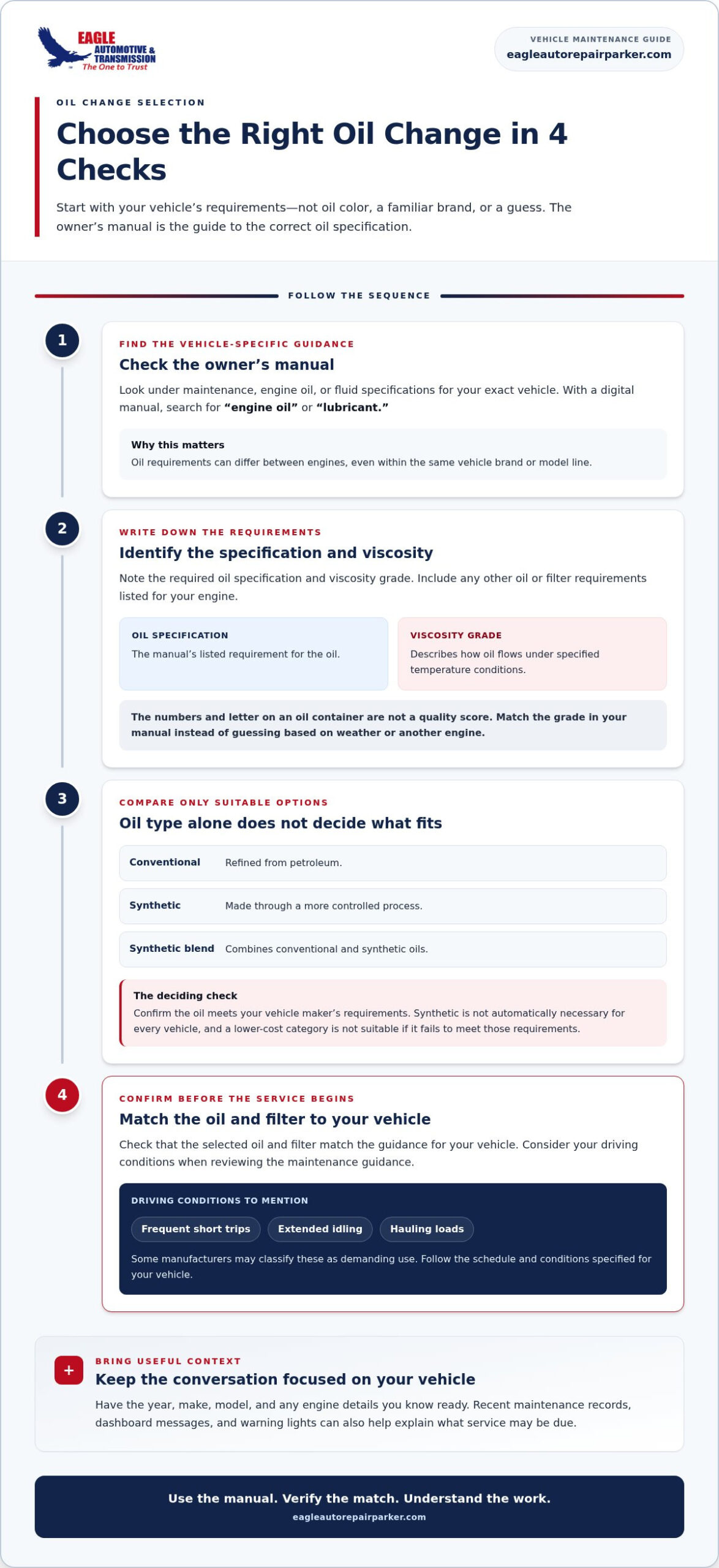
The right oil change starts with your engine’s requirements, not a guess based on what’s popular or what another vehicle uses. Work through these steps to make the choice:
- Check the owner’s manual. Find the maintenance or engine-oil section for your exact vehicle.
- Identify the required specification. Note the oil viscosity and any other oil or filter requirements listed for your engine.
- Compare oil options. Check that the available oil meets the vehicle’s requirements and consider your driving conditions.
- Confirm the service details. Before work begins, make sure the selected oil and filter match the guidance for your vehicle.
If you’re comparing an oil change near me, bring your vehicle’s year, make, model, and recent maintenance information. Those details help keep the conversation focused on your engine rather than broad assumptions about a brand or vehicle type.
How to find your vehicle’s oil specification
Look in the owner’s manual under maintenance, engine oil, or fluid specifications. It may list a viscosity grade, an oil specification, or both. Requirements can differ between engines, including engines offered within the same vehicle brand or model line, so don’t rely on a general recommendation for the make alone. If you use a digital manual, search for “engine oil” or “lubricant.”
How oil types differ without oversimplifying
Conventional oil is refined from petroleum. Synthetic oil is made through a more controlled process, while synthetic-blend oil combines conventional and synthetic oils. These categories describe how the oil is made, but they don’t determine the right choice by themselves. A synthetic option isn’t automatically necessary for every vehicle, and a less costly category isn’t suitable if it fails to meet the maker’s requirements.
Viscosity describes how oil flows under specified temperature conditions. The numbers and letter on the container are not a score of quality. Match the grade in your manual rather than choosing a thicker or thinner oil based on guesswork, weather, or advice for a different engine. If the manual lists more than one acceptable option, use that guidance to compare the choices.
For Parker drivers, Eagle Automotive provides oil changes and preventative maintenance for all makes and models. Bring the manual or a clear note of its oil requirements, then review the selected oil and service details with the team before the work is done. This helps connect the service to your vehicle’s actual needs.
What to Expect During an Oil Change in Parker
A clear oil-change visit should help you understand what service you requested, which oil is selected for your vehicle, and what work was completed. The exact steps can vary by vehicle and service, so don’t assume every visit follows the same routine. Start with a conversation about your vehicle, its maintenance history, and any questions you want answered.
What information helps the service go smoothly
Bring your vehicle’s year, make, and model, along with any engine details you know. Maintenance records can show when the last oil service took place and help clarify what may be due. Share dashboard messages or warning lights, too. These details give the service team useful context for discussing the right service for your vehicle.
A typical visit may include these steps:
- Review vehicle details. Share your vehicle information, available maintenance history, and any dashboard messages that concern you.
- Discuss oil selection. Compare the proposed oil with the requirements in your owner’s manual.
- Confirm the requested service. Make sure you understand what the oil-change service includes before it begins.
- Review completed work. Get a clear summary of the service and any separate recommendations.
This is a general guide, not a promise that every vehicle or visit follows the same sequence. The vehicle and service selected affect the details. A straightforward explanation matters more than a speed claim. You should know what was requested and be able to understand the work recorded afterward.
How to review recommendations during the visit
Keep your requested oil change distinct from additional maintenance suggestions. If another item is recommended, ask what supports it. Is it tied to your vehicle’s maintenance schedule, a dashboard message, or a specific concern observed during the visit? A clear explanation can help you decide whether the item needs attention now or can be planned for later.
You can also ask which oil specification was used and whether the filter was changed as part of the selected service. Keeping those details with your maintenance records helps you plan future service using your vehicle’s guidance. If a recommendation is unfamiliar, ask for its purpose in plain language so you can make an informed decision.
For drivers looking for an oil change near me in Parker, bring your vehicle details and service history, then review the completed work and any recommendations before leaving. A clear record gives you a useful reference for future maintenance and grounds your next decision in what was actually done.
How to Prepare for an Oil Change and Check the Work Afterwards
A little preparation makes it easier to keep your oil service tied to your vehicle’s requirements. Gather the details that explain what your car needs, then save a clear record of what was done. That way, your next maintenance decision can start with information rather than guesswork.
Before you bring your vehicle in
Set aside the owner’s manual, or have the vehicle’s year, make, model, and known engine details ready. Note any maintenance reminders, warning lights, or questions you want addressed. If you have service records, bring them or have them available. They can help establish the vehicle’s maintenance history, especially if you’re unsure when it last received an oil change.
Use this quick checklist:
- Locate the owner’s manual or the vehicle’s maintenance information.
- Write down any oil-life reminders, warning lights, or recent changes you’ve noticed.
- Gather past service records, including notes about oil type or filter service if available.
- Keep a short list of questions so you can review them before leaving.
For Parker-area drivers, having these details ready is useful wherever you arrange an oil change near me. Your location alone doesn’t establish a different oil-change interval. Follow the schedule and guidance provided for your specific vehicle and its driving conditions rather than assuming local weather changes the required interval.
What to keep in your maintenance record
After service, check the invoice or service record for details that will help you plan ahead. Keep the date, odometer reading, and oil specification documented for the visit. Retain the invoice with your other vehicle maintenance documents, whether you use a paper folder or a digital record. If a detail you need isn’t shown, ask for it while the service information is available.
Use the owner’s manual or vehicle maintenance display to guide your next service. A saved record makes it easier to compare the current odometer reading with your vehicle’s guidance and avoid relying on memory. Don’t apply a generic interval just because it appears on an old receipt or applies to another vehicle.
Once you’re back on the road, pay attention to any warning that remains or any new concern. A reminder can have different meanings depending on the vehicle, so consult the manual or follow its guidance for the message. If something seems wrong after service, don’t assume the oil change is the cause or dismiss the concern. Have it assessed appropriately. Eagle Automotive provides oil changes and preventative maintenance in Parker. Keep your records organized and use your vehicle’s guidance to plan the next step.
Where to Get an Oil Change Near Parker and What to Do Next
Finding an oil change near me is only part of the decision. A useful visit should help you understand why the selected oil fits your vehicle, what the service included, and which recommendations are separate from the oil change you requested. Clear explanations give you a record you can use, not unfamiliar terms to sort out later.
What a clear oil-change visit should help you understand
Use this checklist to review the visit and its service record:
- Oil selection: The selected oil should be explained in relation to your vehicle’s requirements, not simply presented as a standard choice.
- Completed work: The record should clearly describe the oil-change service performed and identify the oil specification used, when documented.
- Additional recommendations: Any suggested maintenance beyond the requested oil change should be listed and explained separately.
If a recommendation is unclear, ask what it is based on. It may relate to the maintenance schedule or a concern observed during the visit. A straightforward explanation helps you decide what to address now and what to consider later. You should be able to distinguish the work you requested from separate suggestions.
A practical next step for Parker drivers
When choosing a local shop, consider whether the service conversation covers your vehicle’s oil requirements and whether you’ll receive a clear summary of the work. Bring your owner’s manual and maintenance records to keep the discussion specific to your car. For broader maintenance and repair considerations, reviewing local automotive care standards offers related context.
Eagle Automotive provides oil changes and preventative maintenance in Parker. You can explore Eagle Automotive’s maintenance services in Parker.
Make Your Next Maintenance Step Count
Good maintenance is easier to manage when it becomes part of your routine, not a last-minute guess. Keep your service record somewhere you can find it, and use your vehicle’s own guidance to plan ahead. That gives you a clear starting point the next time you’re considering an oil change near me, even if months have passed since your last visit.
For Parker drivers, choosing a local shop can also make it simpler to keep routine care connected to the vehicle you drive. Eagle Automotive provides oil changes and preventative maintenance for all makes and models. Bring your vehicle information and maintenance history to make the next service conversation specific to your car.
Explore Eagle Automotive’s maintenance services in Parker and take the next step in your vehicle’s routine care.
Frequently Asked Questions
How often should I get an oil change?
Follow the maintenance schedule in your owner’s manual or vehicle display, since there’s no single interval that fits every car. The schedule may account for driving conditions, such as repeated short trips or extended idling. If you’ve bought a used vehicle and don’t know its service history, check available records and consult the manual before setting a maintenance routine. Don’t rely on a generic mileage rule.
What type of oil should I use in my car?
Use oil that meets the requirements listed for your vehicle’s engine. Check the manual for the viscosity grade and any required oil specification, then compare those details with the oil label or service record. Two vehicles from the same manufacturer may have different engine requirements. If the manual lists approved alternatives, choose from those rather than selecting oil based on brand familiarity or guesswork.
Does an oil change include an oil filter replacement?
An oil change often includes replacing the oil filter, but the exact service can vary. Review the work description on your invoice to see whether a filter change is included. If the record doesn’t say, ask for clarification and keep the answer with your maintenance documents. The filter also needs to match the vehicle, so don’t assume a filter used for another car is suitable.
How long does an oil change usually take?
The time varies with the vehicle, the service selected, and the shop’s process, so a single estimate won’t apply to every visit. If you’re arranging an oil change near me in Parker, ask Eagle Automotive about timing for your vehicle and service. Allow extra time if you plan to discuss maintenance records or other concerns, and avoid choosing a service based only on a speed claim.
Can I switch from conventional oil to synthetic oil?
A vehicle may be able to use either type if the oil meets the engine’s specified requirements, but the owner’s manual should guide the decision. Check the required viscosity and oil specification before switching. Don’t assume synthetic oil is automatically necessary or that it permits a longer service interval. If you’re uncertain, bring the manual or details for your exact engine to Eagle Automotive in Parker for guidance.
What should I do if my oil warning light stays on after an oil change?
Check the owner’s manual to identify the warning. An oil-life reminder and an oil-pressure warning can signal different things. If an oil-pressure warning remains on, safely stop the vehicle, turn off the engine, and follow the manual’s instructions. Don’t continue driving to see whether the light clears. If the warning is a maintenance reminder, consult the vehicle guidance for its reset procedure or next step.