

Family Car Safety Inspections in Parker, CO: Checks and Timing
A family car safety inspection in Parker, CO can check tires, brakes, fluids, lights, belts, battery condition, leaks, and other road-safety concerns before a trip. Colorado doesn’t require a general safety inspection for most non-commercial private vehicles, so a pre-trip check is a practical way to spot problems before you travel. There’s no single appointment length: the time depends on the inspection’s scope and whether the vehicle needs further diagnostic work.
Planning a family drive means thinking beyond packed bags and a full tank. A worn tire, weak battery, or faulty light can disrupt the trip, so it’s sensible to understand your vehicle’s condition before setting out.
This guide explains what a pre-trip inspection can cover, which tire and child passenger safety details matter, and what can affect appointment time. You’ll also learn how to arrange an inspection in Parker and when a mechanical concern may need repair before the journey.
Key Takeaways
- A pre-trip check can catch concerns with tires, brakes, fluids, lights, belts, battery condition, and leaks before they interrupt family travel.
- Colorado doesn’t require a general safety inspection for most non-commercial private vehicles, so planning a voluntary check can help you prepare for the road.
- Inspection time depends on the checks involved and whether a concern needs further diagnosis.
- Learn what to look for in tire condition, including the tread-depth standard referenced in Colorado roadworthiness guidance.
- Understand how a warning light or mechanical concern may point to a need for diagnosis or repair before your trip.
Battery, fluid, tire, belt, light, wiper, and coolant-hose checks
A pre-trip check looks across key systems, from battery connections to tire wear. Use these steps to spot visible concerns before loading the family vehicle.
Battery and Fluid Checks
Check the battery case for damage and its terminals for corrosion or loose connections. Slow cranking, dim lights, or a battery warning can signal an electrical concern, but symptoms alone don’t identify the cause. A technician can assess battery condition and charging operation.
Check engine oil, coolant, brake fluid, and windshield washer fluid according to the vehicle’s owner’s manual. Look beneath the vehicle for fresh drips, and note any fluid warning on the dashboard. Low coolant, for example, may accompany a leak or overheating concern, so don’t simply top it off and ignore the cause.
Tire Condition and Pressure
Inspect each tire, including the spare if the vehicle carries one. Look for uneven wear, cuts, bulges, embedded objects, or a slow leak. Check pressure when tires are cold, using the pressure listed on the driver-door label or in the owner’s manual, not the maximum pressure molded into the tire sidewall.
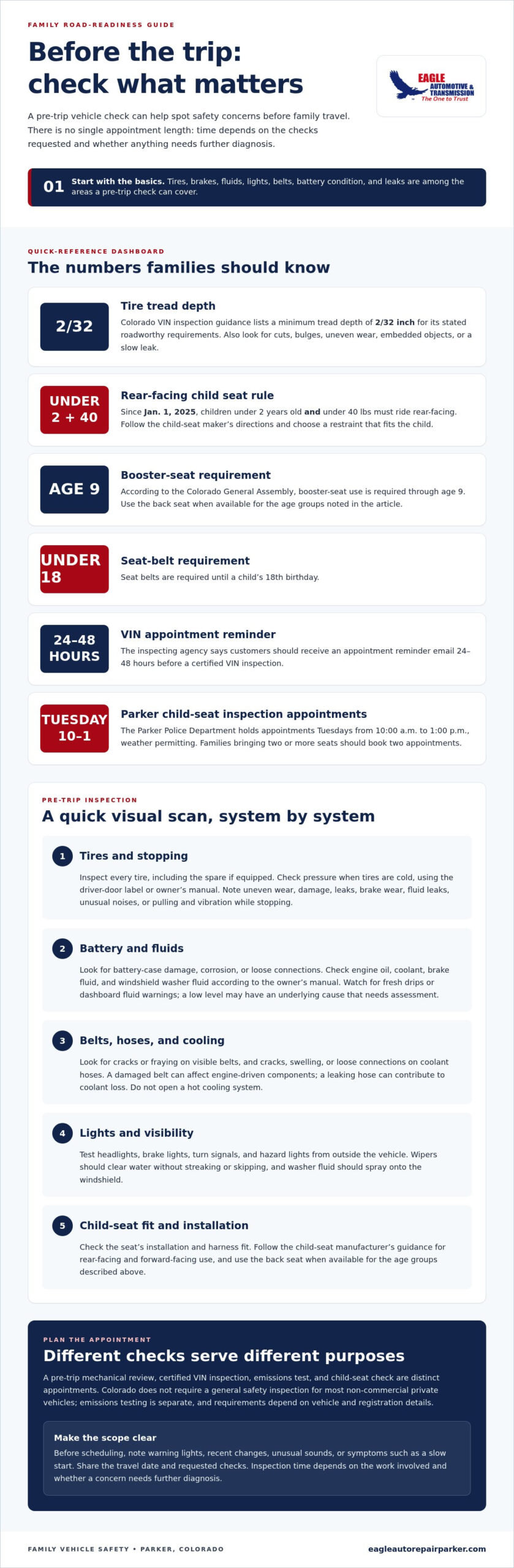
Colorado VIN inspection guidance lists minimum tread depth of 2/32 for vehicles to meet its stated roadworthy requirements. That figure doesn’t replace checking for damage or uneven wear. Have the brakes examined for visible wear, fluid leaks, or unusual noises, especially if the vehicle pulls or vibrates while stopping.
Colorado doesn’t require a general safety inspection for most non-commercial private vehicles before registration or sale. Emissions testing is separate, and Parker drivers may need it depending on county, vehicle age, and registration details.
Many vehicles in Douglas County are subject to Colorado emissions testing, but requirements depend on vehicle age, fuel type, and registration details. Check the state program’s current eligibility guidance for your vehicle before arranging a test.
To find emissions testing stations near Parker, use Colorado’s official station locator and enter your address or ZIP code. The closest option depends on your starting point and the locator’s current station listings.
Before an inspection, clear loose items from the passenger area and trunk, then gather the owner’s manual and note warning lights or recent changes. Check tire pressure, test every exterior light, and make a written list of concerns, such as a slow start or a fluid spot on the driveway.
For family safety, inspect the child seat’s installation and harness fit along with the vehicle’s brakes, tires, and lights. Colorado’s child passenger rules changed on Jan. 1, 2025: children under 2 years old and under 40 lbs must ride rear-facing. Follow the child-seat manufacturer’s guidance for rear-facing and forward-facing use, and choose a restraint that fits the child. Use the back seat when available for those age groups. According to the Colorado General Assembly, booster-seat use is required through age 9, and seat belts are required until a child’s 18th birthday.
Belts, Hoses, Lights, and Wipers
Inspect visible belts and coolant hoses for cracks, fraying, swelling, or loose connections. A damaged belt can affect engine-driven components, while a leaking hose can contribute to coolant loss. Don’t open a hot cooling system. Note visible leaks and have the cause assessed.
Switch on headlights, brake lights, turn signals, and hazard lights, then check each from outside the vehicle. Wipers should clear water without streaking or skipping. Replace worn blades before a trip, and make sure washer fluid sprays onto the windshield.
Inspection appointment duration and booking
Appointment time depends on the inspection type, requested checks, and whether a concern needs investigation. A visual pre-trip check differs from a certified VIN inspection or child safety seat appointment. Identify the service you need before booking, since each appointment follows a different process.
How long should you allow?
There’s no single duration for every vehicle inspection. A straightforward visual review differs from a visit that uncovers a warning light, fluid leak, or brake concern requiring diagnosis. Share the vehicle’s symptoms and travel date when scheduling, so the appointment can account for the work requested.
Bring any documents required for your appointment and arrive with the vehicle accessible. If a warning light is on, describe when it appeared and whether starting, stopping, or shifting has changed. These details help technicians focus the inspection and distinguish the concern from unrelated symptoms.
Before booking, write down what you want assessed. For example, mention a warning that appears only during startup or a noise heard while braking. Clear notes help define the inspection’s scope and make it easier to discuss any additional diagnostic work before proceeding.
VIN and child seat appointments
A certified VIN inspection is separate from a mechanical safety check. The agency says customers should receive an appointment reminder email 24-48 hours prior to the scheduled appointment.
The Parker Police Department holds child safety seat inspection appointments Tuesdays from 10:00 a.m. to 1:00 p.m., weather permitting. Families can schedule through its online booking form. The location is 18600 Lincoln Meadows Pkwy, Parker, CO 80134; families bringing two or more seats should book two appointments.
Booking and failed results
Before booking, decide whether you need a pre-trip mechanical review, VIN inspection, emissions test, or car-seat check. Each serves a different purpose and uses a distinct appointment process. For a VIN appointment, follow the inspecting agency’s booking instructions and watch for the Colorado State Patrol reminder email.
If a mechanical check finds a concern, use the written findings to identify what needs diagnosis or repair before travel. An emissions failure is a separate test result; follow the Colorado program’s instructions for the reported issue. A failed result alone doesn’t identify every underlying mechanical cause.
The cost of a private pre-trip inspection depends on its scope and any diagnostic work needed. The certified VIN inspection fee is separate from a general safety check. For mechanical concerns, use the findings to guide your next steps with Eagle Automotive, rather than treating one result as a complete diagnosis.
Pre-trip and road-readiness inspections
A pre-trip inspection looks for mechanical concerns that could disrupt a drive or affect control. Before leaving Parker, review the vehicle’s visible condition, dashboard warnings, and recent changes in how it starts, stops, or handles.
Start with a walk-around on level ground. Look beneath the engine and passenger area for fresh fluid spots, then check that doors close securely and mirrors are intact. A leak’s color or location can help describe it, but it doesn’t identify the cause. Note where you see it and whether the spot returns after parking.
Next, check the basics before loading passengers. Confirm that the horn sounds, seat belts latch and retract, and child seats are installed according to their instructions. Switch on headlights, turn signals, brake lights, and hazard lights. Ask another adult to observe the rear lights while you press the brake pedal.
A road-readiness review can also include a computer scan for stored trouble codes. A code points to a system or condition that needs investigation; it doesn’t automatically identify a failed part. Pair scan results with symptoms, such as rough running, a warning light, or a change in transmission shifting.
Some inspection criteria include checking that the horn is audible and that the driver has an adequate rear view. A rear-facing mirror must let the driver see 200 feet behind the vehicle. These are VIN inspection criteria, not a substitute for checking the entire vehicle before a family trip.
Before driving, pay attention to how the vehicle behaves on a familiar route. Note pulling, vibration, unusual noises, delayed braking response, or a temperature warning. Don’t use a road test to push a vehicle with a serious warning or obvious loss of control. Record the symptom, when it occurs, and whether it changes with speed or braking.
Use a simple checklist to keep the review consistent:
- Confirm warning lights are off after startup, or document any that stay on.
- Check that the parking brake releases and the vehicle remains secure when parked.
- Listen for grinding or squealing during a gentle, controlled stop.
- Make sure the cargo area doesn’t block the rear window or driver’s view.
- Keep the owner’s manual and inspection notes available during the appointment.
For a used-car buying decision, a pre-purchase inspection can help identify possible repair needs before you commit. Ask for findings in writing and separate urgent safety concerns from maintenance items. If an inspection flags a brake concern, diagnosis can show whether repair is needed before travel, rather than treating one noise or warning as proof of the cause.
Steering, suspension, leaks, and visible safety issues
Steering and suspension problems can affect how a family vehicle tracks, turns, and handles uneven pavement. During a pre-trip review, note changes such as pulling, clunking, excess bouncing, or a steering wheel that feels unusually loose.
Start with the vehicle parked on level ground. Look at each wheel and tire from outside, checking for an obviously uneven stance, damaged wheel, or fluid near the tire. Then inspect visible steering and suspension parts for damage, loose connections, or torn rubber boots. A visual check can reveal concerns, but it cannot show every worn component.
On a familiar, low-traffic route, notice whether the vehicle drifts when you intend to drive straight. Check whether steering effort changes during a slow turn or the wheel vibrates over ordinary pavement. A pull can have several causes, including tire condition or alignment, so one symptom alone doesn’t identify a failed steering part.
Listen for clunks when crossing a small bump or entering a driveway slowly. Repeated knocking, scraping, or a pronounced bounce deserves attention before a longer Colorado drive. Don’t deliberately hit potholes or rough surfaces to test the suspension. Record the road condition and maneuver that produced the sound.
Leaks need a careful look, too. After the vehicle has been parked, check the ground beneath the engine, transmission, and wheel areas. Note the spot’s location and color, and whether it returns after parking. Fluid appearance can offer a clue, but identifying the source requires inspection of the relevant system.
Pay attention to steering fluid concerns only if your vehicle uses a hydraulic steering system. Some vehicles use electric power steering instead. Check the owner’s manual for the system type, and note dashboard warnings, stiff steering, or a new whining sound during turns.
Visible safety issues include damaged mirrors, loose trim, a cracked windshield in the driver’s viewing area, or a door that won’t latch securely. Check that the steering wheel turns without obstruction and that floor mats don’t interfere with the pedals. These simple steps can help catch problems before passengers and luggage are aboard.
- Write down when a steering pull, vibration, or noise occurs.
- Photograph a fresh driveway leak before cleaning the area.
- Arrange maintenance if steering response changes or suspension noises repeat.
- Have suspected damage assessed before a trip, rather than guessing at repairs.
For a family car safety inspection in Parker, CO, clear notes about symptoms help distinguish a visible concern from a repair that needs diagnosis. Share what changed, where it happens, and whether the condition is getting worse.
Fluids, belts, hoses, lights, and wipers
Use a consistent inspection sequence to catch visible wear and identify what needs closer diagnosis. Compare fluid levels with the vehicle manual, then note any warning light, damaged belt, or poor visibility issue.
Fluid and Belt Checks
With the vehicle parked level, use the owner’s manual to locate the engine oil dipstick and fluid reservoirs. Check the marked level ranges and look for obvious contamination, low levels, or fresh residue around caps and connections. Don’t rely on a dashboard warning alone to judge fluid condition.
Inspect accessible drive belts for fraying, cracks, glazing, or missing sections. A belt that looks damaged needs professional assessment; its appearance alone doesn’t determine which component caused the wear. Write down the location and condition so you can discuss the finding during inspection.
Hose, Light, and Wiper Checks
Look over visible coolant hoses for cracks, bulges, abrasions, or wet areas near their connections. A leak can leave residue or a spot beneath the vehicle, but a stain’s location doesn’t prove which hose or connection is responsible. Record what you see without handling hot engine parts.
Test headlights, turn signals, brake lights, and hazard lights from outside the vehicle. Ask another person to confirm the rear lamps illuminate when you activate the controls. Run the wipers across a wet windshield and note skipping, streaking, or blades that fail to clear the driver’s view.
Check dashboard indicators after starting the engine, and note which symbols remain illuminated. A check engine light, battery symbol, or temperature warning points to a system needing attention, but doesn’t identify the failed component by itself. Record the symbol and any change in engine sound or operation.
Separate visible observations from assumptions. For example, a low reservoir level is a finding; a suspected leak is a possible explanation. Share both with the technician, along with whether you’ve added fluid or noticed a recurring spot under the vehicle.
During a walk-around, inspect the windshield, mirrors, and lamp lenses for damage that could reduce visibility or lighting. A cloudy lens, cracked mirror housing, or wiper blade leaving an uncleared band can affect what the driver sees. Include these details in your inspection notes.
- Use the vehicle manual to identify the correct fluid reservoir and level marks.
- Note belt damage, hose residue, or fluid spots rather than guessing at causes.
- Test each light function and confirm the rear lamps with another observer.
- Record warning symbols and changes in engine operation for follow-up.
If a warning light stays on or an engine concern accompanies a fluid or belt finding, arrange diagnosis before travel. A careful inspection connects visible evidence with the system involved, helping determine whether maintenance or repair is needed.
Eagle Automotive: Check Engine Light
Eagle Automotive offers Check Engine Light service for dashboard warnings and engine symptoms before a family trip. Its technicians can investigate the warning and determine whether Engine Repair & Service is needed. Eagle Automotive also provides free computer diagnostics. A stored trouble code can point to a system, but it doesn’t prove a specific part has failed.
Share when the light appeared, whether it stays on, and any changes in starting, power, or engine sound. If the vehicle also has braking or shifting concerns, mention those symptoms so they can be assessed alongside the warning. Clear details help connect inspection findings with the next repair step.
Contact Eagle Automotive to discuss a check engine light or related engine concern before your trip.
Set Up Your Next Trip With a Clear Plan
A family car safety inspection in Parker, CO is most useful when its findings lead to practical next steps. Keep the inspection notes with your trip plans, then decide which concerns need attention before departure and which can be scheduled for routine maintenance.
If a warning light remains on, engine performance changes, or braking feels different, focus first on diagnosis rather than guessing at parts. Eagle Automotive offers Check Engine Light service, Engine Repair & Service, and Brake Repair for concerns that can affect how your vehicle runs or stops.
Share the symptoms you’ve noticed and the kind of driving you’re planning. That gives the conversation a useful starting point and helps connect the vehicle’s condition with the work it may need.
Contact Eagle Automotive to book an appointment and take the next step toward preparing your family vehicle for the road.
Frequently Asked Questions
Where can I get a family car safety inspection in Parker, CO?
For a mechanical pre-trip assessment in Parker, contact Eagle Automotive. The team can evaluate concerns such as engine warning lights, braking symptoms, and unusual vehicle behavior. Eagle Automotive also provides free computer diagnostics to help investigate stored trouble codes alongside the symptoms you describe. Share your travel plans and any recent changes so the assessment can focus on relevant concerns.
What does a comprehensive vehicle safety inspection in Colorado check?
A comprehensive voluntary check can review whether key systems operate as expected, not simply whether parts look intact. For example, a technician can compare a warning light with diagnostic findings, assess brake response alongside visible wear, and investigate whether a fluid leak relates to engine or transmission operation. The inspection’s scope determines which checks are included, so ask for findings that distinguish observed concerns from issues needing further diagnosis.
How long does a vehicle safety inspection take in Parker?
There isn’t one standard duration for every Parker vehicle inspection. Time depends on the requested checks, the vehicle’s condition, and whether a finding needs diagnostic follow-up. To make scheduling more efficient, provide the vehicle’s make and model, describe symptoms, and mention your planned departure date. Ask how the appointment will handle additional findings, such as a warning light that requires further investigation.
What happens if a car fails a safety or emissions inspection in Colorado?
For a mechanical concern, use the written findings to identify what needs diagnosis or repair before travel. For an emissions failure, follow Colorado’s program instructions; the result alone doesn’t identify every underlying mechanical cause.