

Fair Price Mechanic in Parker, CO for Upfront Repair Pricing
A low quote isn’t automatically a fair one. A fair-price mechanic in Parker, CO should explain the diagnosis, the work included, and how parts and labor shape the estimate before repairs begin. Clear pricing gives you a sound basis for comparing repair options, rather than judging a shop by one number.
It’s reasonable to expect dependable work and a bill you can understand. Before choosing a mechanic, look for an estimate that describes the repair, separates recommended work from optional items, and explains how you’ll be updated if the diagnosis changes. Experience with your vehicle’s systems and detailed customer reviews can also help you assess how clearly the shop communicates and how thoughtfully it handles repairs.
This guide explains what upfront pricing should tell you, which questions can clarify an estimate, and how experience and customer feedback fit into your decision. You’ll also learn what can affect a repair quote and how to compare estimates by scope, not just total, so you can choose your next step with confidence.
Key Takeaways
- Judge an estimate by the diagnosis, parts, labor, and repair scope it explains, not just by the total.
- Look for reviews that describe clear communication and relevant repair experience, rather than relying on star ratings alone.
- Compare written estimates line by line and clarify what work is authorized before repairs begin.
- Dealership and independent shop estimates can differ; compare the services and parts included before drawing conclusions about value.
- A check-engine-light diagnosis can help identify the cause of a warning before you decide on engine or other repair work.
Honest, upfront pricing
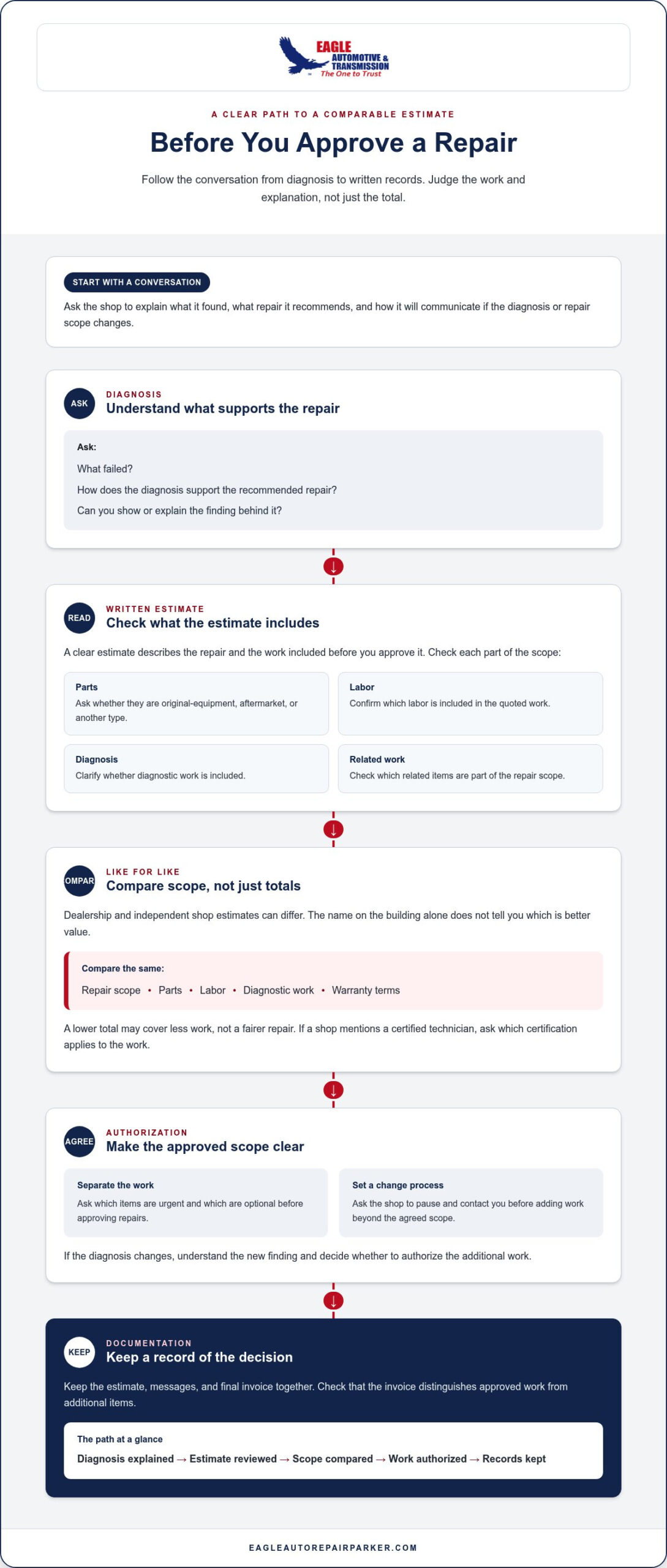
A clear estimate identifies the repair, parts, labor, and work included before you approve it. Ask how the shop will communicate if the diagnosis changes or additional work becomes necessary.
Dealership and Independent Mechanic Costs
Dealership and independent shop estimates can differ, but the name on the building alone doesn’t tell you which offers better value. Compare the same repair scope, parts, labor, diagnostic work, and warranty terms. For brake work, for example, check whether each estimate covers the same pads and related labor. A lower total may cover less work, not a fairer repair.
Ask whether the parts are original-equipment, aftermarket, or another type, and how that choice affects the estimate. If a shop mentions a certified technician, ask which certification applies to the work. Compare what each written estimate actually includes before deciding.
Repair Authorization and Surprise Charges
Don’t guess at Colorado-specific rules based on a shop’s estimate or a general explanation. Protect your decision with a written estimate, a clear record of what you approved, and documentation of any proposed change. Ask the shop to pause before adding work beyond the agreed scope. You can then understand the new diagnosis and decide whether to authorize the work.
Keep the estimate, messages, and final invoice together. Check that the invoice separates approved work from additional items. If a dispute arises, these records show what was discussed and authorized. Don’t rely on memory alone to resolve a disagreement.
Questions Before Approving Repairs
What should I ask a mechanic before approving repairs in Parker, CO? Ask what failed, how the diagnosis supports the recommended repair, and which items are urgent versus optional. Then ask what parts and labor the estimate includes, what warranty terms apply, and how the shop will handle newly discovered work.
- Can you show or explain the finding behind this repair?
- Does the estimate include parts, labor, diagnosis, and related work?
- Will you contact me before changing the repair scope?
- What warranty terms apply to the parts and labor?
Write down the answers before approving the work. A useful estimate makes the repair understandable, not merely itemized. If two shops propose different repairs for the same symptom, compare their diagnostic reasoning first. For engine concerns, ask which test or inspection supports the proposed fix. For brakes, clarify which components need attention and why. These details help you weigh the repair itself, not just the total at the bottom.
These amounts describe particular customer payments, not a universal rate or a guarantee of what another repair will cost.
Use examples as context only: the diagnosis, requested work, parts, and estimate details determine whether a quote is comparable.
Mechanic experience and customer reviews
Experience matters most when it matches the problem your vehicle presents. A mechanic who regularly handles transmission concerns may approach shifting symptoms differently from one focused on routine auto repair. Look for specific descriptions of diagnostics, the systems inspected, and how the recommended work relates to the reported symptom. Those details tell you more than a general claim of expertise.
Parker customer accounts describe William performing a pre-purchase inspection on a Cadillac CTS. Other examples include battery service on a Mazda CX-3 performed by Gerald and starter service on a Ford Expedition performed by Derek. These details give reviews useful context. A vehicle, repair type, and mechanic’s name can tell you more than a brief rating alone.
Read reviews for patterns in communication and workmanship. Does a reviewer describe receiving an explanation before approving repairs? Do they mention updates, diagnostic findings, or how the shop handled a change in the repair plan? One account describes one visit. Several detailed accounts can show whether clear explanations are consistent across different repairs.
What useful reviews can tell you
A useful review describes a specific situation, such as a no-start concern, brake inspection, or transmission symptom, and explains what happened. Check whether the mechanic performed diagnostics before recommending parts. Look for details about updates, explanations of findings, and how the work addressed the original concern. These details help you connect a mechanic’s experience to the repair your vehicle may need.
Separate evidence from conclusions. A review that names a repair and vehicle provides context, but it doesn’t diagnose another vehicle with similar symptoms. For example, one customer’s starter service on a Ford Expedition doesn’t identify the cause of another Expedition’s no-start condition. Different components can produce similar symptoms, so inspection and test results still matter.
Repair pricing depends on the vehicle, diagnosis, parts, labor, and work involved. A quote gives the exact figure for your case. Compare the diagnostic steps and repair scope, and use this guide to affordable auto repair to consider how diagnosis informs repair choices.
Before choosing a shop, look for reviews about systems related to your concern, then note what the mechanic inspected and explained. Bring a concise record of your symptoms, including when they occur and what changes them. For example, describe whether a transmission symptom appears during acceleration or braking. Clear details give diagnostics a focused starting point and help you assess whether the explanation fits your vehicle.
An Eagle Automotive customer reported that the shop completed a water-pump installation on the same day.
How can I get and compare written repair estimates in Colorado?
Start by describing the symptom and requesting a written estimate for the diagnosis and proposed repair. In Parker, one customer reported getting quotes from about five shops for a water-pump repair. This example shows how comparing estimates can reveal differences in scope, not just totals. Give each shop the same vehicle details and description so each response addresses the same concern.
Prepare the same information for each estimate
Before contacting shops, note your vehicle’s make, model, and symptoms. Include when the problem occurs, such as during startup, braking, or a turn. For a water-pump concern, describe what you’ve observed without declaring the component faulty. Ask whether the estimate covers diagnosis, the proposed repair, parts, labor, and related work. Consistent details make written responses easier to compare.
Request documentation that identifies the recommended work and explains what supports it. A useful estimate distinguishes the diagnosed repair from additional suggestions. If a shop recommends replacing a part, ask what inspection or test led to that recommendation. If diagnosis is still in progress, ask which diagnostic step comes next and whether it appears separately in the estimate.
Compare scope, not only the total
Put the estimates side by side and compare each line. Check whether both describe the same repair, parts, labor, diagnostic work, and related services. A water-pump estimate that includes different surrounding work may not be directly comparable to one limited to the pump. Ask each shop to clarify differences in writing before weighing the totals. Don’t assume two estimates cover identical work just because they name the same component.
- Diagnosis: What finding connects the symptom to the recommended repair?
- Parts: What type of part is included, and is the part identified?
- Labor: Which tasks does the labor description cover?
- Scope: Are related components or additional work included?
- Changes: How will the shop document and communicate a revised estimate?
Keep the written estimates and follow-up messages together. If one shop identifies a different cause, compare its explanation and diagnostic evidence instead of treating the lowest figure as automatically best. For example, ask whether the water-pump recommendation follows an inspection or simply repeats the initial symptom description. Clear reasoning helps you understand what each estimate proposes.
Before authorizing work, confirm that the chosen written estimate reflects your decision and the repair scope you accepted. Save a copy, and ask for a revised version if the proposed work changes. This record gives you a concrete reference for the repair and helps keep conversations focused on the vehicle, diagnosis, and agreed work.
What Colorado laws protect customers from unauthorized auto repairs or surprise charges?
For a repair in Colorado, keep a clear record of the work you approve and any later changes. Don’t treat a verbal discussion as a complete record of the repair scope. Ask for written details before work begins, then save the estimate, messages, and final invoice together. These steps help you compare what was proposed, authorized, and performed.
Make the approved scope clear
Before authorizing a repair, write down the specific concern and requested work. For example, if your vehicle needs a brake inspection, distinguish the inspection from replacing brake components. Ask the shop to identify the diagnosis, proposed work, parts, labor, and related services in its estimate. Keep your approval with that document, including any written limit you set.
If the shop finds another problem, ask for its findings and a revised estimate before deciding. A new recommendation is not approval. Record whether you accept or decline the added work. A message or updated document can help both sides track the decision and prevent confusion about what you authorized.
Review changes and the final invoice
Compare the completed invoice with the estimate and your recorded approval. Check the repair description, parts, labor, and any added work. If an item differs, ask for an explanation tied to the vehicle’s diagnosis. For instance, an extra component on the invoice should be connected to a finding and an approved change.
Keep the paperwork in order: original estimate, approval, updates, and final invoice. Note who discussed each change and when. If a disagreement arises, this sequence helps identify whether the issue concerns the diagnosis, scope, or charge. Avoid relying on memory alone, especially after several conversations about different repairs.
These documentation habits are practical safeguards, not a substitute for checking the exact Colorado legal requirements that apply to a dispute. Don’t assume a particular approval form or dollar threshold applies without a reliable legal source. Focus first on preserving records and requesting a written explanation for disputed work. A clear paper trail gives you specific facts to discuss instead of relying on recollection.
- Save the estimate before authorizing repairs.
- Keep written approval tied to the described work.
- Request a revised estimate before accepting added repairs.
- Compare the final invoice against the approved scope.
For example, if an estimate covers a water-pump repair but the invoice includes additional work, locate the message documenting the change. If no record explains it, ask the shop to clarify the finding, added scope, and authorization. Keep the response with your paperwork. This makes the conversation specific and helps you assess whether the invoice matches the work you approved.
Are dealership service departments more expensive than independent mechanics in Parker?
There’s no reliable rule that a dealership always costs more than an independent mechanic in Parker. Compare estimates for the same vehicle, diagnosis, and repair scope. A dealership and an independent shop may propose different parts or procedures, so compare each line rather than judging by shop type alone.
Start with the vehicle’s make and model, then ask both shops to explain the recommended repair. For example, if a warning light leads to an engine repair estimate, compare the diagnostic work performed and the components covered. A quote based only on replacing a part may not cover the same work as one that includes testing and a broader repair plan.
Compare what each estimate includes
Check parts, labor, diagnostic steps, and related work in each written estimate. Ask whether the parts are original-equipment or aftermarket, and whether both quotes include the same components. If one estimate includes additional repairs, ask what inspection finding supports them. This keeps the comparison focused on the work your vehicle needs, not assumptions about dealerships or independent mechanics.
Repair pricing depends on the vehicle, diagnosis, parts, labor, and scope. The exact figure for your case belongs in a written quote. For a brake concern, compare the components and labor each estimate covers. For an engine concern, check whether diagnostic testing appears in the quote and how it relates to the proposed repair. Different scopes can explain different totals.
Weigh expertise and convenience
A dealership may be a practical choice for work tied to a specific make, while an independent shop may handle a wider range of vehicle systems. The best fit depends on the repair, the technician’s relevant experience, and the clarity of the estimate. Ask how each diagnosis supports the proposed work, then compare the answer with the written scope.
Also consider how the repair process fits your needs. Ask about expected communication, how changes to the estimate are handled, and what warranty terms apply to the proposed work. Don’t assume a higher quote includes better coverage or a lower quote leaves out important work. Read the written terms and compare equivalent repairs.
Use a simple comparison: put each estimate side by side, mark differences in parts and labor, then ask about items that don’t match. If the diagnosis differs, compare the evidence and inspection steps before choosing. That’s a stronger basis for selecting a fair-price mechanic in Parker, CO than relying on a dealership label or a single total. A clear estimate should make the proposed repair understandable and define the scope you approve.
Eagle Automotive: Check Engine Light
Eagle Automotive can help when a check engine light appears and you need to find the cause. A warning light can point to different issues, so diagnosis matters before choosing a repair. If testing identifies an engine concern, Engine Repair & Service may be the next step. Transmission symptoms and brake concerns can also be evaluated and repaired.
Bring a clear description of what you noticed, such as when the light came on or whether the vehicle’s behavior changed. That context helps connect the warning to the diagnostic findings and repair recommendation.
For check engine light diagnosis or related engine repair, contact Eagle Automotive.
Take the Next Step With Confidence
A repair decision feels more manageable when you focus on what your vehicle is telling you now. If a warning light has appeared, a brake concern has changed how your car stops, or an engine problem is disrupting your drive, describe the symptoms clearly and start with the system involved. A fair-price mechanic in Parker, CO should make the next repair decision understandable, so you can move forward with a clear purpose.
Eagle Automotive offers Check Engine Light service, Engine Repair & Service, and Brake Repair for drivers facing those concerns. Bring the details you’ve noticed to start a focused discussion about your vehicle’s needs.
Contact Eagle Automotive today to discuss your repair needs. Take the next step with a clear head and keep your vehicle moving.
Frequently Asked Questions
What is a fair hourly labor rate for an auto mechanic in Parker, CO?
There isn’t one hourly rate that proves an auto repair estimate is fair in Parker. The total also depends on the vehicle, diagnosis, repair procedure, and parts involved, and the exact price for your case is provided after a quote request. Compare the estimated labor hours and described tasks, not just the shop’s hourly figure. For example, two quotes may list different labor because they cover different repair steps.
How can I check a Parker mechanic’s reviews, certifications, and warranty?
Read recent Parker reviews for specific examples of work performed, communication, and how concerns were handled. Look for repeated details across reviews rather than relying on a rating alone. For certifications, check the credential’s exact name, issuing organization, and whether it applies to the repair involved. Review warranty terms in writing, including what parts and labor they cover, how long coverage lasts, and any stated exclusions.