

Engine Overheating Repair in Parker for Radiator and Coolant Problems
A faulty radiator can make driving unsafe if it causes the engine to overheat. If the temperature gauge climbs, coolant leaks, or you notice a sweet smell under the hood, pull over somewhere safe and turn off the engine. Continuing to drive can turn a cooling problem into serious engine damage. Engine overheating repair in Parker starts with finding the cause before you get back on the road.
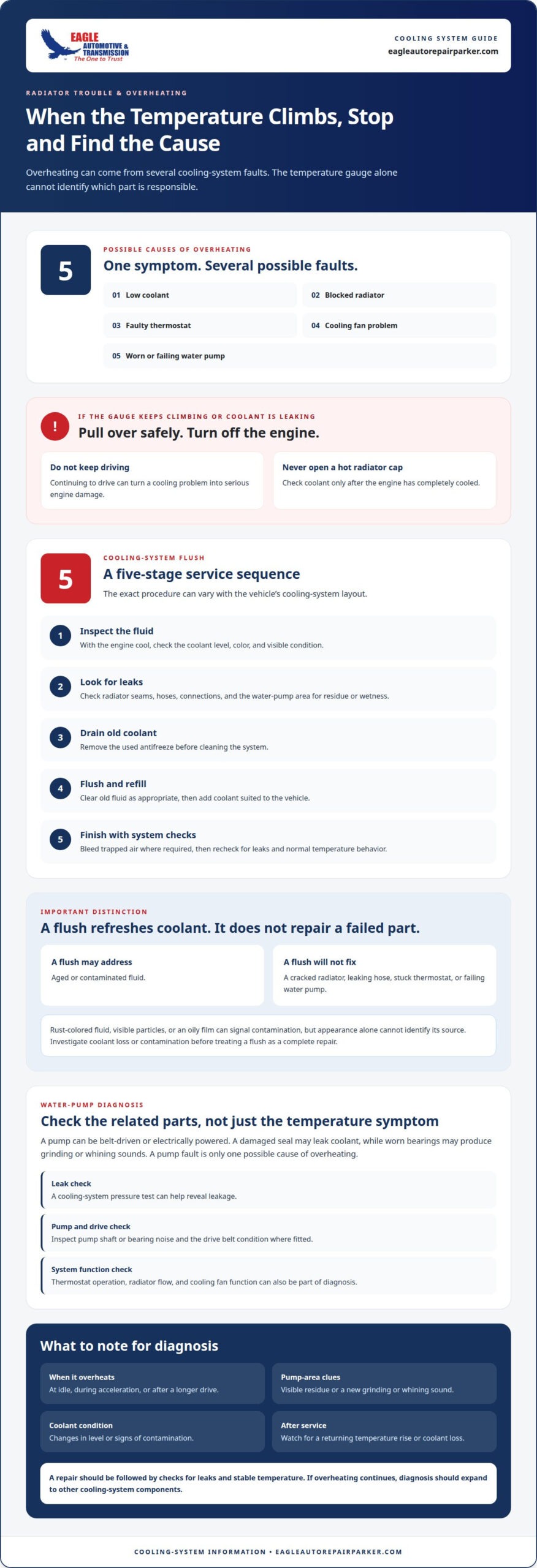
It’s understandable to hope the temperature will settle once traffic clears, but a radiator problem may not resolve on its own. Low coolant, a blocked radiator, a failing thermostat, a cooling fan problem, or a worn water pump can all interfere with temperature control. Never open the radiator cap while the engine is hot. Check the coolant only after the engine has completely cooled.
This guide explains when a faulty radiator makes driving unsafe, what other cooling system faults can cause overheating, and what to do if the temperature starts rising. You’ll also learn what diagnosis and repair may involve, so you can decide on a clear next step without guessing at the cause.
Key Takeaways
- If the temperature gauge keeps climbing or coolant is leaking, stop driving when it’s safe and shut off the engine to limit the risk of further damage.
- Overheating can stem from low coolant, a radiator problem, a faulty thermostat, cooling fan trouble, or water pump failure, so the symptom alone doesn’t identify the cause.
- Check coolant only after the engine is completely cool, and never open a hot radiator cap.
- A cooling system flush removes old antifreeze, but the system should be assessed for leaks or other faults that may be behind the overheating.
- Repair time depends on what diagnosis reveals and which components need attention; an inspection helps determine the next step.
Coolant contamination and system flushing
Engine coolant circulates through passages in the engine and carries heat to the radiator. Airflow across the radiator helps release that heat. Automotive antifreeze is made by mixing ethylene glycol with water, helping the fluid withstand both cold and warm temperatures. It also helps prevent corrosion and lubricates engine components, so coolant condition affects more than temperature control.
Coolant can become less effective as it ages or collects corrosion and debris. Rust-colored fluid, visible particles, or an oily film can signal contamination, though appearance alone can’t identify the source. A partially clogged radiator may restrict coolant flow and contribute to overheating, particularly during demanding driving around Parker. Checking coolant condition is worthwhile, but a technician should investigate signs of contamination.
Low coolant has a clear clue: the level has fallen. A significant drop usually points to a leak or an engine that has been running too hot. Common leak points include radiator seams, hose connections, and the water pump area. A cooling-system inspection can locate the loss before topping up is mistaken for a complete repair. Low coolant can trigger warning lights, engine damage, or shutdown.
A flush removes old antifreeze from the vehicle. It can address aged or contaminated fluid, but it won’t repair a cracked radiator, leaking hose, stuck thermostat, or failing pump. Investigate the cause of contamination and any coolant loss first. Otherwise, fresh fluid may enter a system that still has a leak or restricted passage.
A typical service follows a deliberate sequence, adjusted for the vehicle’s cooling-system layout:
- Inspect the fluid: Check its level, color, and visible condition while the engine is cool.
- Look for leaks: Examine radiator seams, hoses, connections, and the pump area for residue or wetness.
- Drain old coolant: Remove used antifreeze before cleaning the system.
- Flush and refill: Clear old fluid as appropriate, then add coolant suited to the vehicle.
- Finish the service: Bleed trapped air where required and recheck for leaks and normal temperature behavior.
Trapped air after refilling can interfere with circulation, so the final check matters. The exact filling and bleeding method varies with vehicle design. An annual cooling-system inspection can help catch coolant deterioration or early leaks before a long climb or other demanding drive reveals a weakness.
After a flush, note whether the coolant level changes or the temperature rises again during ordinary driving. Those clues can point to a remaining leak, restriction, or separate component fault. A flush refreshes coolant; it doesn’t prove every part of the system is working properly.
Water pump failure
The water pump circulates coolant through the engine and radiator. Its impeller, the internal part that moves fluid, must rotate to keep coolant flowing. If the impeller is damaged or the pump stops turning, heat may build inside the engine. A pump fault can cause overheating, but the temperature gauge can’t distinguish it from a thermostat, radiator, or fan problem.
Water pumps can be belt-driven or electrically powered, depending on vehicle design. In a belt-driven setup, a worn or slipping drive belt may affect pump operation. The pump also contains a seal that keeps coolant inside and bearings that support its rotating shaft. A damaged seal can allow coolant to escape, while worn bearings may create grinding or whining noises.
Location matters during inspection. Some pumps sit where a leak can leave coolant residue near the front of the engine; others are less visible beneath covers or surrounding components. A dry-looking area doesn’t rule out pump trouble, because leaks may appear only while the system is operating. A technician can inspect the pump area and drive components without treating one symptom as proof.
Diagnosis should compare the pump with other parts that affect circulation and heat transfer. A cooling-system pressure test can help reveal leakage. Inspection may also cover pump shaft or bearing noise, drive belt condition where fitted, thermostat operation, radiator flow, and cooling fan function. This helps avoid replacing a pump when another fault better explains the overheating.
Repair depends on the pump design and the failure found. A leaking seal or damaged bearing generally means the pump assembly needs attention. If the belt is worn or damaged, its condition matters because it may drive the pump. After repair, the cooling system may need refilling and bleeding according to the vehicle’s procedure, followed by checks for leaks and proper operation.
- Describe the pattern: Note whether overheating occurs at idle, during acceleration, or after a longer drive.
- Report pump-area clues: Mention visible residue or a new grinding or whining sound.
- Inspect related parts: Include the belt, thermostat, radiator, and fan in the diagnostic picture.
- Verify the repair: Check for leaks and stable temperature after the system is serviced.
A pump replacement should address the failed component and any related drive issue, not just the temperature symptom. If overheating continues after repair, diagnosis should expand to other cooling-system components. A complete assessment helps distinguish a pump fault from other problems affecting coolant movement or heat removal.
What to do when a car overheats
A rising temperature gauge, sweet smell under the hood, or visible fluid leak means the vehicle needs immediate attention. These signs don’t identify the failed part, but they do mean you shouldn’t treat the drive as routine. Watch for traffic, move to a safe stopping place, and switch off the engine.
- Signal and move out of traffic. Use a safe pull-off or parking area rather than stopping in a travel lane. Turn on the hazard lights once stopped, especially if other drivers may approach before you can move farther away.
- Shut down the engine. Don’t keep driving to test whether the gauge will settle. If steam appears or the gauge continues climbing, leave the engine off and avoid standing near the front of the vehicle.
- Let the engine cool completely. Don’t open the radiator cap or coolant reservoir while the system is hot. Hot coolant can cause burns, and the cooling system may remain pressurized after shutdown.
- Check only after cooling. Once the engine is completely cool, inspect the coolant level and look from a safe position for puddles or wet areas. Don’t reach near belts, fans, or other moving parts.
- Record what you observed. Note the gauge behavior, any warning light, smell, visible leak, and whether the problem began in traffic or on a climb.
A sweet smell or puddle can suggest coolant has escaped, but neither identifies the exact source. Radiator seams, hose connections, and the water pump area can all show signs of leakage. After the engine cools, note where fluid appeared and whether the level looked low. Those details give the inspection a useful starting point without guessing at the failed component.
Don’t restart simply because the gauge fell while parked. A cooling fault may show up again as the engine warms or the vehicle moves. If the warning returns, a leak is visible, or steam continues, leave the engine off and arrange an inspection rather than attempting another drive.
Keep passengers away from traffic and the hot engine compartment while waiting somewhere safe. If the car stopped on a narrow shoulder, prioritize distance from moving vehicles and follow local roadside safety practices. Don’t try to remove a hot cap or handle a leaking hose to make the vehicle drivable.
When describing the incident, give the technician a clear sequence: where you were, what the gauge did, whether a warning appeared, and what you noticed after stopping. For example, explain whether the temperature climbed gradually in traffic or rose during a climb. A precise timeline helps distinguish an intermittent symptom from an ongoing cooling problem.
Can I drive my car to a repair shop if it is overheating?
If the temperature gauge is rising, coolant is leaking, or steam is visible, don’t drive to the repair shop. Pull over safely, switch off the engine, and let it cool completely. Having the vehicle transported by a 24-hour towing and recovery service like dependabletowing.ca is far safer than driving, which can cause severe engine damage when coolant is low or circulation has stopped.
A brief gauge rise still deserves attention. A cooling fan fault may show up in slow traffic, while a restricted radiator or weak pump can cause trouble during a long climb on I-25. The gauge dropping after you stop doesn’t prove the fault has disappeared. If it climbs again after restarting, shut the engine off rather than pressing on.
Use these signs to decide whether driving is unsafe:
- Stop and don’t restart: Steam, a sharp temperature rise, repeated overheating, or coolant pouring from beneath the vehicle.
- Keep the engine off: A sweet smell, visible coolant residue, or a warning light combined with a rising gauge.
- Arrange transport: The gauge rises again, the coolant level is very low, or the source of a leak is unclear.
Do not open the radiator cap while the engine is hot. Hot coolant can cause burns, and the system may be pressurized. Check the coolant only after the engine is completely cool. A low reservoir reading can indicate a leak or an engine that has been running too hot, but it doesn’t identify the failed part.
Driving even a short distance can worsen damage if coolant is escaping or the engine cannot shed heat. A radiator leak, loose hose, thermostat problem, cooling fan fault, or water pump failure can all disrupt temperature control. The same gauge warning can have different causes, so adding coolant isn’t a reliable fix for a leak.
If the vehicle is safely parked and fully cool, note the gauge behavior, any warning lights, visible puddles, and when the problem started. For example, record whether it began in traffic or during a climb. These details help focus the inspection, but they don’t replace cooling-system testing.
In Parker, avoid restarting just to see whether the temperature stays down. If the gauge rises again, coolant is leaking, or steam appears, keep the engine off and arrange transport to a repair facility. Driving is only reasonable when the warning has stopped, the engine is cool, and there are no continuing signs of a cooling-system fault.
How long does an engine overheating repair take?
There isn’t one fixed repair time for an overheating engine. A leaking hose may need a different repair process than a failed water pump, restricted radiator, or damaged head gasket. The time depends on diagnosis, access to the faulty component, and whether overheating caused additional engine damage.
The first step is finding why the temperature rose. A visual inspection can reveal coolant residue, a loose hose, or damage around the radiator. Further checks may assess coolant loss, circulation, the thermostat, cooling fan, and water pump. If the initial findings don’t explain the symptoms, diagnosis may take longer than replacing an obviously damaged part.
Repair access also matters. A hose that’s easy to reach differs from a component buried behind other engine parts. The vehicle’s design and the location of the failure affect the work required. Replacing a radiator, for example, involves different steps than correcting a loose connection.
Overheating can complicate the repair. If the engine ran hot for an extended period, inspection may need to look beyond the cooling system. A technician may check for signs of head gasket damage or other engine problems before recommending repairs. This additional diagnosis helps distinguish the original fault from damage caused by continued overheating.
Parts availability and the repair plan also influence completion. A straightforward repair can move forward once its cause is identified and the required part is available. If testing reveals more than one fault, the work may require additional steps. Refilling and bleeding the cooling system, then checking its operation, are important parts of completing many cooling repairs.
To understand what affects the schedule, consider these stages:
- Diagnosis: Inspection and targeted tests identify the cause instead of relying on the temperature gauge alone.
- Repair access: Component location and vehicle design determine how much disassembly is needed.
- Repair scope: A single leak differs from a cooling fault accompanied by possible engine damage.
- Final checks: The system needs proper coolant circulation and stable temperature after repair.
When arranging engine overheating repair in Parker, describe when the gauge rose, whether coolant leaked, and whether the engine overheated more than once. Those details help guide the initial inspection. Ask about the diagnosis and proposed repair steps before work proceeds, especially if testing identifies additional damage.
A useful estimate comes after the cause and repair scope are clear. A radiator leak, water pump fault, and head gasket problem involve different work, so a time estimate made before diagnosis may not reflect the actual repair. If the temperature warning returns, avoid driving the vehicle and arrange an inspection.
Eagle Automotive: Check Engine Light
Eagle Automotive & Transmission in Parker can investigate an overheating engine through engine repair and diagnostics. The shop provides free computer diagnostics. If a warning light appears, the temperature rises repeatedly, or the engine runs poorly after overheating, diagnosis can help identify whether the issue involves the cooling system or engine damage.
Describe what happened before the temperature climbed, including any visible leak, unusual smell, or warning light. That information helps focus the inspection. If overheating may have affected the head gasket or other engine components, further engine repair may be needed after the cause is assessed.
Keep the engine off if it overheats again, and arrange an inspection rather than continuing to drive. Contact Eagle Automotive & Transmission in Parker to discuss your vehicle’s overheating symptoms and next steps.
Get a Clear Plan for Your Next Drive
Once your vehicle has overheated, the next step is more than getting it running again. Find out what caused the temperature problem and what the repair addresses. That gives you a clearer basis for deciding when to return to normal driving and what changes to watch for afterward.
For engine overheating repair in Parker, keep the conversation focused on the diagnosis, affected parts, and checks performed after repair. Ask how the findings explain your symptoms, especially if overheating happened more than once. Clear answers help you make informed decisions about your vehicle’s next steps.
Eagle Automotive can help with Check Engine Light concerns and Engine Repair & Service. Share what you noticed and discuss an inspection for your vehicle. Contact Eagle Automotive for help, and take the next step toward getting back on the road with a clearer plan.
Frequently Asked Questions
Can I Drive With A Faulty Radiator?
No, not if the radiator is leaking or the engine temperature is climbing. A small leak can worsen as the system heats and circulates coolant, leaving too little fluid to control engine temperature. Even if the gauge settles after stopping, the fault may return under load. Keep the vehicle parked if you see coolant pooling or the temperature warning reappears.
What Causes a Car to Overheat?
A car can overheat when heat cannot leave the engine or coolant cannot circulate properly. For example, a radiator restriction can reduce heat transfer, while a failed cooling fan can limit airflow when the vehicle is stationary. A thermostat that doesn’t open properly can also disrupt circulation. These faults can produce similar symptoms, so the temperature gauge alone can’t pinpoint the cause.
What Should You Do If Your Car Starts Overheating?
Get out of moving traffic safely, switch off the engine, and avoid opening the hood if steam is escaping. Once stopped, keep passengers away from traffic and the hot engine compartment. Don’t restart just to test the vehicle. After it cools completely, note warning lights, unusual smells, and any puddles, then share those observations during diagnosis.
What happens if there is not enough coolant in my vehicle?
Insufficient coolant can reduce the system’s ability to carry heat away from the engine. The temperature may rise, warning lights may appear, and severe overheating can damage engine components or cause the engine to shut off. If the reservoir is low after the engine cools, treat that as a clue. A leak or overheating may explain the drop, and refilling alone won’t identify the cause.
What causes a car engine to overheat?
Overheating happens when engine heat builds faster than the cooling system can remove it. A stuck thermostat can restrict coolant flow, while a damaged fan may fail to move enough air through the radiator at low speeds. A water pump fault can also interfere with circulation. The same symptom can have different causes, so identifying the failed component requires checking how the system behaves.
What should I do immediately if my engine overheats?
Prioritize a safe stop, then turn off the engine and keep clear of hot coolant. If you’re on a busy road, stay alert to traffic and avoid standing beside the vehicle in an exposed lane. Don’t remove a radiator cap while the engine is hot. Once the engine is completely cool, record what the gauge showed and whether a warning light appeared.
How do mechanics diagnose an overheating engine?
Mechanics combine the driver’s observations with inspection and system tests. They may look for coolant residue, inspect hoses and radiator connections, and check whether the fan operates. A pressure test can help reveal leaks that aren’t obvious while parked. They can then compare those findings with thermostat, pump, or circulation concerns before deciding which repair addresses the cause.