

Engine Knocking Noise Diagnosis in Parker: Causes and Clues
A sharp metallic ping under acceleration deserves attention, but it does not identify a specific fault. An engine knocking noise diagnosis in Parker starts by relating the sound to when it occurs and what the engine is doing. The U.S. Environmental Protection Agency describes engine knock as autoignition of part of the fuel-air mixture ahead of the normal flame front.
It’s natural to wonder whether the noise comes from fuel, oil, or a worn component. When it happens, its pitch, and how it responds to engine load offer useful clues. Inspection and testing help distinguish possible causes, while guessing from one symptom can lead to the wrong repair.
This guide explains how combustion-chamber deposits and hot spots may contribute to knocking, how fuel octane relates to premature ignition, and why low oil can affect lubrication. It also covers diagnostic checks, what information to note, and why a persistent knock deserves prompt attention. You’ll be better prepared to describe the symptom and understand how inspection findings guide the next step.
Key Takeaways
- Note when the knock happens, such as during acceleration or at idle, because the conditions can help narrow down its cause.
- Carbon deposits can create combustion-chamber hot spots that ignite fuel too soon.
- Fuel octane, spark plug condition, ignition timing, and fuel pressure can all affect how smoothly the engine’s fuel-air mixture burns.
- A proper diagnosis may include checking the plugs and timing, testing fuel pressure, inspecting for carbon buildup, and verifying oil level and lubrication.
- Low oil can impair lubrication and contribute to internal knocking, so check the oil level and take persistent engine noise seriously.
Carbon buildup and hot spots
Carbon deposits can form on surfaces inside an engine’s combustion chamber, including piston crowns, cylinder heads, and areas around valves. As deposits build up, they can affect how heat moves through the chamber. A deposit may become a hot spot and potentially contribute to premature ignition.
During normal combustion, the spark plug ignites the fuel-air mixture in a controlled sequence. A hot spot can ignite part of that mixture too soon. The resulting pressure waves may sound like metallic pinging, especially when the engine is under load. Carbon buildup is one possible cause, not proof of the diagnosis.
Pay attention to the conditions around the sound. A ping during acceleration or while climbing a hill directs attention toward combustion under load. A noise that continues at idle, changes with engine speed, or sounds more like a deep clunk may have another cause. Note when it starts, how long it lasts, and whether temperature or load changes it.
Deposits can affect engine operation in other ways, too. Uneven buildup, for example, may interfere with airflow or change the space available for combustion. A technician can inspect the spark plugs for deposits or signs of unusual heat, assess the chamber, and compare findings with the vehicle’s symptoms. A scan tool may reveal related fault information, but it cannot identify every mechanical cause on its own.
Useful diagnostic clues include:
- A metallic ping that occurs mainly under acceleration.
- Visible deposits on inspected spark plugs or chamber surfaces.
- Changes in engine response alongside the noise.
- A knock that remains after fuel and ignition concerns are addressed.
These clues help guide testing, but inspection is needed to determine whether carbon is responsible. Other issues, including ignition timing or fuel delivery, can produce similar symptoms. Replacing parts based on sound alone can miss the actual cause.
Cleaning is not a one-size-fits-all fix. The right approach depends on where deposits are located and what inspection reveals. A technician may assess the combustion chamber, ignition system, and fuel delivery before recommending cleaning or another repair. If a hot spot has contributed to engine damage, removing deposits alone may not address the damaged parts.
For Colorado auto repairs, don’t assume one warranty period applies to every job. Review the written terms for the specific repair, and keep the estimate, authorization, final invoice, and warranty documents. They record the approved work and stated coverage if questions arise.
Prompt diagnosis matters because continued knocking can damage pistons and bearings or overheat engine components. If the noise persists or grows louder, don’t treat an additive or fuel change as a confirmed repair. Inspection can distinguish chamber deposits from other engine problems and identify a repair suited to the evidence.
What Causes Engine Knocking?
A knock can indicate combustion trouble or internal mechanical wear. Its sound and the conditions in which it occurs can narrow the possibilities, but neither identifies the failed part on its own.
Common Causes of Engine Knocking
Engine knocking is a noise associated with abnormal combustion or mechanical contact inside the engine. Worn spark plugs can disrupt combustion, and incorrect ignition timing can also contribute. The cause matters: replacing a plug won’t correct a separate internal problem. Inspection should connect the suspected cause with evidence rather than treating every knock alike.
Other clues can help narrow the possibilities. A knock under load suggests a different line of investigation from a noise heard while stationary. Changes in engine response, warning lights, and recent maintenance provide useful context, but none alone proves which component needs repair.
Identifying Different Types of Knocks
Describe the sound by its pitch, rhythm, and timing. A sharp ping during acceleration differs from a steady tick or a heavier clunk. Note whether it starts at idle, during startup, or only when the engine works harder. These details help focus testing, but inspection is still needed to confirm the diagnosis.
Keep a brief symptom log instead of repeatedly revving the engine. Note whether the sound changes as the vehicle warms up, during acceleration, or after starting. A recording may capture an intermittent noise, and notes about warning lights and engine response can provide additional context.
Oil, Fuel, and Overheating Effects
Low oil and unsuitable low-octane fuel can contribute to knocking through different mechanisms. Overheating may occur alongside engine trouble, but the noise alone does not show that overheating caused it. Treat a temperature warning or visible overheating as a separate urgent symptom and report it during inspection.
Is it safe to drive with a knock? Driving with a knocking engine isn’t recommended because continued operation can quickly cause internal damage. If the sound persists or worsens, stop safely rather than testing the engine with harder acceleration.
What repairs address engine knocking? The repair depends on the confirmed cause, which may involve ignition components, fuel delivery, or internal engine work. If inspection finds severe internal damage, repair or replacement may be considered. That decision depends on the damage found, not the noise alone.
One symptom can have several explanations, so diagnosis should connect the sound, operating conditions, and test results. Describe what you hear accurately, and avoid authorizing parts based only on a guess. The right repair starts with identifying what the evidence supports.
Insufficient fuel pressure can make the air-fuel mixture lean and may contribute to engine knocking. Fuel pressure is therefore one possible part of the investigation, not proof that the fuel system is responsible. Consider the symptom alongside when the noise occurs and what inspection finds. Don’t assume a lean mixture explains every knock; the sound alone cannot establish low pressure. Testing should confirm whether fuel pressure is low before a repair is chosen.
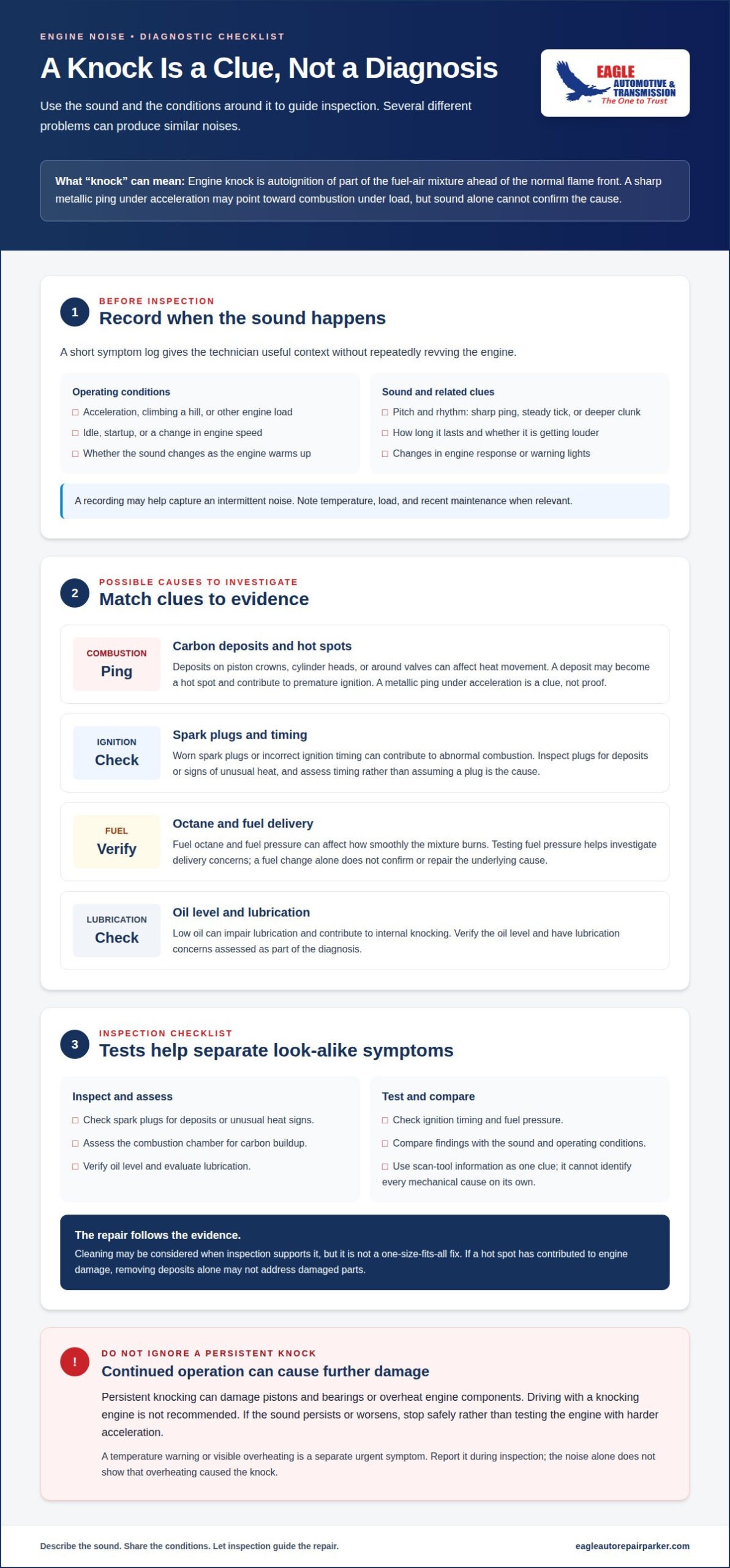
Diagnosing engine noises
A useful diagnosis connects the sound with test results rather than guesswork. Checks may include spark plugs, ignition timing, fuel pressure, carbon deposits, oil level, and lubrication. The sequence depends on when the noise occurs and what other symptoms appear.
How long does engine knock diagnosis and repair usually take? There’s no single timeline. Testing may be straightforward, while an intermittent noise or suspected internal damage can call for deeper inspection. Repair time depends on the confirmed cause, the work involved, and parts availability.
Start by documenting the conditions around the knock. Note whether it happens during startup, at idle, during acceleration, or while climbing. Record whether the engine is cold or warm and whether the sound changes with engine speed. A short recording can help describe intermittent noise, but it cannot replace inspection.
For engine knocking noise diagnosis in Parker, technicians compare the reported symptom with engine operation. A scan tool can reveal stored trouble codes or operating data. Those results guide further checks, but a code alone doesn’t prove a particular part caused the knock. Physical inspection and testing connect the evidence to the sound.
Testing can follow a practical sequence:
- Verify the oil level and inspect for signs of poor lubrication.
- Inspect spark plugs for wear, deposits, or signs of unusual combustion.
- Check ignition timing and compare it with the engine’s operating symptoms.
- Test fuel pressure for delivery problems that could create a lean mixture.
- Assess carbon buildup when findings point toward chamber deposits.
Each result helps determine what to check next. Worn plugs, for example, may explain rough combustion, while plugs in good condition shift attention elsewhere. Low fuel pressure can cause hesitation, rough idling, or power loss alongside a knock. A clean scan report doesn’t rule out mechanical wear or lubrication trouble.
A knock can be mistaken for other engine noises. A light metallic ping under acceleration differs from a steady tick or deep clunk. The sound’s location, rhythm, and response to engine speed help distinguish possible sources. Avoid repeatedly revving the engine to reproduce a severe noise.
Driving with a persistent engine knock isn’t recommended because continued operation can quickly cause internal damage. If the knock grows louder, an oil pressure warning appears, or the engine overheats, stop safely and arrange an inspection. Continued operation can damage pistons and bearings or overheat engine components.
Diagnosis and repair are separate stages. Testing identifies the likely cause; repair work addresses the confirmed fault. A spark plug or fuel delivery issue calls for a different response than internal damage. Keep notes about when the sound occurs, recent fuel changes, oil checks, and warning lights. Those details help focus the inspection and avoid replacing parts based only on sound.
A careful engine knocking noise diagnosis in Parker combines these observations with test results. The evidence helps determine the next repair step without treating one symptom as the whole answer.
Fuel octane and premature combustion
Fuel octane describes resistance to premature ignition under pressure. If gasoline has a lower octane rating than an engine requires, combustion may begin too early. The resulting pressure can create a sharp ping, especially during acceleration or while climbing a grade. The sound is a clue, not proof that fuel caused the knock.
The U.S. Environmental Protection Agency describes engine knock as autoignition of part of the fuel-air mixture ahead of the normal flame front. In ordinary combustion, the spark plug starts a controlled burn. With knock, part of the remaining mixture ignites too soon, producing pressure waves that may be heard as metallic pinging.
Check the vehicle’s fuel requirements before changing grades. The owner’s manual or fuel door label identifies the specified octane. If the wrong grade went into the tank, note the fuel type and when the sound began. Don’t assume a higher grade will solve a knock caused by ignition timing, carbon deposits, or mechanical wear.
Acceleration provides useful context. A ping that starts as the engine works harder may point to a combustion-related problem. If the noise continues at idle, sounds like a heavy clunk, or remains after using the specified fuel, consider other causes. Record the driving conditions, engine temperature, and any recent fuel change for diagnosis.
- Check the vehicle’s specified fuel grade in its manual or fuel door label.
- Write down the fuel grade used before the noise appeared.
- Notice whether the ping occurs during acceleration, uphill driving, or steady cruising.
- Report any hesitation, rough idle, or loss of power with the sound.
Fuel octane is only one part of the combustion picture. Worn spark plugs can disrupt ignition, while incorrect timing can change when the mixture burns. Low fuel pressure can also create a lean mixture and contribute to knocking. These faults require testing; switching gasoline grades cannot repair a faulty ignition or fuel system.
If a vehicle starts pinging after a fuel change, for example, the grade and timing of that change are relevant clues. If the ping continues with the specified fuel, the investigation should move beyond fuel grade. Spark plug condition, ignition timing, and fuel pressure can help distinguish an octane mismatch from another fault.
Don’t keep accelerating to reproduce a persistent metallic knock. Continued knocking can damage pistons and bearings or overheat engine components. A technician can compare the reported conditions with ignition and fuel-system test results. That evidence helps determine whether fuel choice contributed or another repair is needed.
Low-octane fuel can ignite too early and cause premature combustion in a car engine. Knocking during acceleration can also result from incorrect fuel combustion or engine timing issues. These possibilities can produce similar symptoms, so the sound and driving conditions alone don’t establish the cause.
Engine knocking can occur when fuel burns unevenly rather than in a smooth, controlled way, producing a sharp tapping or metallic ping. A ping during acceleration is consistent with a combustion problem, but it doesn’t distinguish a fuel-grade mismatch from an engine timing issue by itself.
Low oil and poor lubrication
Engine oil forms a protective film between moving metal parts. If the oil level falls too low, that film may not protect components adequately. Parts can contact or struggle against one another, creating knocking or clunking sounds. The noise may change with engine speed, but sound alone cannot confirm an oil problem.
Low oil can have several causes, including a leak or oil consumption inside the engine. Look for fresh spots beneath the vehicle, oily residue near the engine, or a low dipstick reading. A leak may be hard to see if oil collects on an engine cover or undertray. A low reading is a clue, not a diagnosis of why the level dropped.
Check the oil level safely. Park on level ground, switch off the engine, and follow the owner’s manual for the dipstick procedure. Wipe the dipstick, insert it fully, then check the level again. If it’s below the marked range, use only the oil specified for the vehicle. Don’t overfill, as excess oil can also cause operating problems.
Adding oil may restore the level, but it won’t repair a leak or explain ongoing oil consumption. If the dipstick remains low after topping up, or the level drops again, arrange an inspection. A warning light or persistent knock deserves prompt attention. Avoid repeatedly starting or revving an engine making a severe noise.
- Check the dipstick reading using the vehicle manual’s procedure.
- Look for oil spots, residue, or a recurring drop in level.
- Note whether the knock changes at startup, idle, or acceleration.
- Record any oil warning light alongside the sound.
Oil level is only one part of lubrication. The oil pump circulates oil through passages to components such as bearings and valve gear. A circulation problem can leave parts without adequate lubrication even when the dipstick reading looks normal. Internal wear may also create noise that remains after the oil level is corrected.
Diagnosis may include checking the oil level and condition, inspecting for leaks, and assessing lubrication operation. The results help distinguish a simple shortage from a circulation fault or internal damage. For example, a low dipstick reading with visible leakage calls for a different next check than a normal reading with a continuing deep knock.
Don’t treat thicker oil or an additive as a confirmed fix. The right response depends on the vehicle’s specified oil and the cause of the noise. If the engine knocks after the oil level is corrected, have the lubrication system and internal components inspected before continuing to drive. Low oil can reduce lubrication, and ongoing knocking can damage engine parts.
Eagle Automotive: Check Engine Light
Eagle Automotive can investigate a knocking engine and related warning lights. Its Check Engine Light and Engine Repair & Service offerings fit when a scan shows a fault or the noise continues after basic checks. A warning code can guide testing, but it doesn’t identify every mechanical cause by itself.
Share when the knock starts, whether it changes with acceleration, and any recent oil or fuel changes. Those details help connect the symptom with inspection findings. If the engine makes a persistent knock, avoid driving it until the cause is assessed, since continued operation can worsen internal damage.
For a check engine light or ongoing engine noise, contact Eagle Automotive or visit Eagle Automotive online.
Choose a Clear Next Step
A new or persistent engine knock calls for an evidence-based decision, not guesswork. Note when it occurs and what changed before it began. That record can help focus the inspection on the conditions you’ve noticed.
For engine knocking noise diagnosis in Parker, Eagle Automotive & Transmission offers Check Engine Light and Engine Repair & Service to investigate engine concerns. The shop provides free computer diagnostics. Brake Repair is available for separate brake issues. If the knock continues, arrange an assessment before putting the engine under more strain.
Contact Eagle Automotive for help and take the next step toward understanding the noise. A clear diagnosis gives you a practical path forward.
Frequently Asked Questions
How do you diagnose engine knocking step by step?
A technician diagnoses engine knocking by documenting the symptom, checking electronic data, and testing likely causes before recommending repairs.
- Note when the sound occurs and whether warning lights appear.
- Share recent service, fuel changes, and when the noise began.
- Scan the vehicle for fault codes and relevant operating data.
- Compare those results with inspection and targeted tests.
- Use the combined evidence to identify the repair path.
Avoid revving the engine just to recreate a severe knock. Keep any scan results or service records available for comparison.