

Engine Diagnostic Service in Parker, CO for Check Engine Lights
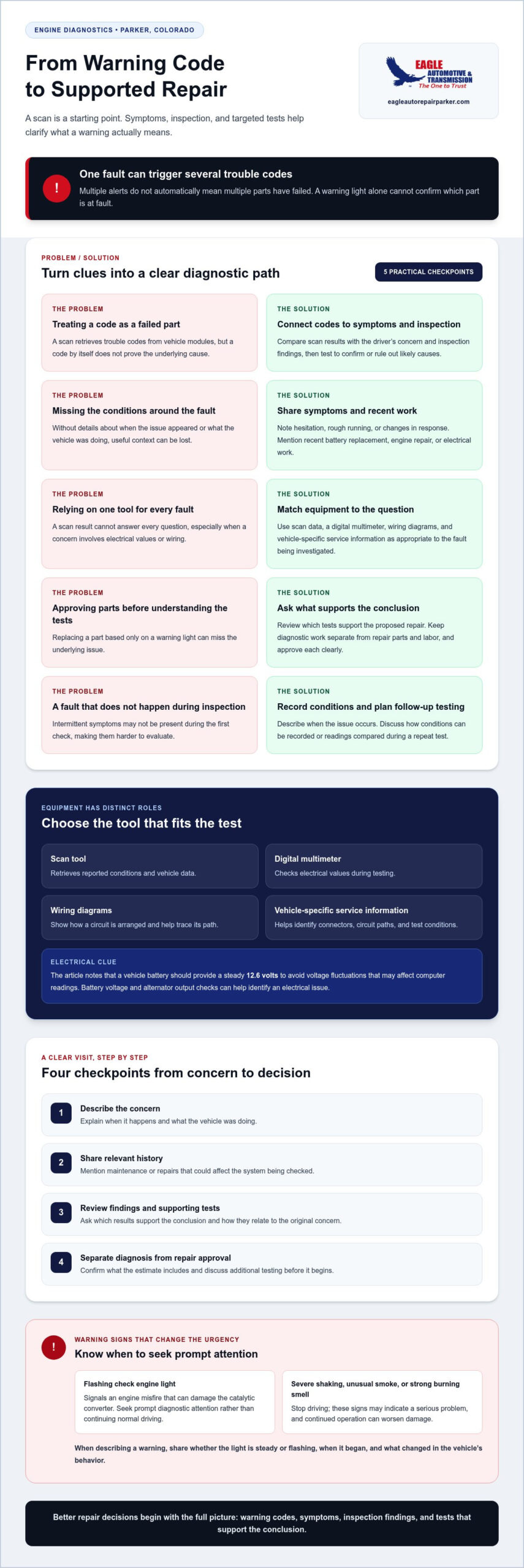
One underlying fault can trigger several trouble codes, so a cluster of alerts doesn’t always mean several parts have failed. An engine diagnostic service in Parker, Colorado, helps connect those codes with the vehicle’s symptoms and inspection findings. Even if your car seems to run normally, a warning light can be the first visible sign of a problem worth investigating.
A scan is a starting point, not a final diagnosis. The important question is how the scan results relate to the symptoms you’ve noticed and what testing can clarify the cause. This guide explains what a diagnostic visit can involve, how technicians use equipment and recorded vehicle data, and what to ask before approving testing or repairs. You’ll also learn why local driving conditions may matter when interpreting engine behavior in Parker. The goal is practical: understand what a warning can tell you, what it cannot prove by itself, and how to make the next repair decision with clearer information instead of guessing.
Key Takeaways
- A warning light can appear even when the vehicle seems to run normally, so pay attention to the light and any changes in how the car drives.
- Common causes include a loose gas cap, a failing mass air flow sensor, or damaged spark plugs or wires.
- A diagnostic scan retrieves trouble codes from vehicle modules, but inspection helps determine which underlying issue is responsible.
- Freeze-frame data can show conditions such as engine temperature and vehicle speed when a fault occurred.
- In Parker, thinner air can affect the engine’s fuel-to-air ratio, making vehicle-specific testing important.
My car feels fine, but should I still get a diagnostic if a light is on?
Yes. A steady check engine light indicates a problem that shouldn’t be ignored, even when the car feels normal. An engine diagnostic service in Parker, Colorado, can help identify which system needs attention. The light alone doesn’t confirm that a particular part has failed, so avoid replacing parts based only on its appearance.
Several different faults can turn on the check engine light. A loose gas cap is one possible cause. A failing mass air flow sensor can affect how the engine measures incoming air. Damaged spark plugs or wires can cause ignition trouble, sometimes before you notice a change in how the vehicle drives.
- Check that the gas cap is secure, then note whether the light remains on.
- Record any hesitation, rough running, or change in engine response.
- Tell the mechanic when the warning appeared and what the car was doing.
Battery and charging-system checks are also relevant. A failing battery or weak alternator can trigger warning lights in modern vehicles. A vehicle battery should provide a steady 12.6 volts to avoid voltage fluctuations that may affect vehicle-computer readings. Testing battery voltage and alternator output can help identify an electrical issue before engine parts are considered.
Check Engine Diagnostic Pricing
Diagnostic pricing depends on the vehicle and the testing needed to investigate its symptoms. The price is provided after a quote request. Ask whether the quoted work covers code retrieval only, or also includes inspection and follow-up testing on related circuits or components.
Before authorizing an engine diagnostic service in Parker, Colorado, ask what the estimate includes, which additional tests may be needed, and how the findings will be explained. Confirm whether any repair requires separate approval. A clear estimate distinguishes diagnostic work from repair parts and labor, so you know what you’re authorizing.
Warning Signs Requiring Immediate Diagnostics
A flashing check engine light signals an engine misfire, which can damage the catalytic converter. Seek prompt diagnostic attention rather than continuing normal driving. A steady light also deserves investigation, even if the engine still seems to run smoothly.
Stop driving if the warning appears with severe shaking, unusual smoke, or a strong burning smell. These signs may indicate a serious problem, and continued operation can worsen damage. Tell the technician whether the light is steady or flashing, when it began, and what changed in the vehicle’s behavior.
For an engine diagnostic service in Parker, Colorado, share any symptoms and ask which test supports the suspected cause. Eagle Automotive provides free computer diagnostics, helping connect repair decisions to the vehicle’s findings rather than assumptions based on a warning light alone.
Diagnostic equipment and inspection process
A useful diagnostic visit follows a clear path from the driver’s concern to documented test findings. The equipment supports the work, but the inspection plan determines which checks are relevant and what the results mean.
Diagnostic Equipment
Diagnostic equipment can include a scan tool, a digital multimeter, wiring diagrams, and vehicle-specific service information. Each serves a different purpose: scan data identifies reported conditions, a meter checks electrical values, and a wiring diagram shows how a circuit is arranged. The technician selects tools based on the vehicle and the question being investigated, rather than relying on one device for every fault.
Vehicle-specific information also helps identify connector locations, circuit paths, and the conditions needed for a test. A meter reading means little without knowing where it was taken and what value the circuit should produce. Ask which equipment or reference information supports the test, especially if the diagnosis involves wiring that is difficult to see.
Inspection Process and Service Inclusions
The process should begin with the complaint, not a parts recommendation. The technician records the conditions surrounding the issue, reviews relevant system information, and selects tests that can confirm or rule out likely causes. Findings are then compared with the original concern, so a recommendation addresses the fault rather than simply replacing a part associated with it.
A focused visit can follow this practical sequence:
- Describe the concern, including when it occurs and what the vehicle was doing.
- Provide maintenance or repair details that could affect the system being checked.
- Review the diagnostic findings and ask which tests support the conclusion.
- Separate diagnostic work from any proposed repair and approve work clearly.
Useful history matters. If a symptom started after a battery replacement, engine repair, or recent electrical work, mention that before testing. It does not prove the cause, but it can help the technician consider disturbed connectors, changed settings, or a condition that appeared after the work.
Ask how the shop will handle an issue that cannot be reproduced during the first inspection. Intermittent faults may require recording the conditions when they occur or comparing readings during a repeat test. Agree on what the initial diagnostic covers and how additional testing will be discussed before it begins.
Before approving parts, ask to see how the test findings support the proposed repair and what that repair includes. A clear estimate separates the confirmed work from any additional concerns. For drivers seeking professional care during an engine diagnostic service Parker Colorado, Eagle Automotive provides thorough inspections and transparent repair options.
Keep the written findings with your vehicle records. If the same concern returns, the technician can compare earlier test results with the new symptoms instead of starting without that history. That record also helps you understand whether the current recommendation addresses the original fault or a separate issue.
Professional diagnostic scans and trouble codes
A professional scan retrieves trouble codes from a vehicle’s various modules. These codes help identify which system reported a fault, but they don’t automatically identify the failed part. The useful next step is matching each code with the vehicle’s symptoms and test results.
One problem can produce several codes because vehicle systems share information. For example, an engine fault may affect readings that another module monitors, creating related alerts. A technician looks for connections between codes rather than treating every entry as a separate repair. A cluster of related codes can point toward one underlying issue.
Scan results may include current faults and records of conditions detected earlier. A technician considers whether a code returns after clearing or appears during a particular operating condition. That distinction helps separate an ongoing fault from an intermittent one. The vehicle’s behavior, such as hesitation during acceleration, adds context to the scan.
During interpretation, the technician can compare a code with live sensor readings and inspect the connected circuit. For example, a reading that doesn’t match expected engine behavior may lead to checks of wiring, connectors, or the related sensor. The scan guides those tests, but it doesn’t replace them.
A scan report can include more than one code. Grouping results by system and checking which codes appeared together makes the findings easier to understand. Ask for the code descriptions and the reasoning behind any recommended test. A clear explanation should connect each result to an observation or measurement.
- One code: Identify the system or condition it references, then test the related circuit or component.
- Several related codes: Look for shared wiring, power, or sensor information that could link the reports.
- A code that returns: Compare the recurring fault with the symptoms present during operation.
- A code without a matching symptom: Check the system and its connections before choosing a repair.
Before approving work, ask which test supports the diagnosis and what result it found. For example, if a sensor is suspected, ask whether its signal or circuit was checked. This keeps the decision tied to evidence instead of a code description alone.
Keep a copy of scan findings and note whether the warning light returns after testing or repair. If the same trouble code reappears, that record gives the next inspection a clear starting point. The code, symptoms, and test results together provide a more useful picture than any single scan entry.
Advanced diagnostic tools
Some engine faults appear only under specific operating conditions, so a stored code may not tell the whole story. Advanced scan functions help technicians examine recorded events and changing sensor readings instead of relying on one snapshot.
Freeze-frame data captures conditions when a fault occurred, including engine temperature and vehicle speed. Those details can show whether a fault appeared during a cold start, while idling, or as the vehicle accelerated. This context gives the technician a useful starting point for reproducing the problem.
Live data displays changing information as the engine runs. A technician can watch readings from related sensors and compare them with the vehicle’s operating behavior. If a warning occurs during acceleration, the technician can observe relevant data under that condition instead of relying only on what the car reported earlier.
Graphing scan data can make changes easier to spot. A sudden drop, delayed response, or inconsistent pattern may help narrow the investigation to a circuit or component. The graph still needs interpretation: a reading can be affected by wiring, a connector, or another system, not just the sensor reporting it.
An automotive oscilloscope can display electrical signals over time. This helps reveal a signal that cuts out briefly, something a basic code reader may not show. For instance, a technician might compare a sensor’s signal during normal operation with its signal when the engine stumbles.
Some scan tools also support bidirectional controls. These functions let a technician command certain vehicle components to operate, then observe the response. A controlled test can help distinguish a component that responds correctly from a fault elsewhere in its wiring or control path.
Advanced tools are most useful when the technician has a clear test question. Before testing, the technician should connect the symptom to a system, choose relevant data, and decide what result would support or rule out a cause. A tool reading without that plan can create more guesses instead of clarity.
- Freeze-frame data: Compare engine temperature and vehicle speed recorded during the fault.
- Live data: Watch relevant sensor readings while reproducing a symptom.
- Graphing: Look for abrupt changes or signal patterns that match the complaint.
- Oscilloscope testing: Examine electrical signals that may drop out intermittently.
- Bidirectional controls: Command a supported component and observe its response.
Ask which data or test result supports the diagnosis and how it relates to the reported symptom. For example, if hesitation occurs only under acceleration, the findings should connect to that condition. A clear explanation links the recorded event, the test, and the recommended next step.
Engine diagnostics in Parker, Colorado
Parker’s elevation and changing temperatures can shape how an engine runs and how its components hold up. Local diagnostics should consider the vehicle’s symptoms, recorded data, and the conditions surrounding the fault, not just the warning light.
Dealerships generally focus on their vehicle makes, while independent shops may service multiple makes and models. Compare the diagnostic process, access to vehicle-specific information, and explanation of test results rather than assuming one option always diagnoses better. Eagle Automotive serves all makes and models in Parker.
Same-day or walk-in availability varies with a shop’s schedule, workload, and the tests a vehicle needs. Call before driving over and describe the warning light, symptoms, and vehicle make and model to help staff assess the visit.
When considering diagnostic service in Parker, read business-profile reviews for specific details about communication, testing, and repair explanations. Review repair warranty terms in writing before authorizing work; diagnostic testing and repair coverage are separate questions.
Parker’s elevation means thinner air, which affects an engine’s fuel-to-air ratio. It’s useful to consider how the engine runs under the conditions where the warning appeared. A code should still be matched with inspection and testing rather than blamed on elevation alone.
Rapid temperature changes in Parker can make plastic connectors and sensors brittle, increasing the chance of premature failure. A visual check of connectors and wiring can reveal cracks, loose fittings, or damaged insulation. If the fault appears intermittently, note whether it follows a cold start, a temperature change, or a particular driving condition.
Give the technician a clear description of the symptoms in Parker. “The light appears after a cold start” offers a more useful lead than “the car acts strange.” Include whether the engine idles smoothly, hesitates, or loses power, and whether the warning stays on or flashes.
For a useful comparison between shops, consider these points:
- Testing: Does the process connect scan findings with inspection and component checks?
- Explanation: Can the shop describe what a code means and what evidence supports the diagnosis?
- Written terms: Are diagnostic charges and any repair warranty terms explained before approval?
- Local context: Does the inspection account for the reported conditions around the fault?
Ask for the test findings before approving a repair. A clear diagnosis should identify the suspected system, the checks performed, and how those results relate to the symptoms. That gives you a practical basis for deciding what work to authorize.
Eagle Automotive: Check Engine Light
Eagle Automotive offers check engine light service for drivers facing a warning, whether the vehicle feels normal or shows changes in performance. The shop provides free computer diagnostics. If testing identifies an engine concern, its Engine Repair & Service offers a next step for addressing the underlying problem.
Bring details that help explain the issue, such as when the light appeared, whether it flashes, and any changes in how the engine runs. Share previous scan results if available, and ask how the diagnostic findings connect to the recommended repair. Clear information helps keep the discussion focused on your vehicle’s symptoms and test results.
For a check engine light or engine concern, contact Eagle Automotive to discuss the next step.
Make Your Next Repair Decision With Clear Information
A warning light doesn’t have to leave you guessing about what to do next. Use the diagnostic findings to understand what needs attention, what the evidence supports, and which repair decisions can wait. An engine diagnostic service in Parker, Colorado, is a practical starting point for a clear conversation about your vehicle, not a reason to approve work without understanding it.
Before your appointment, keep any scan report and note changes in how the car behaves. Ask the technician to explain the connection between the test results and the proposed work. Then decide on repairs with the findings in front of you and your questions answered.
If a warning light is on or an engine concern persists, take the next step with contact Eagle Automotive. A clear discussion can help you move forward with confidence and make an informed plan for your vehicle.
Frequently Asked Questions
Can one problem trigger several trouble codes at once?
Yes. A single fault can affect connected systems and lead to several related codes. For example, one electrical or signal problem may cause multiple modules to report unusual information. Look for codes that appear together and ask which one best matches the vehicle’s symptoms. This helps distinguish a primary fault from secondary alerts that may clear after the underlying issue is repaired.
What is a Professional Car Diagnostic Service?
A professional car diagnostic service combines a vehicle scan with targeted inspection and testing. The technician gathers the driver’s symptom details, reviews the scan results, and checks the systems those results point toward. For example, a complaint about hesitation can guide testing toward engine operation under the conditions where it occurs. The outcome should explain the findings and the next repair decision, not just provide code numbers.
What kinds of problems can engine diagnostics uncover?
Engine diagnostics can help identify issues involving ignition, fuel delivery, air measurement, emissions controls, sensors, and electrical circuits. For instance, a vehicle that stalls at idle may need checks beyond the part named by a stored code. Diagnostic results can also reveal whether a warning relates to engine performance or another connected system. Testing narrows the possibilities, while inspection confirms what needs attention.
Which auto repair shops in Parker, Colorado offer engine diagnostics?
Eagle Automotive provides check engine light troubleshooting and free computer diagnostics in Parker. Its engine diagnostic work helps drivers understand warning lights and determine whether engine repair is needed. Before authorizing a repair, ask what the scan found, which additional tests support the diagnosis, and what work the estimate covers. Those details help you make a clear decision about the vehicle’s next step.
How much does an engine diagnostic test cost in Parker, Colorado?
The price depends on the vehicle and diagnostic work required, and is provided after a quote request. A basic scan may not involve the same work as troubleshooting an intermittent fault that needs additional testing. Ask what the quote includes, such as code retrieval, inspection, or follow-up circuit tests. Clarify the scope before authorizing work so you understand what the diagnostic charge covers.
Do Parker auto shops charge separately for diagnostic scans and repairs?
Diagnostic testing and repairs are distinct tasks, and an estimate can list them separately. Ask whether the diagnostic covers code retrieval alone or also includes follow-up testing. Then ask for repair parts and labor to be itemized separately. A written estimate makes it easier to see what you’re approving and distinguish the cost of finding the fault from correcting it.
How do OBD-II engine diagnostic scans work, and what can they identify?
An OBD-II scan tool connects to the vehicle’s diagnostic port and communicates with its computer systems. It retrieves trouble codes that indicate reported faults or abnormal operating conditions. The scan can guide checks of systems such as ignition, emissions, and engine sensors, but a code doesn’t prove a specific part has failed. A technician uses the result to choose relevant tests and interpret the findings.