

Check Engine Light Diagnostics in Parker
A check engine light diagnostic in Parker starts with retrieving trouble codes and then testing the affected system to identify a likely cause. A steady light calls for timely diagnosis, while a flashing light can signal a serious engine problem that may damage the catalytic converter. A code points to a system or condition, but it does not prove which part has failed. The goal is to connect the warning to evidence and a practical next step.
That light can be unsettling, especially when the car still seems to run normally. It can also be difficult to know what information will help explain the problem. Before seeking service, note when you first noticed the warning, whether it has changed, and any unusual behavior you’ve observed. Those details can give the diagnostic process a clearer starting point without relying on guesses or replacing parts at random.
This guide explains what may trigger the warning and how code retrieval, live data, and road tests help narrow down possible causes. You’ll also learn what the onboard system can report, what it cannot confirm by itself, and how to choose a sensible next step for your vehicle.
Key Takeaways
- A check engine light can stem from issues ranging from a loose gas cap to ignition, sensor, or exhaust problems, so symptoms alone can’t confirm the cause.
- A flashing light calls for prompt attention; a solid light still deserves timely diagnosis, even if the vehicle seems to run normally.
- Trouble codes identify the system reporting a problem, but further testing is needed to pinpoint the faulty part.
- Live data and a road test can help show whether a suspected issue appears under real operating conditions.
- Note any changes in how the vehicle runs and share them during diagnosis to help narrow down the cause.
Common causes of a check engine light
A check engine light can be triggered by faults across several systems, not just a single engine part. A loose gas cap is one straightforward possibility: if its seal is cracked or the cap isn’t secured, fuel vapors can escape and trigger an emissions warning. Check the cap’s fit and seal, but don’t assume it explains the light if the warning remains.
An oxygen sensor measures oxygen in the exhaust and helps the engine manage its fuel mixture. If the sensor fails, the vehicle may use more fuel than needed. Leaving the problem unresolved may eventually harm spark plugs and the catalytic converter, so reduced fuel economy alongside a warning deserves attention.
The catalytic converter helps manage exhaust emissions. If it fails, the check engine light may appear, and performance or fuel economy can decline. A loss of power can have other causes, too, so it is not proof that the converter needs replacement.
- Spark plugs or ignition coils: These ignition parts help the engine burn its fuel mixture. A problem can lead to rough running, weak acceleration, or lower gas mileage.
- EVAP purge control valve or solenoid: These parts help control fuel vapors. A fault can trigger the light without an obvious change in how the vehicle drives.
- Battery: A dead or weakening battery can contribute to a warning. Starting trouble or other electrical symptoms may provide useful context.
- Hoses or manifold: A cracked hose or leak around the manifold can affect engine operation. A hissing sound or rough idle may be a clue, though neither identifies the failed component alone.
Notice what changed around the time the warning appeared. Did the engine begin idling unevenly, lose power, or use more fuel? Record the symptom, when it occurs, and whether it happens during startup, acceleration, or steady driving. These observations help describe the problem clearly without guessing at a repair.
Don’t replace a sensor simply because its name appears in a code description. The code may point to a system while the underlying cause lies elsewhere, such as a connection, hose, or related component. A sound repair decision considers the fault and supporting test results, helping avoid replacing parts that still work. A proper professional check engine light diagnostic in Parker can help make the repair decision more informed.
If the vehicle develops rough running or reduced power, arrange an inspection at Eagle Automotive rather than waiting for more symptoms. The cause may be minor or may involve a component that affects engine operation and emissions. Identifying the fault lets you address the actual problem instead of treating the warning light as the repair itself.
Difference between a solid and flashing light
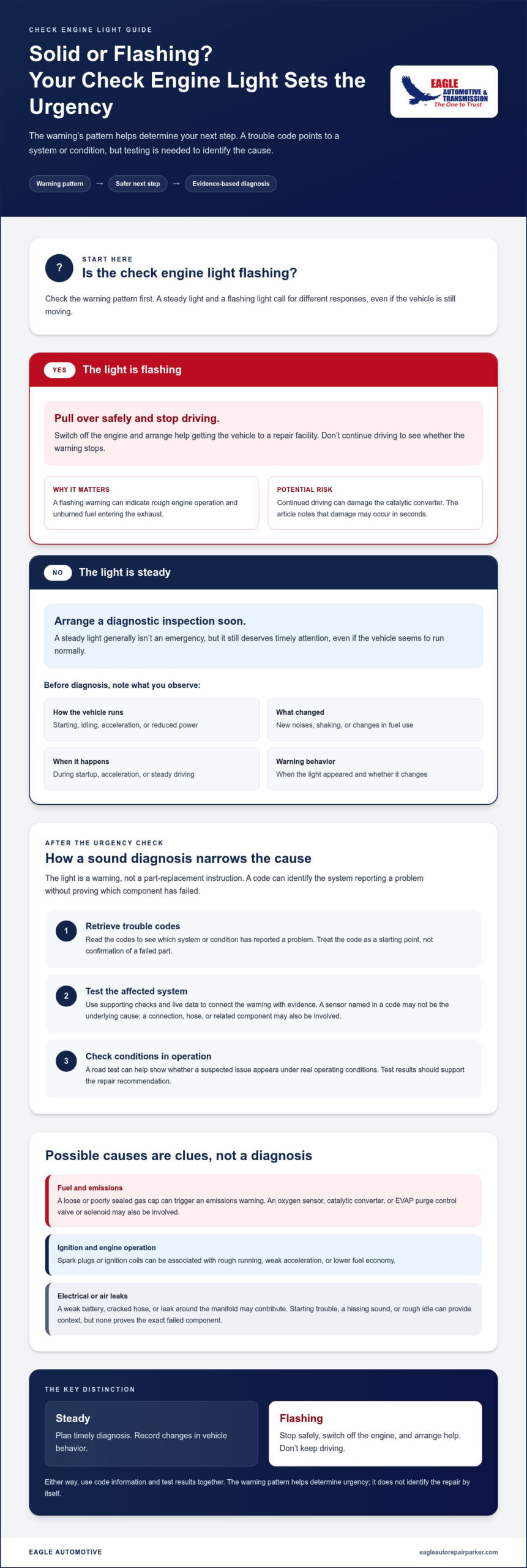
The light’s behavior affects how quickly you should respond. A steady check engine light generally isn’t an emergency, but it still calls for service soon. A flashing warning is more urgent and can indicate rough engine operation and a risk of catalytic converter damage.
With a steady light, note whether the vehicle starts, idles, and accelerates normally. Pay attention to new noises, shaking, reduced power, or changes in how the engine runs. These details help describe the problem during diagnosis, but they cannot establish the exact cause.
A flashing light means take a different approach. Pull over safely and stop driving rather than continuing toward your destination. A flashing warning can mean unburned fuel is entering the exhaust, where it may damage the catalytic converter in seconds.
- Solid light: Arrange a diagnostic inspection soon. Record any changes in engine behavior and avoid treating the warning as proof of one specific failed part.
- Flashing light: Pull over and call for help. Don’t keep driving to see whether the warning stops or the vehicle improves.
The distinction matters because a vehicle can still move while a serious fault is active. A steady light may allow time to plan service, while a flashing light signals a condition that can worsen quickly. The warning’s pattern helps gauge urgency, but testing is still needed to identify the fault.
If the light flashes while you’re driving, reduce risk first. Find a safe place to stop, switch off the engine, and arrange help getting the vehicle to a repair facility. Continuing to drive can expose the exhaust system to ongoing damage, even if the engine still runs.
If the light is steady and the vehicle feels normal, note when it appeared and whether it changes after restarting. Don’t assume a temporary change means the fault is gone. A stored code may still provide useful diagnostic information, and a technician can determine whether the issue remains active.
Both warnings deserve attention, but they call for different responses. A steady light means schedule service soon; a flashing light means pull over and arrange help. The right next step depends on the warning pattern and the vehicle’s behavior, not on a guessed repair or cost estimate.
During diagnosis, the code and test results should support any recommended repair. That helps distinguish a component failure from a related symptom and gives you a clearer basis for deciding what work is needed. Don’t keep driving with a flashing warning while waiting for diagnosis.
How vehicle OBD systems trigger the check engine light
Onboard diagnostics, or OBD, is the vehicle computer’s monitoring system for engine and emissions components. Sensors send information while the vehicle runs, and the computer compares those readings with expected operating conditions. If it detects a fault, it can store a code and illuminate the check engine light.
The system monitors patterns, not just individual parts. For example, it may compare engine temperature with other operating signals or track changes in exhaust sensor readings. Depending on the vehicle’s design, a fault may also involve the transmission or another monitored system.
A diagnostic code records a condition the computer detected, such as a signal outside its expected range. That information narrows the search but does not establish the cause by itself. A technician may need to inspect wiring, connectors, or system operation to understand why the computer received that signal.
When choosing a Parker shop for check engine light diagnosis, look for reviews describing clear explanations of test findings and repairs tied to those findings, rather than general praise alone. Comments about diagnostic work specifically are more useful than ratings that do not describe the service.
A dealership or independent mechanic in Parker can be appropriate for engine diagnostics. Choose a facility equipped to diagnose your vehicle and explain its test results. A dealership may be useful for make-specific procedures, while an independent shop may diagnose vehicles across multiple makes.
The time a check engine light diagnostic takes depends on whether the fault is easy to reproduce or appears only under certain conditions. Retrieving a code is an initial step; investigating an intermittent issue may require additional checks or a road test.
Preventive maintenance can help reduce the chance of some warning-light problems. Follow the schedule in your owner’s manual, and address changes such as rough running or unusual starting promptly. Routine checks can also reveal worn or damaged components before they affect related systems.
Useful diagnostic services include scan equipment that can access vehicle data and a process for explaining findings in plain language. Ask what test results support the proposed repair and whether the issue involves the engine, emissions system, or transmission. Clear findings help you understand why a repair is recommended and what it addresses.
Live data testing and road tests
A trouble code records a fault, while live data shows how related systems behave during operation. A diagnostic scan tool can display readings such as engine speed, coolant temperature, and oxygen sensor activity. Technicians compare those values with the vehicle’s operating conditions to see whether a fault is active, intermittent, or absent during testing.
For example, an oxygen sensor code may prompt a technician to compare sensor signals with fuel adjustment readings. If the values change unexpectedly as the engine warms, that pattern can help narrow the investigation. The code alone cannot show whether the sensor, wiring, or another condition caused the reading.
A road test can help reproduce a problem that does not appear while the vehicle is parked. The technician may observe live data during acceleration, steady cruising, or deceleration and note when the warning or symptom appears. A transmission concern may also show up during a shift, making engine and transmission data useful together.
Testing should match the warning and the vehicle’s condition. A car with a flashing check engine light or severe rough running should not be driven for a routine road test. For a vehicle with a steady light and no severe symptoms, a controlled drive may help reveal a fault that appears only under particular conditions.
Emissions test results can depend on the vehicle’s onboard diagnostics status. An illuminated check engine light can therefore affect the test outcome. Clearing codes without repairing the cause does not establish that the vehicle is ready or that the underlying fault is fixed.
Emissions testing and repair diagnosis are related but serve different purposes. An emissions test checks whether the vehicle meets applicable test requirements; live-data diagnosis investigates why a warning or abnormal reading occurred. If a code returns after clearing, further testing can identify the cause instead of masking the symptom.
Diesel vehicles also use onboard monitoring, but their emissions systems and data differ from those in gasoline vehicles. A technician may inspect readings tied to the diesel engine and its emissions components, then compare them with symptoms and stored codes. The checks depend on the vehicle and the reported fault.
Before a diagnostic visit, note when the warning appears, how the vehicle behaves, and whether the issue happens during a cold start or highway drive. Those details give technicians specific conditions to reproduce. Include the driving situation, any change in engine response, and whether the warning stays lit or flashes.
Diagnostic equipment and trouble-code retrieval
A scan tool connects to the vehicle’s onboard diagnostic system and retrieves stored trouble codes. Each code points to a system or operating condition, but it does not identify the exact failed part. For example, an engine misfire code can guide testing without proving whether a spark plug, coil, wiring, or another issue caused the fault.
Tool capability varies, but even a higher-end scanner does not diagnose a vehicle by itself. The technician must interpret the code alongside symptoms, test results, and vehicle data.
A basic reader can retrieve a code and show which system reported trouble. Its limits matter, though. It may not provide the detailed data, system tests, or manufacturer-specific information needed to pinpoint a cause, especially when a fault appears only under certain driving conditions.
Use a code reader as a starting point, not a parts-ordering guide. Write down the code exactly as displayed, along with the date and any symptoms. For example, note whether the engine stumbled during acceleration or the warning appeared after refueling. Those details help an auto repair technician connect the code to the event.
A thorough scan process typically follows a sequence:
- Retrieve codes: Record active and stored codes before clearing anything.
- Review context: Match code information with the driver’s symptoms and vehicle history.
- Test the affected system: Check relevant components, wiring, connections, and live readings.
- Confirm the finding: Verify the suspected fault before recommending a repair.
Some scan tools can display freeze-frame data, a snapshot of conditions recorded when a fault occurred. Engine speed or temperature in that snapshot can help explain whether the issue happened during a cold start, idle, or acceleration. Not every reader displays the same information, so a missing detail does not rule out a fault.
Clearing a code before recording it can erase useful diagnostic evidence. It also does not fix the reason the warning appeared. If the computer detects the same condition again, the light may return. Keep any printed scan results and share them at your diagnostic appointment.
Choose a diagnostic shop that explains what the code indicates and what testing supports a repair recommendation. Ask which checks will confirm the cause, rather than relying on a code description alone. That distinction helps prevent replacing a part based only on a broad system warning.
Eagle Automotive: Check Engine Light
Eagle Automotive provides check engine light diagnostics in Parker to help identify what triggered your vehicle’s warning and what repair may address it. Turn to the shop when the light appears, returns after a previous repair, or comes with changes in engine performance.
Diagnosis can involve retrieving trouble codes and evaluating the affected system before recommending next steps. If testing points to an engine problem, Eagle Automotive’s Engine Repair & Service can address related repair needs. A code is a starting point, not a parts list, so understanding the test findings helps you make an informed decision.
Share when the light appeared and any changes you noticed, such as rough idling or reduced power. Contact Eagle Automotive to arrange a check engine light diagnostic.
Take the Next Step Toward a Clear Diagnosis
Before arranging service, make a short note of when the warning appeared and how the vehicle behaved. Details such as a rough idle, a recent fuel stop, or a change during acceleration can help focus the conversation and make your next step more productive.
A check engine light diagnostic in Parker can turn a warning into a practical repair plan. Eagle Automotive offers Check Engine Light diagnostics, Engine Repair & Service, and Brake Repair. Start with a clear account of what you noticed, followed by testing that supports the recommended work.
Bring your notes and any code-reader results you’ve saved. For help moving forward, contact Eagle Automotive and discuss your vehicle’s warning light. A focused diagnosis gives you a clearer path to getting back on the road with confidence.
Frequently Asked Questions
Where can I get a check engine light diagnostic in Parker, Colorado?
Arrange a check engine light diagnostic in Parker with Eagle Automotive. The shop provides check engine light troubleshooting and free computer diagnostics. Bring any scan results you have, and describe when the warning appeared or what changed in the vehicle’s behavior. That context can help the technician connect your concern to the right inspection and explain the next repair steps.
How much does a check engine light diagnostic cost in Parker, CO?
The cost depends on the vehicle, the testing needed, and whether diagnosis leads to a repair. Retrieving a code and investigating an intermittent fault can involve different work. Contact Eagle Automotive for a quote based on your situation. A general repair estimate found online may not reflect your vehicle’s actual issue or the testing required.
What information does an OBD-II scan provide, and what does it not diagnose?
An OBD-II scan retrieves trouble codes and can show which system or operating condition triggered a warning. Depending on the scan tool, it may also display additional vehicle data. A code does not prove that the named component has failed. For example, a circuit-related code can lead to checks of the component, wiring, and connections before choosing a repair.
Can I drive with the check engine light on, and when should I stop immediately?
A steady light with normal vehicle behavior generally calls for prompt service rather than an immediate roadside stop. If the light flashes, the engine runs roughly, or the vehicle loses power, pull over safely and stop driving. Don’t restart a trip just because the warning changes after a pause. Note what happened and arrange appropriate help before continuing.
What are common causes of a check engine light in cars?
Common triggers include a poorly sealed gas cap, an oxygen sensor or catalytic converter fault, ignition problems, EVAP system issues, battery trouble, and cracked hoses. Similar warning lights can accompany different faults, so avoid replacing a part based only on a symptom or code label. Record what the vehicle was doing when the warning appeared, such as idling or accelerating, and share that detail during diagnosis.
Which mechanics in Parker have the best reviews for check engine light diagnosis?
When comparing shops, look for reviews that describe clear explanations of diagnostic findings and repairs tied to those findings. Reviews that mention diagnostic work specifically are more useful than general praise alone.