

Car Repair Second Opinions in Parker for Diagnostics and Repairs
The first estimate can be helpful, but it shouldn’t determine the diagnosis on its own. For a car repair second opinion in Parker, bring the estimate and available records, then describe what you’ve noticed before sharing the first shop’s conclusion. This gives the technician a clear starting point based on your experience with the vehicle.
It’s reasonable to seek clarity before approving a repair. A useful second assessment can help you understand what the technician found, how the recommendation relates to the problem, and what questions remain. The goal isn’t to collect opinions until one sounds appealing. It’s to decide based on clear reasoning and information about your vehicle.
This guide explains how to prepare for an independent assessment and compare repair recommendations without focusing only on the estimate’s total. You’ll learn what details help a technician evaluate the concern, how to identify unclear explanations, and what direct communication from a Parker shop should look like. That way, you can ask better questions and make a more informed decision.
Key Takeaways
- Bring the first estimate and diagnostic records, but describe your vehicle’s symptoms before sharing the original diagnosis.
- Look for a second assessment that connects recommended repairs to specific symptoms or inspection findings.
- Review the estimate for clear repair descriptions, supporting explanations, and work that may be separate from the main concern.
- Ask which recommendations are safety-critical and which repairs may be able to wait.
- Use the shop’s willingness to explain its findings and answer questions to help judge whether its recommendations make sense.
Vehicle diagnostics and mechanical repairs
A second opinion is an independent assessment of whether a diagnosis and proposed repair fit your vehicle’s symptoms. Bring the first estimate and records, but describe what you’ve noticed before sharing the earlier conclusion.
That sequence gives the technician room to assess the concern independently and connect your observations with inspection findings and recommended repairs. For example, note whether a noise occurs at startup, while turning, or after the vehicle warms up.
Which Parker auto repair shops offer free or low-cost diagnostic second opinions? Ask the Parker shop whether the second-opinion visit has a diagnostic charge and what the inspection includes. Don’t assume the assessment is free or covers every test.
Can I get a second opinion without authorizing repairs at the first shop? Yes. You can request the estimate and diagnostic records without approving the recommended repair, then arrange an independent assessment. The second shop may need your approval before performing its own diagnostic work.
Independent Repair Diagnosis
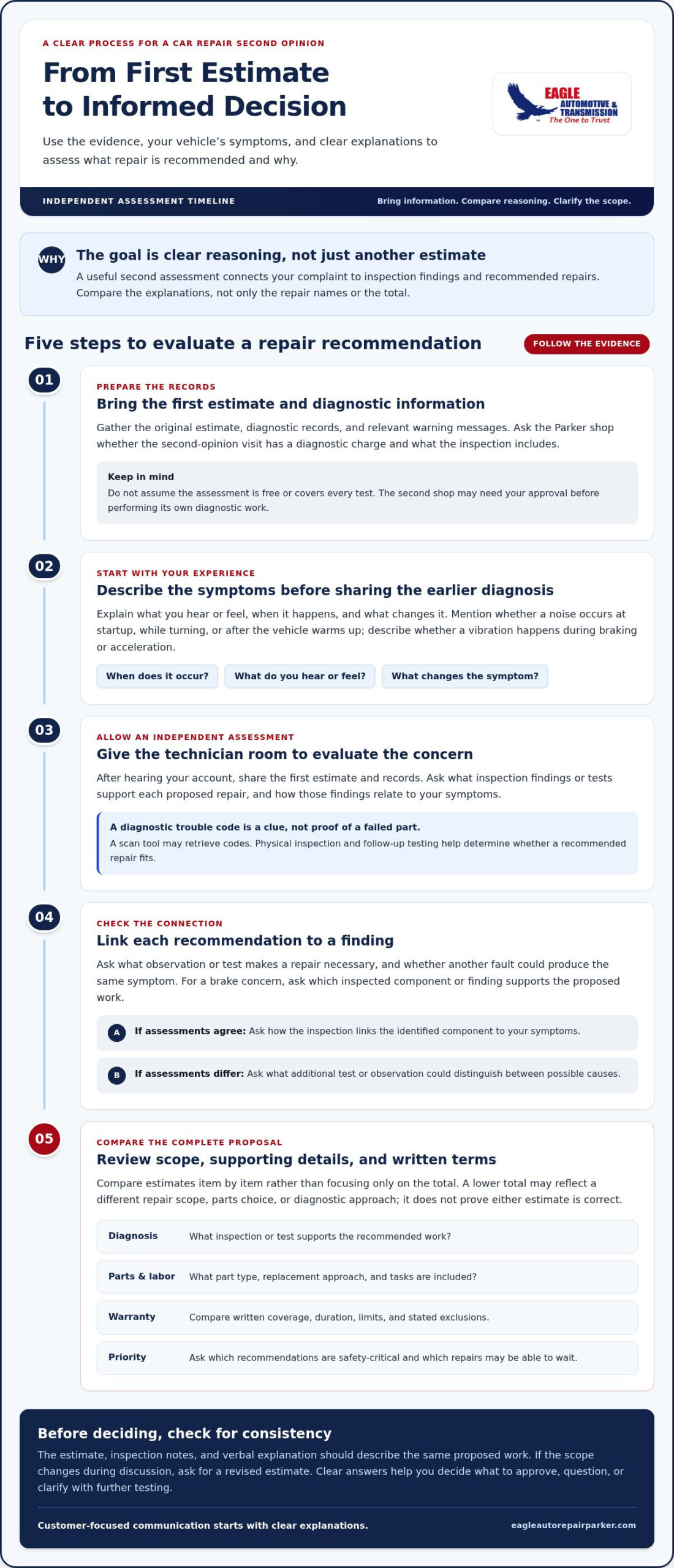
A useful second opinion starts with your account of the problem: when it occurs, what you hear or feel, and whether it changes with speed or temperature. For example, describe whether a vibration happens during braking or acceleration. Then provide the first estimate and ask what findings support each recommended repair.
Compare the explanations, not just the repair names. If both assessments identify the same damaged component, ask how the inspection links it to your symptoms. If they differ, ask what additional test or observation could help distinguish between the possible causes.
Verifying Recommended Repairs
A mechanic can compare your symptoms with inspection findings, then use appropriate tests to narrow down the cause. A scan tool may retrieve diagnostic trouble codes, but a code alone doesn’t prove that the named part has failed. Physical inspection and follow-up testing help determine whether the recommendation fits.
For a brake concern, an inspection can assess relevant components rather than relying only on a warning or noise. Ask the mechanic to explain which finding makes a repair necessary and whether another fault could produce the same symptom.
Electrical problems need measured diagnosis. A dim headlight, for instance, can involve a bulb, connection, charging issue, or another circuit fault. Testing narrows the possibilities before parts are replaced. Comparing the proposed work with industry standards on proper diagnosis before replacing parts can help you assess whether the recommendation at Eagle Automotive is supported by the findings.
- Share symptoms first, including when they occur and what changes them.
- Bring the original estimate, diagnostic records, and relevant warning messages.
- Ask what test or inspection supports each proposed repair.
- Request an explanation if two diagnoses point to different causes.
An independent assessment should connect your complaint, the evidence, and the repair recommendation. That clear reasoning helps you decide what to approve, what to question, and what further testing may clarify.
Choosing a trustworthy auto repair shop
A good Parker shop explains its inspection process, documents its findings, and answers questions without pressure. Compare the written estimate, repair scope, and warranty terms together, not just the total.
How do repair estimates and warranties compare between Parker auto shops? Compare estimates item by item: diagnosis, parts, labor, and included work. Review each shop’s written warranty terms separately, including the repairs covered and any stated limits.
Start with clarity. An estimate should identify the concern and describe the proposed work in language you understand. If one estimate says “repair engine” and another names a specific component, ask each shop to explain the difference before deciding.
A lower total may reflect a different repair scope, choice of parts, or diagnostic approach. It doesn’t prove that either estimate is correct. Compare like with like, and ask whether each proposed repair addresses the cause or only a symptom.
- Diagnosis: What inspection or test supports the recommended work?
- Parts: What part type or replacement approach does the estimate describe?
- Labor: Which tasks are included in the proposed work?
- Warranty: What terms apply, and where are they documented?
Read the warranty language carefully. Ask for the terms in writing and compare the covered repair, duration, limits, and stated exclusions in each document. A verbal assurance isn’t a substitute for written details.
Clear communication matters as much as paperwork. A shop should explain why a component needs repair, what evidence supports that conclusion, and how the proposed work relates to your complaint. If an estimate recommends replacing a part after a warning light appears, ask what testing links the part to the warning.
Use the conversation to assess the process. Does the shop distinguish inspection findings from suggested maintenance? Can it explain which work addresses the original symptom? Direct answers help you compare recommendations without having to interpret unexplained technical terms.
Check that the estimate, inspection notes, and verbal explanation are consistent. If the written scope changes during discussion, ask for a revised estimate that reflects the new recommendation. The paperwork should match the work being proposed.
Ask about repeated tasks if separate estimate lines seem to involve the same component or access work. The shop can explain whether those operations are distinct or overlap, making the proposed scope easier to understand.
Before choosing, write down any questions the estimates leave unanswered. A shop that addresses them plainly gives you a better basis for deciding which recommendation fits your vehicle and needs.
Warning signs in a repair estimate
A repair estimate should connect each recommended job to a concern, inspection finding, or test result. Watch for vague descriptions, unexplained extra work, and changes without a clear explanation. Those details call for questions, not an automatic yes or no.
What are Colorado rules for written auto repair estimates and customer authorization? Don’t treat an estimate as automatic approval for every repair. Ask for the proposed work in writing, clarify what you’re authorizing, and give clear approval before the shop adds work or changes the scope.
Read every line, not just the total. “Engine repair” doesn’t identify the failed component or explain how the work addresses your symptoms. Ask which repair is proposed, what it is meant to address, and what inspection finding supports it.
Separate the original concern from additional recommendations. For example, an estimate for brake noise might also list unrelated maintenance. Ask which item addresses the noise, what findings support other work, and whether each recommendation is urgent or can wait.
- Unclear descriptions: Ask what component will be repaired or replaced.
- Missing diagnostic explanation: Request the test result or inspection finding behind the recommendation.
- Unexplained additions: Ask how each extra item relates to your complaint.
- Changed scope: Request an updated written estimate before approving added work.
Look for mismatches between the explanation and the estimate. If a technician describes repairing one component but the paperwork lists another, pause and ask for clarification. The revised estimate should match the work discussed.
Check whether parts and labor are described clearly enough to compare with another estimate. Different wording can conceal different repair scopes. Before comparing totals, ask whether both shops are addressing the same component and proposing the same work.
Pay attention to duplicated tasks. If separate estimate lines seem to involve the same component or access work, ask whether the labor overlaps. The shop can explain whether those operations are distinct or part of one repair procedure.
A recommendation based only on a warning light needs context. A diagnostic trouble code can point to a system or condition, but doesn’t prove by itself that a particular part has failed. Ask what inspection or follow-up test links the code to the proposed repair.
Keep the paperwork together: the original estimate, revised versions, inspection notes, and any written approvals. If the shop calls with a change, ask for the revised scope in writing before deciding. The record helps you compare the initial recommendation with the updated proposal.
One questionable line doesn’t prove the whole estimate is wrong. It does give you a practical next step: ask for a specific explanation, compare the documented work, and seek another assessment if the answer doesn’t resolve the discrepancy.
Communication about recommended work
A useful repair conversation connects your concern, the technician’s findings, and the next step. Ask the shop to explain each link in plain language. For example, if your vehicle stalls at idle, ask what inspection finding connects the proposed repair to that symptom.
Start with open, specific questions. “What did you find?” invites an explanation, while “Is the part broken?” may narrow the discussion too quickly. Ask what the technician observed, what test supports the conclusion, and whether another cause could produce the same behavior.
Ask the shop to separate safety-critical work from repairs that can wait. Find out which issue affects safe operation, what makes it urgent, and what signs mean the vehicle needs attention sooner. Then discuss a reasonable order for the remaining work.
A clear explanation distinguishes a confirmed fault from a possibility still being investigated. For example, a warning light may identify a system concern without proving which component failed. Ask what has been verified and what additional inspection could narrow down the cause.
- “Which finding connects this recommendation to my complaint?”
- “What work affects safe operation, and what can wait?”
- “What remains uncertain, and what would clarify it?”
- “What should I watch for if I postpone this repair?”
Listen for answers that address your actual symptoms. If you reported a grinding noise during turns, the explanation should cover when it occurs and what the inspection found. A generic answer that overlooks that detail leaves an important gap.
Agree on how the shop will handle new findings before work begins. Ask how you’ll be informed if the inspection reveals another concern and whether the shop will pause for your decision. This helps prevent an unexpected change from being mistaken for permission to proceed.
Write down the key points during the discussion: the component named, the evidence described, the recommended action, and any symptoms to monitor. If a phone conversation changes the proposed work, ask for an updated written explanation so the record matches.
Keep your symptom notes specific. Record whether a vibration occurs while braking, turning, or accelerating, and whether it changes after the vehicle warms up. Those details give the technician more useful information than “it feels wrong” and make follow-up conversations more focused.
Before ending the discussion, repeat the plan in your own words. For example: “You found a leak, the engine repair addresses it, and the other recommendation can wait.” Ask the technician to correct anything you misunderstood.
Good communication isn’t a technical lecture. It gives you enough concrete information to understand the recommendation, weigh its urgency, and make a deliberate decision about the next repair step.
Where can I get a second opinion on car repairs in Parker, Colorado?
Choose a Parker repair shop that can assess the vehicle system named in your estimate and explain its inspection process. A car repair second opinion in Parker should provide an independent evaluation, not simply another version of the first estimate. Before booking, describe the concern, such as a clunk over bumps or a warning light that appears after startup.
Match the shop’s capabilities to the problem. If the estimate involves a head gasket, ask whether the shop can assess engine and cooling-system concerns. For a brake complaint, ask which brake components the inspection will cover. A clear answer helps you understand whether the visit addresses your concern or only provides a general check.
Prepare a short symptom record before calling. Write down when the issue occurs, what seems to trigger it, and what changes it. For example, note whether a vibration happens while braking, turning, or accelerating. Include dashboard messages and whether the symptom is constant or intermittent. These details help the shop understand what you want assessed.
Ask practical questions when arranging the appointment: what the inspection includes, whether it involves diagnostic testing, and which documents would help. Clarify whether the technician will focus on the estimate’s main concern or review its other recommendations too. Knowing the scope in advance helps you compare the assessments fairly.
- Ask whether the shop handles the system listed in the estimate.
- Clarify the inspection scope and any diagnostic testing involved.
- Bring relevant service records and copies of the estimate.
- Write down symptoms, dashboard messages, and when they occur.
Bring the first estimate and any available inspection notes or diagnostic printouts. These records show what the first shop examined, but shouldn’t replace your own description of the symptoms. Keep the original paperwork together and make copies or readable photos to share with the technician.
If the second shop reaches a different conclusion, ask what specific observation or test supports its assessment. For instance, ask which finding links a proposed component replacement to the reported symptom. A useful explanation identifies what the technician observed and what further inspection could clarify.
For a car repair second opinion in Parker, choose a shop that explains its process, defines the inspection scope, and clearly reports its findings. That approach lets you weigh the evidence and decide what to do, rather than comparing estimate totals alone.
Eagle Automotive: Check Engine Light
Eagle Automotive can assess a check engine light and explain what the warning may indicate. A stored diagnostic code can point to a system or condition, but further testing helps determine which repair fits the vehicle’s symptoms.
Bring the earlier estimate and any diagnostic results. Describe when the light appeared and what changed in the vehicle’s performance. If findings point to an engine concern, Engine Repair & Service may address the underlying mechanical issue. If the estimate concerns braking or transmission behavior, those repairs can be evaluated against the symptoms and inspection findings.
Use the second assessment to understand what was observed, what remains uncertain, and why a repair is recommended. Contact Eagle Automotive to discuss a check engine light or repair diagnosis.
Make Your Next Repair Decision With Confidence
A second assessment can turn a confusing estimate into a clearer decision. Use the findings to decide what needs attention now, what can wait, and what questions remain. A careful choice starts with understanding the evidence, not simply accepting or rejecting the first recommendation.
If you’re considering a car repair second opinion in Parker, bring your estimate and describe the symptoms in your own words. Eagle Automotive can assess check engine light concerns, engine repair needs, and brake issues, then explain the findings and relevant repair options.
Take the next step at your pace. Contact Eagle Automotive for a second opinion and get a clearer basis for deciding what comes next.
Frequently Asked Questions
Do I need to bring the first shop’s estimate with me?
Yes, bring it if you have it, along with any inspection notes or test results. The next technician can see what work was proposed and identify unanswered questions. Explain what the car is doing first, then share the paperwork. If you don’t have a printed copy, a clear photo of each estimate page can help preserve the details.
How do I know if my mechanic is being honest?
Look for explanations that link the recommendation to observable evidence, such as a test result, visible leak, or damaged component. Ask the mechanic to show or describe the finding and explain what the repair is expected to address. Clear answers and consistent paperwork help you assess the process. A confident tone alone isn’t proof; the reasoning should fit your vehicle’s symptoms.
How long does a second-opinion inspection take?
The time depends on the concern, access to the vehicle, and the tests needed to reach a useful finding. A straightforward visual check differs from tracing an intermittent electrical fault or reproducing a noise that occurs only while driving. When arranging the visit, describe the symptom and ask what the assessment includes. That helps set expectations and distinguish an initial inspection from a complete diagnosis.
What can happen if you approve work without confirming it?
You may authorize repairs that don’t address the original symptom, leaving its underlying cause unresolved. For example, replacing a component based only on a warning code may leave a separate wiring or mechanical problem unfixed. Approval also moves the repair forward before you’ve compared the proposed scope. Understand the work and how it relates to your complaint before giving the go-ahead.
What does a second opinion on car repairs mean?
It means having another repair professional independently assess a vehicle concern and evaluate the proposed work. The goal isn’t simply to get a different estimate. It’s to understand whether the findings support the recommended repair and whether another cause merits consideration. For example, a technician may inspect a reported vibration and explain what evidence supports a suspension, tire, or brake concern.
What documents and diagnostic codes should I bring for a repair second opinion?
Bring the estimate, diagnostic printout, inspection notes, and relevant service records. Include the exact code numbers shown on a scan report, along with any dashboard message or warning light you observed. Don’t clear a warning or discard a printout before the visit, since that information may help explain the original concern. A dated symptom list can also clarify when the issue occurs.
What should I do if a second mechanic disagrees with the first repair diagnosis?
Ask each mechanic to identify the specific observation or test behind their conclusion. Then ask what additional inspection could distinguish between the explanations, especially if both fit the symptoms. A disagreement doesn’t automatically mean either mechanic acted improperly; the vehicle may need further testing. Keep both written assessments and base your next step on the evidence, not the difference in opinion alone.
How can I find trustworthy, certified mechanics in Parker, Colorado?
Ask Parker shops which technicians hold relevant certifications and what those credentials cover. Request the technician’s name and credential details, then verify them with the issuing organization. Certification can show formal training, but it doesn’t replace a diagnosis specific to your vehicle. Also consider whether the shop explains its findings, provides a clear written scope, and answers your questions directly before you authorize work.