

Brake service near me for pad, shoe, and fluid checks
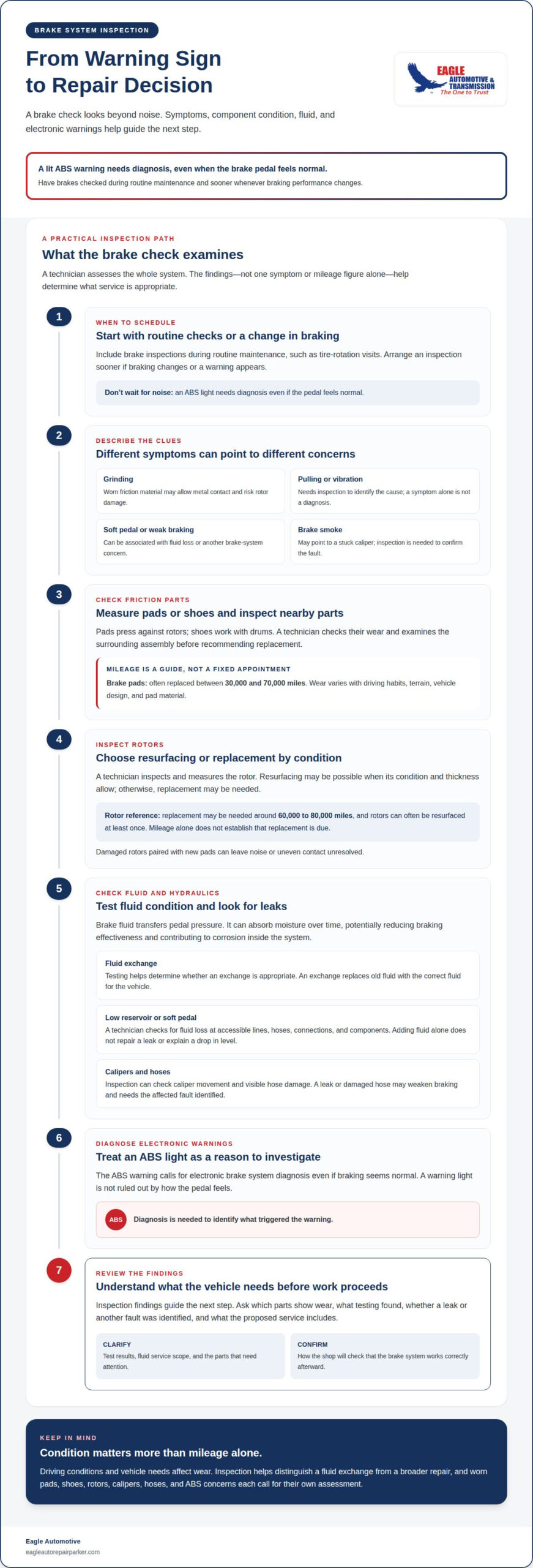
What if the brake warning that matters most isn’t a squeal, but an ABS light? Have your brakes checked during routine maintenance and promptly whenever their performance changes. A lit ABS warning needs diagnosis, even if the pedal feels normal. If you’re looking for brake service near me, don’t wait for noise to be your only clue.
Grinding, pulling to one side, vibration, or a soft pedal can point to different problems, from worn pads to fluid or caliper concerns. A thorough inspection checks the whole system, not just the parts you can hear or feel.
Learn when to schedule a brake check, which warning signs need attention, and how technicians assess pads, shoes, brake fluid, rotors, and electronic systems such as ABS. You’ll also see how inspection findings guide the next step, so you can understand what your vehicle needs before a small concern becomes a larger repair.
Key Takeaways
- Schedule brake checks as part of routine maintenance, and seek an inspection sooner if braking changes.
- Grinding, pulling, vibration, or a soft pedal can signal different brake problems that need professional diagnosis.
- Brake fluid can absorb moisture over time, making fluid condition an important part of a brake service.
- Pad and shoe replacement depends on wear and vehicle needs, while continued grinding can put other brake parts at risk.
- An illuminated ABS warning light calls for electronic brake system diagnosis, even if the brakes still seem to work normally.
Brake fluid exchange
Brake fluid transfers pedal pressure to brake components, so its condition matters during maintenance. An exchange replaces old fluid with fresh fluid; a complete brake service may include additional inspections and repairs.
A high star rating alone doesn’t identify the right nearby brake shop. Look for recent reviews that describe clear brake diagnoses, fluid service, and explanations of the work performed.
Brake Fluid Testing and Exchange
A technician tests brake fluid condition to help determine whether an exchange is appropriate. Testing supports a service decision, but doesn’t replace checking for leaks or examining other brake components. Brake fluid can absorb moisture from the air, which may reduce braking effectiveness and contribute to corrosion inside the system.
During an exchange, a technician replaces old fluid with the correct fluid for the vehicle. A flush generally moves fluid through the system to clear out old fluid, rather than simply topping off the reservoir. Since the terms can vary, ask what the service includes.
At one surveyed municipal garage, a complete brake service took about 5 hours per job, according to the National Institute for Occupational Safety and Health (NIOSH). That figure describes one garage’s complete service, not the time required for every fluid exchange. The work involved depends on the vehicle and any problems found.
Brake Fluid Replacement and Leaks
Replacing fluid restores the supply, but a low reservoir can signal a leak or another brake-system concern. A technician checks the reservoir and inspects accessible lines, hoses, connections, and components for signs of fluid loss. Adding fluid alone won’t repair a leak or explain why the level dropped.
A leak can reduce hydraulic pressure and weaken braking. If the brake pedal feels soft or braking changes, have the system inspected promptly. The technician can locate the leak, repair the affected part, then replace fluid and bleed air from the system as needed.
Brake fluid maintenance differs from steering-fluid service: the fluids serve separate systems and aren’t interchangeable. A technician uses the specification suited to the vehicle and checks whether fluid condition or a leak calls for further work. Keep your vehicle’s service records available to show when brake-fluid maintenance was last performed.
When choosing brake service near me, focus on whether the shop explains test results, identifies any leak, and outlines the work before proceeding. Ask what the proposed exchange covers, whether the inspection found another fault, and how the shop will confirm the brake system works correctly afterward. These details distinguish fluid replacement from a complete brake-system repair.
Brake pad and shoe replacement
Brake pads press against rotors to slow a vehicle; brake shoes work with drums. Their friction surfaces wear with use, but the rate depends on driving habits, terrain, vehicle design, and material. A technician checks pad or shoe thickness and examines nearby components before recommending brake repair. Replacing only the visibly worn part without assessing the full assembly can miss related damage.
Brake pads often need replacement between 30,000 and 70,000 miles, depending on driving habits, vehicle, and pad material. That range is a guide, not a fixed appointment interval. Frequent hard stops, steep routes, and heavy loads can affect wear. A technician’s inspection and the vehicle owner’s manual help determine whether replacement is due.
Grinding deserves prompt attention. A harsh grinding noise can mean the pads have worn down completely, allowing metal contact that may damage rotors. Shoes can also wear down and affect drum surfaces. The repair may involve pads or shoes alone, or additional components if inspection finds scoring, heat damage, or wear beyond usable limits.
Brake Pads, Shoes, and Rotors
Rotors may need replacement around 60,000 to 80,000 miles, and they can often be resurfaced at least once. Resurfacing restores the rotor’s braking surface when its condition and thickness allow. The technician measures and inspects the rotor before choosing resurfacing or replacement. New pads paired with damaged rotors can leave braking noise or uneven contact unresolved.
Replacement intervals vary by vehicle and driving conditions. The braking system’s condition matters more than mileage alone. A vehicle approaching a rotor interval may need inspection sooner if it vibrates or makes grinding sounds. Conversely, mileage by itself doesn’t establish that pads, shoes, or rotors need replacement.
Calipers and Brake Hoses
A caliper applies pressure to a disc brake’s pads. If it sticks or fails to release properly, braking can become uneven; visible brake smoke may also point to a stuck caliper. A technician checks caliper movement and related parts before deciding on repair or replacement. One symptom alone doesn’t prove the caliper is at fault.
Brake hoses carry fluid to braking components. Damage can cause delayed or weak braking, and a leak may lead to brake failure. An inspection looks for leaks or visible hose damage, then determines whether a hose or another component needs repair. Replacing a damaged hose addresses that fault, while a complete brake-system check can uncover related issues.
For a clear repair decision, ask which parts show wear and how the inspection supports the recommendation. Arrange professional brake repair if grinding, weak stopping, or smoke signals a concern. A thorough assessment of pads, shoes, rotors, calipers, and hoses can help keep you safe without treating every worn component as the same problem.
How Often Should Brakes Be Checked?
Have brakes inspected during routine maintenance, including tire rotation visits, and sooner if braking changes. When looking for reliable brake service near me, compare auto repair options by inspection scope, diagnostic explanation, and repair recommendations. Inspection and repair time depends on the work required and what the technician finds.
Brake Inspections and Diagnosis
A complete brake inspection looks beyond visible pad wear. The technician checks pads, shoes, rotors, calipers, hoses, and fluid for wear, damage, or leaks. Uneven wear can point to a caliper or another issue that needs diagnosis, not simply new friction material.
Ask what the inspection covers and how the findings support each recommendation. A clear explanation identifies the affected component and why it needs attention. Diagnosis matters because a symptom can have more than one cause. For example, uneven braking may involve a caliper, friction material, or another brake-system component.
Rotor Inspection and Resurfacing
Rotor inspection checks the braking surface for grooves, uneven wear, heat marks, and vibration-related concerns. A technician assesses whether resurfacing can restore an even contact surface or whether replacement is needed. The decision depends on rotor condition and whether enough material remains for safe operation.
Resurfacing may be appropriate when the rotor’s condition allows the surface to be restored. It isn’t suitable for every rotor problem. The technician’s findings explain whether resurfacing or replacement addresses the concern and what the chosen repair can resolve.
A free visual brake inspection, when offered, may provide an initial look at visible components. It isn’t necessarily the same as a full diagnostic inspection. A visual check may not reveal a hidden fluid leak, an internal caliper problem, or an electronic fault. Ask what the inspection includes and what it can assess.
Schedule checks according to maintenance needs and symptoms, rather than relying on one mileage figure for every vehicle. Tire rotation appointments offer a convenient chance to request an inspection. New grinding, pulling, vibration, or a changed pedal feel calls for attention sooner. Driving conditions and component wear influence what the technician finds.
Brake repair may involve replacing affected parts, resurfacing suitable rotors, or addressing caliper and hose problems. Trusted shops like Eagle Automotive explain their findings and proposed work before repairs proceed. Ask which parts need attention and whether related components show wear. That information clarifies the repair plan and supports consistent stopping.
Ratings can help narrow local choices, but reviews alone don’t establish inspection quality. Look for feedback describing clear explanations, specific findings, and communication about recommended work. A useful brake inspection gives you vehicle-specific information, not just a general statement that repairs are needed.
What are the warning signs of brake problems?
Brake symptoms can point to different faults, so one sound or sensation doesn’t identify the cause. Note when it happens, such as during a stop, and have the system inspected if braking changes.
Grinding is a serious warning. A harsh grinding noise can mean brake pads have worn down completely, allowing contact that may damage rotors or drums. Continuing to drive can turn a friction-part replacement into a larger repair. Arrange a prompt inspection rather than waiting for the sound to disappear.
A soft or spongy brake pedal may indicate low brake fluid or air in the system. A damaged hose can also cause delayed or weak braking, and a leak may lead to brake failure. These symptoms need professional inspection because fluid loss, air, or hose damage can affect hydraulic pressure.
Does the vehicle pull to one side when you brake? Uneven brake wear or a caliper problem may cause this. Caliper problems can also lead to uneven braking and skidding. Technicians check the brake assemblies on both sides, since replacing one visible part without finding the underlying issue may leave the symptom unresolved.
Brake vibration often points to uneven rotor surfaces. You may feel it through the pedal or steering wheel, but that alone doesn’t confirm the source. A technician inspects the rotors and related parts to determine whether resurfacing or replacement is appropriate. Don’t assume every vibration calls for the same repair.
Visible smoke near a wheel can indicate a stuck caliper. A caliper that fails to release may keep a pad pressed against the rotor, creating excessive friction. Stop driving and arrange professional attention; continued contact can worsen the damage. Smoke is not a routine brake condition.
Are there certified brake technicians or reputable brake service chains nearby? Certification and staffing differ between shops, so look for technicians’ credentials and detailed customer reviews. Favor explanations that connect a specific finding, such as uneven wear or a leaking hose, to the proposed repair.
During an inspection, technicians can identify whether brake pads, rotors, calipers, hoses, or fluid need attention. Ask what they found, which component is affected, and why they recommend the repair. A clear diagnosis helps distinguish worn pads from rotor damage or a hydraulic problem.
An expert brake evaluation considers the whole system, not just the loudest symptom. Grinding, smoke, weak braking, or a soft pedal each calls for prompt attention. Share when the warning occurs and whether it changes during stopping; those details help technicians assess the fault and plan the repair.
ABS and electronic brake system checks
An illuminated ABS warning light is a reason to have the anti-lock brake system diagnosed. The light can indicate an electronic fault, but it doesn’t identify the failed part by itself. ABS helps prevent wheel lock during hard braking, supporting steering control as the vehicle slows. If the warning appears, don’t assume the system will provide its usual assistance.
Diagnosis starts with the warning pattern and a scan of the brake system’s stored fault information. A technician may then inspect wheel-speed sensors, wiring, connections, and related ABS components. Damaged wiring or a poor connection can resemble a failed sensor. Replacing a part based only on the dashboard light may miss the actual cause.
Some vehicles coordinate ABS with electronic stability or traction functions. Warning lights and system behavior vary by model, so technicians consider the vehicle’s design and reported symptoms. They can compare scan results with sensor readings and inspect related components before recommending repairs. This helps distinguish an electronic fault from worn pads, squealing, or another mechanical concern.
ABS problems don’t always feel like ordinary brake wear. A vehicle may still slow down, yet its anti-lock function could be impaired. If the pedal feels different, braking becomes weak, or the vehicle behaves unpredictably, arrange a professional inspection. Normal pedal pressure alone doesn’t confirm that electronic assistance works.
- Warning light: Note whether the ABS light stays on or appears with another warning.
- Driving behavior: Describe changes in pedal feel, stopping, or steering control.
- Repair findings: Ask which test identified the fault and what component needs attention.
These details help technicians choose the right diagnostic path. They also help separate an ABS concern from a friction-brake issue that may call for pad replacement. A thorough brake evaluation considers both electronic warnings and mechanical findings, so repairs address the identified fault rather than a guess.
After repairs, the technician checks that the warning concern has been addressed and that the brake system operates as intended. Ask for the diagnosed cause, the work performed, and any recommended follow-up. Keep the repair record with your vehicle documents, including warranty paperwork, and review its terms for coverage details.
The key takeaway is simple: an ABS light calls for diagnosis, not guesswork. Sensor, wiring, or control-component faults can require different repairs. A clear explanation of test results helps you understand the work and make decisions with confidence, whether the concern involves electronic braking or ordinary brake wear.
Eagle Automotive: Engine Repair & Service
Eagle Automotive & Transmission in Parker can help when worn brake components, unusual braking, or an ABS warning calls for professional attention. Its Brake Repair service addresses brake concerns, while Check Engine Light diagnosis can investigate a separate dashboard warning.
Describe the symptoms you’ve noticed, such as grinding, pulling, a changed pedal feel, or an illuminated warning light. That information helps the technician understand what needs inspection and explain the next steps. If the concern points beyond the brakes, Eagle Automotive & Transmission also provides Engine Repair & Service and transmission repair.
Contact Eagle Automotive to discuss your brake concern and arrange the next step.
Make Your Next Brake Decision With Confidence
Good brake care starts with a clear diagnosis and a repair plan you understand. If you’re choosing brake service near me, look for a shop that explains its findings, identifies the work your vehicle needs, and answers your questions before repairs begin. That conversation helps you make a practical decision without guessing at the cause of a warning or change in braking.
Eagle Automotive & Transmission in Parker provides Brake Repair for brake-system concerns, along with Check Engine Light diagnosis and Engine Repair & Service when other vehicle issues need attention. Share what you’ve noticed and ask about the next step for your vehicle.
Contact Eagle Automotive for brake service to discuss your concern and move forward with a clear plan.
Frequently Asked Questions
How do I know if I need new pads or rotors?
A technician determines this by assessing pad thickness and rotor condition together. If pads are worn but rotors remain suitable for use, pad replacement may address the issue. Deep scoring, uneven surfaces, or rotor damage can change the repair plan. Ask which measurements or visible findings support the recommendation, and whether the rotors can be resurfaced or need replacement.
How long do brakes last?
Brake life varies with driving habits, terrain, vehicle design, and the materials used. Frequent hard stops or demanding routes can wear components differently from gentler driving. There isn’t one lifespan that applies to every car. Maintenance records and inspection findings provide a more useful picture than mileage alone, especially if the vehicle has changed drivers or its usual routes have become more demanding.
What’s the difference between ceramic and semimetallic pads?
Ceramic and semimetallic pads use different friction materials, which can affect noise, dust, feel, and performance under a vehicle’s operating conditions. Neither material is automatically right for every car. The appropriate choice depends on the vehicle’s design and intended use. Ask the technician to explain which pad type matches your vehicle’s requirements and what trade-offs matter for your regular driving.
Why are my brakes making a burning smell?
A burning odor after braking can come from overheated brake components, but the smell alone doesn’t identify the cause. A dragging caliper or repeated hard braking may contribute to excess heat. If the odor persists, returns during ordinary driving, or comes with smoke or changed braking, stop in a safe place and arrange professional inspection. Don’t rely on smell alone to diagnose the system.
Why are my brakes making a grinding noise?
Grinding can mean friction material has worn away and metal parts are contacting one another. Debris or damage may also create unusual sounds, so noise alone can’t confirm which component is responsible. Note whether grinding happens during every stop or only sometimes, then describe that pattern during inspection. Prompt diagnosis can identify whether pads, rotors, drums, or another part needs attention.
Why are my brakes squeaking?
Squeaking can come from vibration between brake parts, surface conditions, or worn components. A brief sound in damp conditions may differ from persistent noise during ordinary stops. The frequency, timing, and whether the sound changes with braking help narrow the diagnosis. If squeaking continues or appears alongside weaker stopping or a changed pedal feel, have the system inspected rather than assuming the noise is harmless.
Why are my brakes vibrating?
Vibration during braking can come from uneven rotor surfaces, but it may also involve another wheel or suspension concern. Notice whether the shaking is felt mainly through the pedal, steering wheel, or vehicle body, and whether it occurs only while braking. Those details help a technician distinguish possible causes. A physical inspection is needed before deciding which component requires repair.
What brake services are available near me?
In Parker, Eagle Automotive & Transmission provides Brake Repair, including brake pad and rotor replacement, brake fluid inspection, and ABS light diagnostics. Free computer diagnostics are provided for every customer. The technician can assess the reported concern and explain which brake work the findings support. Share any warning light, sound, or change in braking to help direct the inspection to the right system.