

Brake Repair Explained: Inspections, Repair Options, and What to Expect
What if the sound or pedal feel you notice points to more than one brake problem? A squeal, vibration, or change in stopping response can have several causes, so guessing at the part can lead to the wrong repair. Brake repair should start with a careful inspection, not a one-symptom diagnosis.
It’s reasonable to want clear evidence before approving work, especially when you’re unsure whether it’s safe to keep driving. A technician can inspect the brake pads, rotors, calipers, and related components to identify what’s worn, damaged, or working as it should. The findings help determine whether the right approach is servicing or replacing a specific component, rather than assuming every part needs attention.
This guide explains how brake concerns are evaluated, what repair options may fit the condition of your vehicle, and what to expect when arranging service in Parker. You’ll also learn which warning signs call for prompt attention and what information to discuss with a repair shop. Eagle Automotive serves all makes and models in Parker, with brake inspection, servicing, and component replacement as part of its broader automotive repair work.
Key Takeaways
- A brake noise, vibration, warning light, or pedal change can have more than one cause, so the symptom alone doesn’t identify the repair.
- A methodical inspection helps connect the concern you describe with the condition of relevant brake components.
- Brake repair options depend on what inspection finds, including the condition of pads, rotors, calipers, and hydraulic components.
- Reviewing the inspection findings and proposed work helps you understand the next steps before authorizing repairs.
- Eagle Automotive provides brake inspections, servicing, and component replacement for vehicles in Parker.
What brake repair covers and why one symptom is not a diagnosis
Brake repair is inspection-led work to address braking parts that are worn, damaged, or not functioning properly. It can involve servicing or replacing pads, rotors, calipers, or hydraulic components, depending on what an inspection finds. The goal is to identify the condition behind the concern before settling on a repair, not to replace parts based on a guess.
Why does that matter? A squeal, grinding sound, vibration, warning light, pulling, or change in pedal feel can point to different issues. Some symptoms may also come from parts outside the brake assembly. A single symptom cannot identify a specific failed component.
How the main brake components work together
Pressing the brake pedal creates hydraulic pressure in the system. That pressure moves the calipers, which press the brake pads against the rotors at the wheels. Friction between the pads and rotors slows the vehicle. The Brake system overview on Wikipedia provides more background on braking principles and components.
Each part has a different job. Pads provide the friction surface, rotors turn with the wheels, and calipers apply pressure to the pads. Hydraulic components carry and control pressure through the system. Wear or damage in one area can affect how the parts work together, so an inspection may need to consider more than the component that first drew attention.
Why brake symptoms need context
Listen to the sound and notice when it happens, but treat those details as clues. Squealing may be associated with pad condition, while grinding can signal more severe wear. Vibration during braking may relate to rotor condition, but other wheel or suspension concerns can also create vibration. Pulling to one side or a pedal that feels unusually soft or firm also needs evaluation rather than an assumption about the cause.
Context helps narrow the possibilities. Does the concern happen every time, only during a particular maneuver, or alongside a warning light? The answers help guide inspection, but they don’t confirm a failed part. If braking feels compromised, avoid continuing to drive and arrange an assessment. A later symptom-focused discussion can explore common warning signs in more detail without treating any one sign as a diagnosis.
For drivers in Parker, understanding the inspection process can make it easier to discuss a brake concern and consider the next step. A focused assessment helps keep attention on the parts and conditions relevant to the vehicle rather than treating a symptom as a diagnosis.
How a brake inspection narrows down the repair needed
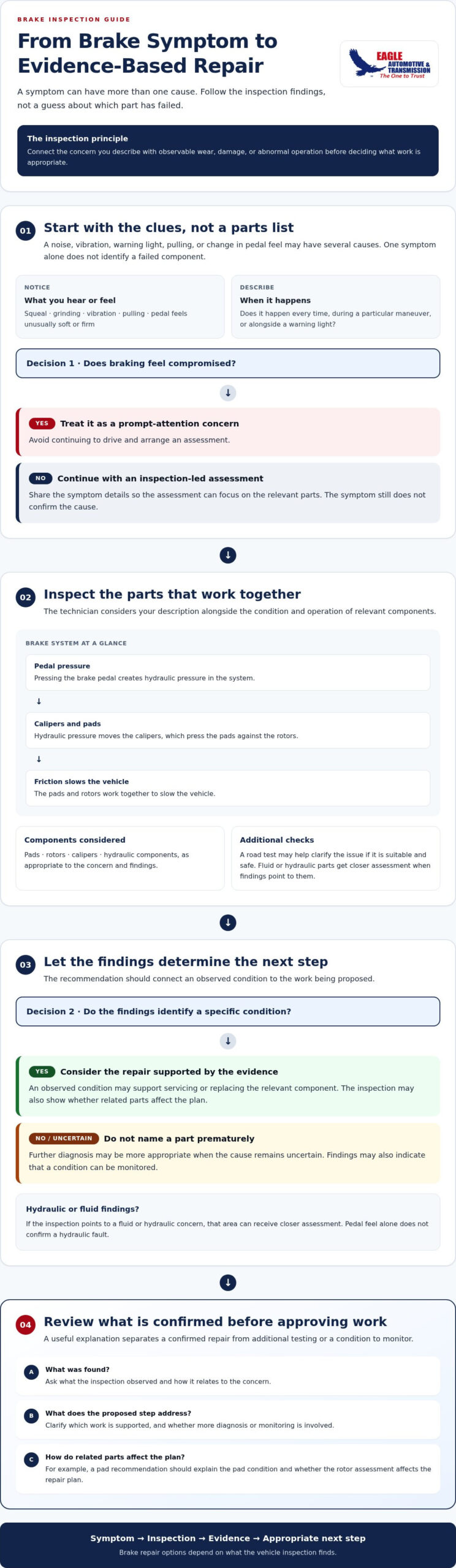
A brake inspection turns a concern into a sequence of checks and decisions. It begins with the driver’s account, moves to examination of relevant parts, and ends with an explanation of what the findings support. That process helps distinguish a repair need from a question that requires more testing or follow-up.
- Describe the concern. Explain when it occurs and whether it changes. Details such as a sound during gentle braking, a pedal that feels different after the vehicle has been parked, or a warning light appearing during a trip can help direct the assessment.
- Examine relevant components. The technician assesses pads, rotors, calipers, and other parts as appropriate, looking for wear, damage, or abnormal operation. The scope depends on the concern and what becomes apparent during the inspection.
- Compare the findings. Observed conditions are considered alongside the reported behavior. A road test may help clarify the issue if it is suitable and safe. Fluid or hydraulic components warrant closer assessment when the findings point to them.
- Review the options. The results help explain what work is supported, what may need additional diagnosis, and what can be monitored.
What a technician assesses during brake diagnosis
The driver’s description helps focus the assessment, but it doesn’t dictate which part gets replaced. A vibration during braking, for example, may lead to a closer look at rotor condition, while the technician also considers other relevant causes. The aim is to relate the symptom to observable wear, damage, or operation, not to use it as a shortcut to a parts list.
There isn’t one universal measurement or replacement rule for every vehicle. The findings must be considered in the context of the vehicle and the component being assessed. If evidence suggests a fluid or hydraulic concern, that area can receive further attention rather than being assumed faulty from pedal feel alone.
How inspection findings become a repair recommendation
A useful explanation separates confirmed work from possibilities. A component with an observed condition may support servicing or replacement. If the cause remains uncertain, further diagnosis may be more appropriate than naming a part prematurely. Ask what the technician found, how it relates to the concern, and what the proposed step is intended to address.
For example, a recommendation involving pads should make clear what their condition indicates and whether the related rotor assessment affects the plan. The Auto Care Association’s automotive maintenance resources provide broader industry context, but the vehicle’s own inspection results should guide its repair decisions. Before approving work, make sure the explanation distinguishes necessary repairs from monitoring or additional testing.
Brake repair options: pads, rotors, calipers, and hydraulic components
The right repair depends on which parts show wear or damage and how those parts work together. Replacing pads, for example, doesn’t automatically mean rotors, calipers, or hydraulic components also need replacement. Each recommendation should connect to an observed condition and the needs of the vehicle.
Component | Condition assessed | Possible repair approach | Decision factor
Brake pads: Wear, damage, and contact with the rotor. Approach: Service or replace as indicated. Factor: Pad condition considered alongside rotor condition.
Rotors: Surface condition, damage, and whether they meet applicable specifications. Approach: Service or replace as appropriate. Factor: Inspection findings and vehicle specifications.
Calipers: Whether they apply and release pressure as intended, and whether damage is present. Approach: Further diagnosis, servicing, or replacement if supported by findings. Factor: Evidence of a caliper concern.
Hydraulic components: Signs of leakage or abnormal pressure-related operation. Approach: Diagnose and address the affected component. Factor: Inspection evidence, not assumption.
Brake pad and rotor work are related, but not identical
Pads create friction against the rotors to slow the vehicle. Because they work together, a technician assesses both, but they don’t necessarily have the same condition or repair needs. Pad service may be appropriate when the pads show wear, while the rotor’s surface and condition help determine whether it can remain in service or needs attention. The vehicle’s applicable specifications matter; there’s no universal rule that every pad replacement requires new rotors. A dedicated pad-versus-rotor comparison can explore those choices in greater depth.
Ask what the inspection shows on each part. A recommendation should explain whether the pad condition, rotor condition, or both support the proposed work. That makes it easier to understand why one vehicle may need pad service while another needs a broader repair.
When diagnosis points beyond pads and rotors
A caliper problem is a separate possibility, not an automatic add-on to pad or rotor work. If inspection indicates that a caliper isn’t applying or releasing pressure properly, it may affect braking at that wheel and should be assessed on its own evidence. Hydraulic concerns also need diagnosis. A pedal change alone doesn’t prove a fluid or hydraulic failure, but findings such as a leak can justify closer evaluation.
Steering or suspension wear can also affect how a vehicle feels or tracks, especially if it pulls or feels unstable. Those concerns can overlap with a braking complaint without being a brake failure. Keep the systems distinct: repair the brake components that inspection supports, and assess related handling issues separately. Clear findings keep brake repair focused on what the vehicle actually needs.
What to expect when arranging brake repair in Parker
Arranging brake service starts with a conversation, then moves to an inspection and a review of the findings. You don’t need to identify the failed part before making an appointment. Share what you’ve noticed, and let the inspection establish which components need attention. This keeps the repair discussion grounded in the vehicle’s condition instead of guesswork.
Preparing useful details before a brake inspection
Before bringing in your vehicle, think through when the concern occurs and what you notice. Does a sound happen as you slow down, or does the pedal feel different each time you press it? Mention whether the symptom changes, any warning lights you’ve seen, and any recent change in how the vehicle brakes or handles.
Keep it simple. You don’t need to reproduce the symptom through a risky maneuver or inspect parts yourself. If you’re worried the vehicle may not be safe to drive, describe that concern when arranging service so you can discuss an appropriate next step.
Understanding the repair discussion
After inspection, the repair conversation should connect each recommendation to a finding. Ask which component was assessed, what condition was observed, and how the suggested work addresses it. If more diagnosis is needed, ask what remains unclear. You should be able to distinguish work supported by current findings from items that may only need monitoring.
The repair scope depends on inspection results and vehicle condition. A recommendation might focus on one component, or include related work if the evidence supports it. Don’t assume that a concern with one part means every nearby component needs replacement. A clear explanation helps you understand the options before deciding how to proceed.
It can also help to confirm the practical next steps: what work is recommended, whether additional diagnosis is needed, and what to expect after the repair discussion. These questions keep the decision focused. A shop should be able to explain the observed condition in everyday language and show how it led to the proposed work.
For drivers in Parker, brake repair is one part of maintaining a vehicle. Eagle Automotive provides brake inspection, servicing, and component replacement for all makes and models. The local service discussion should begin with what your vehicle’s inspection shows, so you can understand the recommendations and make an informed decision.
If you’ve noticed a change in braking, arrange an inspection and bring the details you’ve observed. A clear description gives the technician a useful starting point, while the inspection findings guide the repair plan. The next step is straightforward: share your concern and review the findings before deciding on the work.
Brake repair at Eagle Automotive: from inspection to next steps
A brake concern can feel uncertain, especially if you’re weighing whether to keep driving or schedule service. You don’t need to arrive with a diagnosis. Bring the concern to Eagle Automotive and use the inspection discussion to understand what the vehicle needs. A calm, clear conversation helps turn an unfamiliar symptom into a practical next step.
How Eagle Automotive addresses brake concerns
Start by explaining what changed and how it affects your confidence behind the wheel. The technician’s findings give the discussion a factual starting point. If a recommendation is unclear, ask what was observed and how the proposed work addresses it. You can also ask which items are immediate repair needs and which may call for further assessment, so you understand the scope before deciding.
Keep the conversation focused on your vehicle. A sound or change in feel may be worrying, but it doesn’t tell you by itself what needs attention. The inspection provides that context. Eagle Automotive can help you work through the findings and consider the next step without relying on assumptions or replacing parts based on a guess.
Choose a clear next step for your vehicle
If you’ve noticed a change in braking, write down when it occurs and share that information when arranging service. Don’t try to recreate a concerning symptom in traffic. If the vehicle feels unsafe to drive, explain that concern before setting out so you can discuss how to proceed safely.
Once you’ve reviewed the findings, take time to understand the recommended work and ask any remaining questions. The goal is a decision grounded in the vehicle’s condition, not pressure to guess at the cause. For drivers in Parker, Eagle Automotive is a local place to begin that conversation and move forward with a clear understanding of the next step.
Make your next move with confidence
A change in braking is worth acting on thoughtfully. You don’t have to identify the cause yourself or decide which part needs replacing. The useful next step is to share what you’ve noticed and let the inspection findings guide the repair conversation. That gives you a clearer basis for deciding what work to approve and helps keep brake repair focused on your vehicle’s actual condition.
If braking feels unreliable, avoid testing the vehicle in traffic. Describe the concern when arranging an inspection, and ask for the findings and recommended next steps to be explained plainly. A steady, evidence-based approach can make a stressful decision easier to handle.
For brake inspection, service, and component replacement in Parker, contact Eagle Automotive. Arrange brake service with Eagle Automotive, and take the next step toward understanding what your vehicle needs.
Frequently Asked Questions
Can I keep driving if my brakes are making noise?
It depends on the sound and how the brakes respond, so don’t assume the vehicle is safe based on noise alone. A brief light squeak differs from persistent grinding, especially if stopping feels weaker or the pedal changes. If you hear grinding or notice reduced braking, avoid unnecessary driving and arrange an inspection. In Parker, share when the sound happens so the technician can assess the concern.
How often should brake pads be inspected or replaced?
There isn’t one replacement interval that fits every vehicle. Pad wear depends on the vehicle, driving conditions, and use, so follow the maintenance guidance in your owner’s manual and have the pads checked during scheduled service. If you notice a new sound or change in braking before then, arrange an inspection rather than waiting for the next routine visit. Replacement should be based on observed condition, not an assumed schedule.
Is it normal for brakes to squeal after rain?
A brief squeal after rain can occur when moisture leaves a thin surface film on brake components. The sound may fade as the brakes are used normally. If it continues, returns regularly, or comes with grinding, vibration, pulling, or a change in stopping, don’t write it off as weather. Arrange an inspection to identify the cause and determine whether brake repair is needed.
What happens if I ignore a brake warning light?
Ignoring it can leave a developing brake-system issue unassessed. The meaning varies by vehicle and warning, so check your owner’s manual for the indicator’s description and arrange service promptly. If the light appears with a change in pedal feel, reduced braking, or another serious symptom, pull over somewhere safe and avoid continuing the trip. A technician can inspect the system and explain the next step.