

Auto Repair in Parker, Colorado: A Practical Guide to Engine Diagnostics
When a warning light comes on or your engine starts running differently, the first step is finding out why, not guessing which part to replace. Choosing auto repair parker colorado drivers can use starts with a diagnosis that considers the vehicle’s symptoms and test results, not just a code reader.
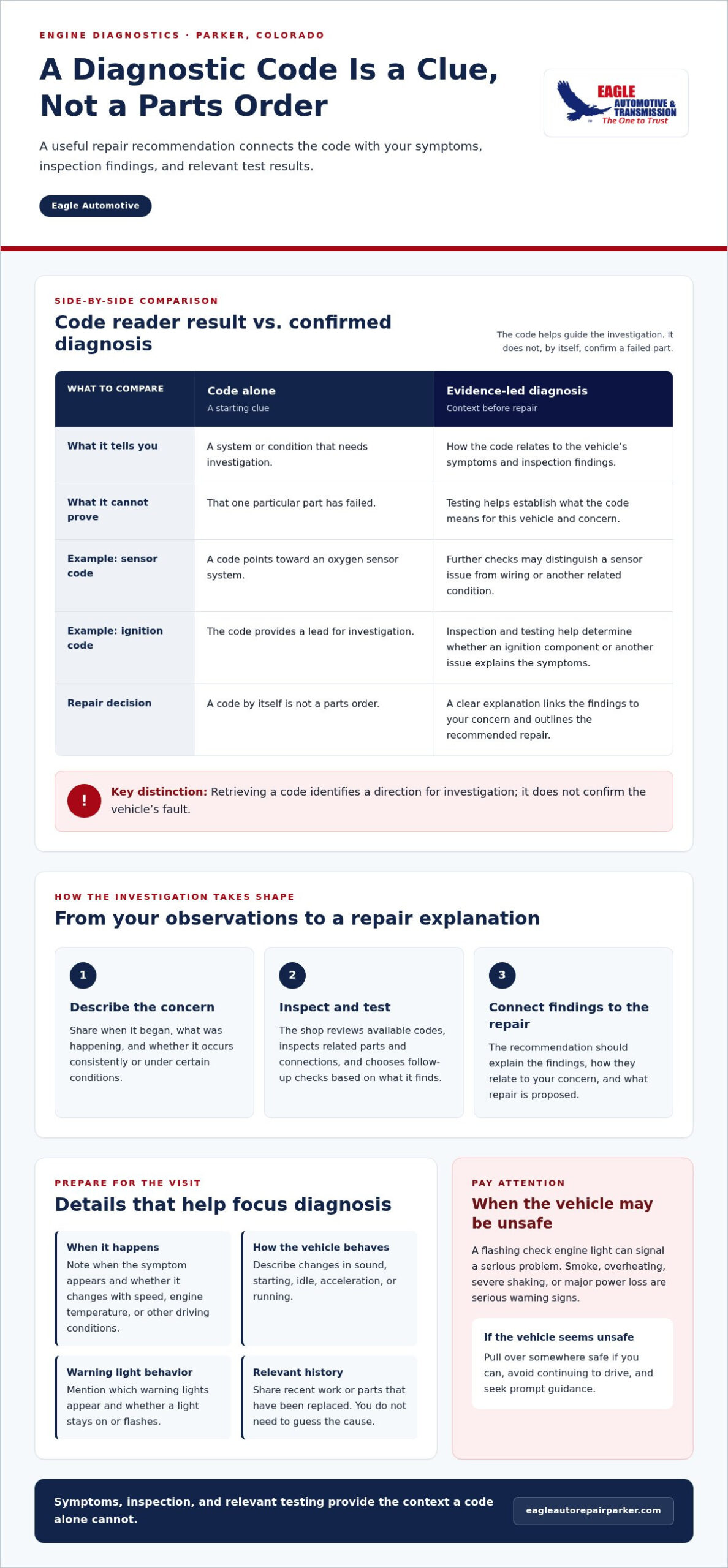
A diagnostic trouble code points technicians toward a system or condition, but it doesn’t always identify the failed part. The code needs to be considered alongside the vehicle’s symptoms and test results before a repair is recommended. A steady check engine light calls for attention, while a flashing light can signal a serious problem. If the light is flashing or the vehicle is running poorly, avoid pushing on and seek prompt guidance.
This guide explains what to expect during an engine diagnostic visit, what details to share with the shop, and how to assess a repair recommendation. You’ll also learn how Eagle Automotive in Parker handles check engine light troubleshooting and engine diagnostics, so you can take a useful next step.
Key Takeaways
- Engine diagnostics investigate the cause of a vehicle concern; a trouble code is a clue, not a final answer.
- Look for a repair explanation based on the vehicle’s symptoms, inspection, and relevant testing, not a code alone.
- Note when symptoms occur, how the vehicle behaves, and which warning lights appear to make your diagnostic visit more useful.
- A flashing check engine light or severe running problem can make driving unsafe. Take the symptoms seriously and seek prompt guidance.
- For auto repair parker colorado drivers can use, Eagle Automotive provides check engine light troubleshooting, engine diagnostics, and repair for all makes and models.
Auto Repair in Parker, Colorado: Why Accurate Engine Diagnosis Matters
An unfamiliar warning light, odd noise, or sudden change in how your vehicle runs can leave you wondering what to do next. Have the concern investigated before deciding which part needs repair. When comparing auto repair parker colorado options, consider how a shop reaches its recommendation, not just how quickly it can read a code.
Engine diagnostics investigate a vehicle concern by combining stored information with the driver’s description, an inspection, and relevant tests. Similar warnings or symptoms can have different causes, so context matters. A code can guide the investigation, but it doesn’t prove that a particular part has failed.
What can engine diagnostics tell you?
A vehicle’s On-board diagnostics (OBD) system may store diagnostic trouble codes (DTCs) when it detects certain conditions. These codes help identify an area that needs attention. For example, a code related to an engine system may prompt further checks, but it doesn’t confirm which component is faulty. Inspection and relevant testing help establish what the code means for that vehicle.
When should a Parker driver seek diagnostic help?
A warning light, unusual sound, rough running, or change in acceleration can all be reasons to arrange an assessment. Note when the symptom appears and whether it changes with speed, engine temperature, or other driving conditions. You don’t need to identify the cause yourself. A clear description gives the shop useful information to consider during diagnosis.
Smoke, overheating, severe shaking, or major power loss are serious warning signs. Pull over somewhere safe if you can, and avoid continuing to drive if the vehicle seems unsafe. Seek prompt guidance rather than risking further damage.
A diagnostic code is a clue; symptoms and testing provide the context needed to understand it. When reviewing a repair recommendation, look for an explanation of how the vehicle’s symptoms and diagnostic findings support the proposed work. If the cause isn’t clear yet, further investigation may be needed before choosing a repair.
How Engine Diagnostics Work at a Parker Auto Repair Shop
A useful diagnostic visit connects what you’ve noticed with what the vehicle’s systems and inspections reveal. There isn’t one fixed test sequence for every concern. The next steps depend on the symptoms, any stored information, and what the initial checks show.
Retrieving a code identifies a direction for investigation; it doesn’t confirm the vehicle’s fault. A code can point toward a system or condition, but more than one issue may produce similar clues. For auto repair parker colorado drivers can rely on, look for a process that investigates those clues before recommending work.
From the driver’s symptoms to a focused diagnostic plan
The conversation helps narrow the investigation. Tell the shop when the concern began, what the vehicle was doing at the time, and whether the problem happens consistently or only under certain conditions. Mention whether a warning light stays on or flashes, and describe any recent changes in sound, starting, idle, or acceleration.
Share relevant repair history, too, including recent work or parts that have been replaced. You don’t need to name a suspected cause. Clear observations help the shop decide what to inspect and which follow-up checks make sense for your vehicle.
How testing helps narrow down possible causes
After reviewing the concern and available codes, the shop may inspect related parts and connections, then perform tests based on what it finds. For example, a code pointing toward an oxygen sensor doesn’t automatically mean the sensor has failed. Further checks may help determine whether the sensor, its wiring, or another related condition needs attention.
An ignition-related code is another clue, not a parts order. Inspection and testing can help establish whether an ignition component is involved or whether another issue better explains the symptoms. The aim is to connect the recommendation to evidence gathered from the vehicle, not to replace parts based on a code alone.
Some engine concerns also relate to emissions performance. The EPA’s engine testing regulations provide background on engine testing and emissions requirements. For a repair decision, focus on what the inspection and relevant tests show on your vehicle.
A clear explanation should identify the findings, describe how they relate to your concern, and outline the recommended repair. If the evidence points to a different cause than the initial code suggests, the diagnosis should account for that. This turns the diagnostic visit into a reasoned next step instead of a guess.
Is a Diagnostic Code Enough to Choose an Auto Repair Shop?
No. A diagnostic code can point toward a system or condition, but it doesn’t automatically identify a failed component. A useful repair recommendation connects the code with your symptoms, inspection findings, and relevant test results. That distinction matters when evaluating auto repair parker colorado options: retrieving a code is one step, while interpreting what it means for your vehicle takes further investigation.
Code-reader result versus confirmed diagnosis
Think of a code as a lead, not a parts order. It can help focus attention, but the evidence needed to confirm a fault depends on the vehicle and the concern.
| What a code may indicate | What it cannot prove on its own |
|---|---|
| A system or condition that needs investigation | That one particular part has failed |
| A useful starting point for inspection and testing | That the code explains every symptom |
| A reason to gather more information about the vehicle | That replacing a related component will resolve the concern |
For example, a code associated with an engine sensor may lead to checks of the sensor and related connections. It isn’t proof that the sensor needs replacement. The Auto Care Association represents businesses across the automotive aftermarket, including those involved in vehicle repair. For your decision, focus on whether the shop explains how its findings support the proposed work.
How to assess a repair explanation
Listen for a clear connection between what you reported, what the shop observed, and what it recommends. A sound explanation should separate confirmed findings from possibilities that still need investigation. If a problem is intermittent or the available evidence is incomplete, additional testing may be needed. A careful shop shouldn’t present an unresolved possibility as a confirmed failure.
Repair recommendations should follow diagnostic evidence, not the code alone. Ask what the inspection or testing revealed and how that finding relates to the symptoms you described. You don’t need to challenge technical details. Look for a straightforward explanation you can understand, including what remains uncertain.
A clear explanation helps you weigh the next step without treating a code as a diagnosis. Consider whether the proposed work addresses an identified problem and whether the shop can explain the connection between its findings and recommendation. That gives you a more useful basis for deciding how to proceed.
How to Prepare for an Auto Repair Diagnostic Visit in Parker
A few clear observations can help the shop understand what needs attention. You don’t need to identify the cause or use technical terms. Describe what you noticed, when it happens, and whether anything changes the symptom. This gives the technician a useful starting point without locking the investigation onto a guess.
What information should you share with the technician?
Before your visit, note when the concern began and what the vehicle was doing at the time. Record whether a warning light stays on, appears intermittently, or comes on alongside a particular symptom. Include changes in starting, idling, or acceleration, and describe unusual sounds as accurately as you can.
Also mention recent repairs, maintenance, or events that might provide context. If the vehicle behaves differently only in certain conditions, such as during startup or acceleration, share that detail. Small observations can help focus the inspection.
- When the issue started and how often it occurs
- Which warning lights appear and whether they stay on or come and go
- Changes in starting, idle, acceleration, or engine sound
- Recent repairs or other changes you’ve noticed
Don’t clear a warning or erase stored information just to make the dashboard look normal before the visit. The warning’s behavior and stored information may help with the assessment. If you’ve already cleared it, simply let the shop know.
When should you stop driving and seek help?
Some symptoms call for caution before you head to a repair shop. Overheating, smoke, severe shaking, major power loss, or unsafe braking can make continued driving hazardous. If the vehicle doesn’t feel safe to control, pull over somewhere safe as soon as you can and seek guidance about what to do next.
Not every check engine light means you must stop immediately. Consider how the vehicle is running, whether the light is steady or flashing, and whether other serious symptoms are present. A flashing light or a sudden, severe change in performance deserves prompt attention. Don’t risk driving if the vehicle’s condition could endanger you or others.
Sharing your observations and repair history gives the shop useful context for investigating the concern. For professional auto repair parker colorado services, trusted technicians can thoroughly inspect your vehicle and address any mechanical or electrical issues efficiently.
Eagle Automotive: Local Engine Diagnostics and Auto Repair in Parker
An unfamiliar warning or change in engine performance can have several possible causes. Eagle Automotive is a Parker repair shop serving all makes and models, with check engine light troubleshooting, engine diagnostics, and engine repair. The goal is to investigate the concern and explain how the findings inform the next step, rather than assume a part needs replacement based on a warning alone.
From check-engine troubleshooting to an informed repair decision
Diagnostic findings help determine whether more testing or a mechanical repair is appropriate. The recommended work depends on what the assessment shows. If the evidence points to an engine problem, engine repair may be relevant. Head gasket repair is also available when the vehicle’s findings support that work. A warning light or one symptom alone doesn’t establish that a head gasket has failed.
A useful repair discussion explains what was found and how it connects to your concern. If further investigation is needed, that distinction matters too. It helps you understand what’s known, what remains uncertain, and why a particular repair is being considered. The right recommendation depends on the vehicle’s condition, not a guess made before assessment.
Get local auto repair support in Parker, Colorado
Before arranging a visit, note when the concern began, what the vehicle was doing, and whether you’ve noticed changes in starting, idling, or acceleration. Share recent repairs or relevant history as well. These details give the shop useful context without requiring you to diagnose the problem yourself.
Eagle Automotive works on all makes and models, so drivers can bring a range of vehicles for engine diagnostics and repair. If the findings involve a concern beyond the engine, the shop also provides mechanical services including brake, transmission, steering, suspension, heating, and air conditioning work. The appropriate repair depends on the problem identified.
For auto repair parker colorado drivers need, a clear conversation starts with the symptoms you’ve observed and continues with an explanation of the diagnostic findings. You don’t have to arrive with the answer. Discuss your vehicle’s warning light or engine concern with Eagle Automotive and take the next step toward an informed repair decision.
Take the Next Step Toward a Clear Answer
A warning light or unfamiliar engine symptom can be unsettling, but you don’t have to guess at the cause. A diagnostic trouble code is a clue, not proof that a particular part has failed. A useful diagnosis connects the code with your symptoms, inspection findings, and relevant testing before a repair is recommended.
For drivers comparing auto repair parker colorado options, Eagle Automotive is a Parker repair shop serving all makes and models. Its services include check-engine-light troubleshooting, engine diagnostics, and engine repair. Depending on the vehicle’s condition, findings may also point to another mechanical repair or preventative maintenance. A clear description of what you’ve noticed helps start the conversation, and an explanation of the findings helps you understand possible next steps.
Ready to talk through a warning light or engine concern? Talk with Eagle Automotive about your vehicle’s diagnostic needs. Bring your questions and observations to start with a clearer understanding of what your vehicle may need.
Frequently Asked Questions
Is a check engine code enough to tell which part needs repair?
No. A diagnostic code points toward a system or condition that needs investigation, but it doesn’t prove that a specific part has failed. The shop considers the code alongside your symptoms, inspection findings, and relevant tests. For example, a code linked to an engine system may lead to checks of several related components before the cause is clear. A repair recommendation should connect the evidence to the proposed work.
Can I drive to an auto repair shop with the check engine light on?
It depends on how the vehicle is running and whether other warning signs are present. A steady light without serious symptoms may call for prompt assessment, but smoke, overheating, severe shaking, major power loss, or unsafe braking can make driving hazardous. A flashing check engine light can signal a serious engine problem. If continuing could put you or others at risk, pull over safely and seek guidance before driving farther.
How long does engine diagnostics take?
Diagnostic time varies with the vehicle, the symptoms, and what the initial checks reveal. Some concerns may be straightforward to investigate, while intermittent problems or issues requiring additional testing can take longer to narrow down. A code reading alone doesn’t determine how much investigation is needed. In Parker, ask the shop to explain what the diagnostic process involves for your concern and when it can provide findings, rather than assuming every visit follows the same timeline.
What should I tell a mechanic when my check engine light comes on?
Describe when the light appeared, whether it stays on or comes and goes, and what the vehicle was doing at the time. Mention changes in starting, idling, acceleration, fuel use, or engine sounds, along with any recent repairs or relevant events. You don’t need to diagnose the cause. Clear observations help an auto repair shop in Parker, Colorado, connect the warning to the vehicle’s behavior and decide what to investigate.
Will a diagnostic code confirm that my oxygen sensor is bad?
No. A code related to an oxygen sensor can direct attention to that sensor or a related system, but it doesn’t confirm the sensor itself has failed. Wiring, connections, or another engine condition may also need investigation. A mechanic can compare the code with the vehicle’s symptoms and relevant test results before recommending a repair. Treat the code as a starting point, not an instruction to replace a part.
1 Comment. Leave new
[…] stumbles, whether symptoms are constant or intermittent, and how warning lights behave. Available diagnostic codes provide additional clues, but they aren’t proof that a particular part has failed. Inspection and follow-up tests depend […]