

5 Symptoms of a Bad Alternator and What They Mean
A failing alternator can turn a routine drive into a breakdown. Five common symptoms of a bad alternator are a battery warning light, dim or flickering headlights, malfunctioning electrical accessories, unusual noises or burning smells, and a battery that keeps losing charge. The alternator converts engine power into electricity and helps keep the battery charged while you drive.
If your lights behave strangely or the engine struggles to keep running, it’s understandable to suspect the battery. But the alternator, battery, belt, wiring, or electrical connections can all cause similar problems. A jump-start may get the engine going, but it won’t fix a charging-system fault.
This guide explains what each warning sign can mean, why driving with a failing alternator can leave you stranded, and what battery and charging-system testing can reveal. You’ll also learn why symptoms alone can’t confirm which part has failed, so you can take the next step with a clearer understanding of the problem.
Key Takeaways
- A battery warning light or malfunctioning accessories can point to a charging issue, especially when several electrical features act up together.
- Burning odors, unusual noises, slow cranking, and stalling can have more than one cause, so look for patterns rather than relying on a single symptom.
- A failing alternator may leave the vehicle running on its remaining battery charge and can lead to a stall while driving.
- Battery and charging-system tests help distinguish an alternator problem from a weak battery, worn belt, or electrical connection fault.
- Headlight changes can offer a clue, but they cannot confirm the cause; persistent symptoms call for a thorough inspection.
Dashboard Warning Lights and Electrical Problems
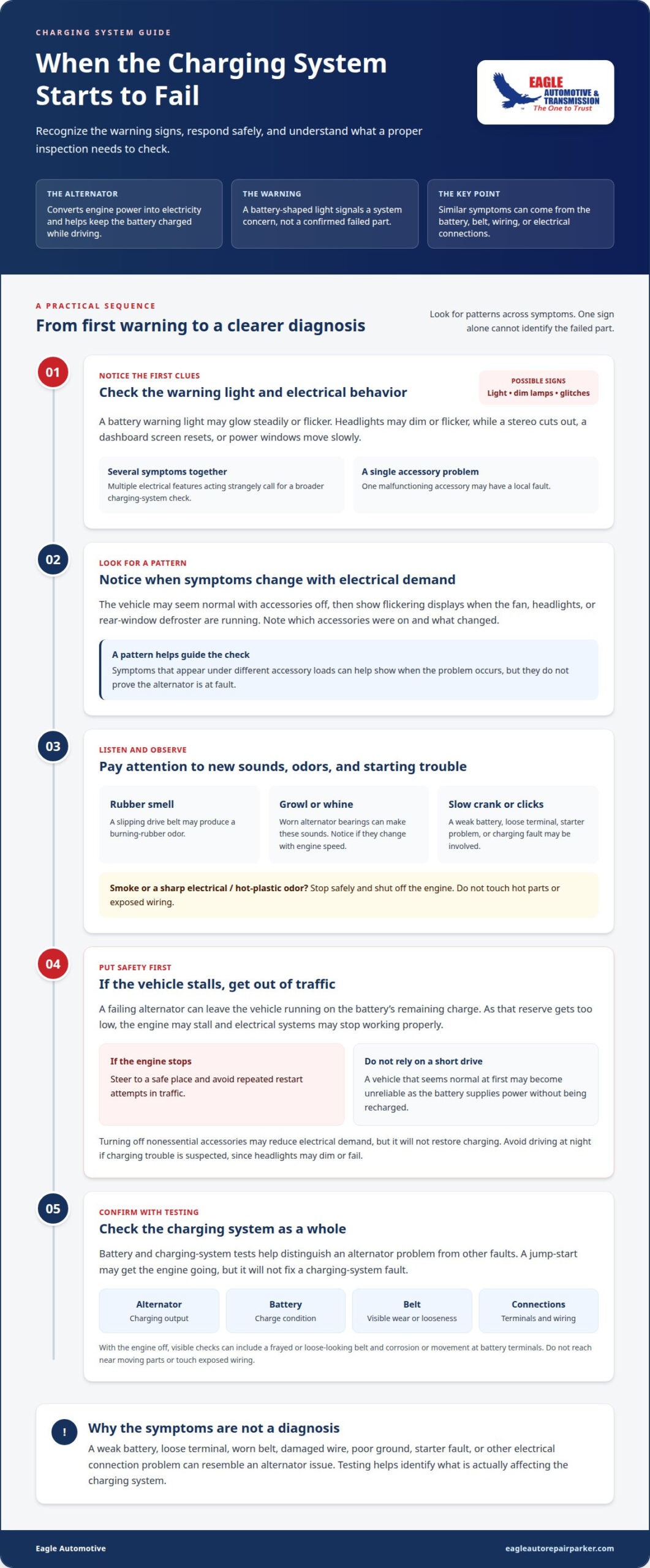
A battery-shaped warning light can signal a charging-system problem, including an issue with the alternator or its connections. It may glow steadily or flicker as electrical demand changes. Note whether it appears when you switch on the cabin fan, headlights, or rear-window defroster. The warning light signals a system concern, not the specific part that needs attention.
Electrical accessories can offer additional clues. A stereo that cuts out, a dashboard screen that resets, or slow power windows may point to an inconsistent electrical supply. If several features act strangely during the same drive, note what changed and which accessories were running. One malfunctioning accessory may have a local fault, but several unrelated glitches together call for a broader charging-system check.
Electrical load can make a developing fault easier to notice. The vehicle may seem normal with the fan and lights off, then show flickering dashboard displays when those accessories run together. This doesn’t prove the alternator is at fault: a weak battery, loose terminal, damaged wire, or poor ground can also interfere with power. Comparing symptoms under different accessory loads helps show when the problem occurs.
Pay attention to odors near the dashboard or under the hood, too. A sharp electrical smell, smoke, or hot-plastic odor can point to an overheated wire or connection. A worn drive belt may produce a rubber smell as it slips near the alternator pulley. If smoke appears or an odor intensifies, stop safely and shut off the engine instead of continuing to test accessories.
Simple maintenance checks can reveal visible problems before they become harder to trace. With the engine off, look for a frayed or loose-looking belt, and check for corrosion or movement at the battery terminals. Don’t touch exposed wiring or reach near moving parts. If the battery warning light returns, the display glitches, or several accessories fail together, have the battery, alternator, belt, and electrical connections tested as a system.
Burning Smells, Unusual Noises, and Starting Trouble
A hot odor or new sound under the hood can help narrow down a charging problem, but neither proves the alternator has failed. A slipping drive belt may smell like burning rubber, while worn alternator bearings can produce a growl or whine. Notice whether the sound changes with engine speed or occurs during startup. A sharp electrical odor, especially with visible smoke, means you should stop safely and shut off the engine.
The odor’s location matters. A rubber smell near the front of the engine may point to belt friction, while a hot-plastic scent near wiring can suggest an overheating electrical connection. Don’t touch hot parts or exposed wiring to locate the source. Instead, note when the smell began, whether it continues after the engine stops, and whether a warning light or accessory problem appeared at the same time.
Starting trouble has several possible causes. A slow crank can result from a weak battery, a loose battery terminal, or a starter problem. The alternator may be involved if the battery repeatedly loses charge between drives. Rapid clicking during a start attempt can mean the battery doesn’t have enough voltage to operate the starter, but that symptom alone can’t distinguish a discharged battery from a charging fault.
Pay attention to what happens after a jump-start. If the engine starts and then dies soon afterward, the alternator may not be supplying enough power to keep the vehicle running. But a loose connection, faulty starter, or battery that can’t hold a charge can also cause repeated starting failures. Note whether the engine cranks slowly, clicks, starts and stalls, or does nothing; each pattern helps narrow down the inspection.
Stalling while driving calls for a safety-first response. If the engine stops, steer to a safe place and avoid repeated restart attempts in traffic. Once parked, note any burning smell, growling, or whining, and whether the problem began during acceleration, idling, or accessory use. These details help a technician inspect the belt, alternator, battery connections, starter, and charging output without treating one symptom as a complete diagnosis.
Risks of Driving with a Failing Alternator
A failing alternator can leave a vehicle running on the battery’s remaining charge. Once that reserve gets too low, the engine may stall and electrical systems may stop working properly. This can happen during a trip, not just when starting. A car that seems normal at first may become unreliable as the battery supplies power without being recharged.
That creates a practical hazard in traffic. If the engine loses power while crossing an intersection, merging, or climbing a hill, you may have little time to react. The vehicle may no longer accelerate normally, and a stall could leave it blocking a lane or exposed on the roadside. Don’t treat a short successful drive as proof the charging system can handle another trip.
Electrical demand can also affect how long the vehicle keeps running. Headlights, the cabin fan, a defroster, and other accessories all draw power. If the alternator can’t keep up, turning off nonessential accessories may reduce demand, but it won’t restore charging. Avoid driving at night if possible when charging trouble is suspected, since the headlights may dim or fail.
Repeated stalling is another reason to stop driving and arrange an inspection. For example, an engine that stalls after stopping at a light and then needs a jump-start may not be receiving enough electrical power. A failing alternator is one possibility, but a weak battery, poor connection, or another fault can cause similar behavior. The risk remains: another stall could happen in a less safe location.
If the vehicle stalls while moving, signal and steer to a safe place as conditions allow. Once stopped, turn off nonessential electrical accessories and avoid repeated restart attempts. A jump-start may get the engine running temporarily, but it won’t fix a charging fault. If the car can’t be moved safely or the lights are too dim for visibility, don’t continue driving.
Arrange diagnosis instead of testing the vehicle on a longer route. Note where the symptoms appeared, whether accessories were running, and whether the engine restarted. These details can help an inspection identify the fault without exposing you to another breakdown. A whining sound or warning light adds useful context, but neither alone confirms an alternator problem.
Charging-System Inspection and Testing
A battery warning light points to the charging system, not automatically to a failed alternator. The battery, drive belt, wiring, and electrical connections can also affect charging. A battery that dies after a drive may not have been recharged properly, but testing helps identify the cause. Note whether the warning light stays on, flickers, or appears alongside other electrical changes.
A healthy car alternator’s running voltage is generally about 13.7 to 14.7 volts. The exact reading can vary with vehicle design and electrical demand, so one measurement isn’t a complete diagnosis. A technician compares battery condition and charging output, then checks whether the belt and connections can carry power reliably. Results need to be interpreted alongside the vehicle’s symptoms and test conditions.
A headlight check can offer a rough clue. With the vehicle parked, headlights may change brightness as engine speed changes; a suggested observation involves raising engine speed to about 2,000 RPM. But bright or dim lights alone can’t confirm alternator failure. A battery issue, loose connection, or changing electrical load may affect the result. Keep the vehicle parked, and don’t attempt this check in traffic.
Professional charging-system testing goes beyond watching the lights. An inspection can include battery condition, alternator output, belt wear, wiring, and corroded or loose connections. A technician can also assess whether output changes under electrical load, such as with the headlights and cabin fan running. A whining sound may warrant checking the belt or alternator bearings, but sound alone doesn’t identify the failed component.
A flickering warning light or inconsistent charge deserves attention, especially if other electrical problems occur at the same time. If testing shows low or excessive running voltage, the voltage regulator or another charging-system component may be involved. A reading outside the expected range calls for diagnosis, not automatic alternator replacement. Battery condition matters, too, because it affects how charging results should be interpreted.
If the battery warning light stays on, the headlights dim, or the car struggles to keep running, arrange an inspection rather than relying on a quick visual check. A complete electrical-system test can distinguish charging faults from battery, belt, and wiring problems. Whether relying on a local technician or an established service centre like Motortech 4X4, thorough diagnostic testing helps determine whether the alternator needs replacement or another part is responsible, giving any repair a clear starting point.
Dim, Bright, or Flickering Lights
Headlights that dim while the engine is running can signal unstable charging-system voltage. Notice whether both headlights lose brightness together or just one lamp looks weak. A single dim bulb may point to a bulb or local wiring issue. If dashboard lights and cabin lamps also flicker, a charging-system problem becomes more likely, though testing is needed to identify the fault.
Unusually bright lights deserve attention, too. A faulty alternator or voltage regulator can send inconsistent voltage to vehicle electronics, making headlights seem brighter than usual. One clue is headlights that grow brighter as the car accelerates, then dim at idle. That pattern differs from a burned-out bulb, which typically stays dark instead of changing with engine speed.
Flickering can affect several systems. For instance, headlights may pulse as the dashboard display briefly dims, or cabin lights may flutter while the fan runs. Electrical load can make an underlying charging weakness more noticeable, especially when several accessories operate together. Some modern vehicles reduce power to nonessential accessories before cutting power to headlights, so a stereo or screen glitch may accompany changing lights.
Watch for timing and combinations, not just brightness. If the lights flicker after starting and then settle, note whether the battery warning light also appears. If they dim whenever you switch on the cabin fan or defroster, record that pattern. A hot rubber smell or whining sound at the same time adds another clue, but neither proves the alternator is responsible.
Don’t rush to replace bulbs when several lights change together. A charging-system inspection can compare alternator output with battery condition and check the wiring, connections, and voltage regulator. This matters because a weak battery or poor connection can imitate alternator trouble. If headlights dim while driving, reduce nonessential electrical use and find a safe place to stop if visibility becomes poor. Multiple flickering lights, a warning light, or repeated changes with engine speed call for prompt diagnosis.
Alternator Replacement Considerations
Alternator replacement may be needed when testing identifies a failed alternator as the cause of charging trouble. If the battery warning light stays on, headlights dim while driving, or the engine repeatedly stalls, arrange an inspection instead of assuming the alternator is the only possible fault.
Diagnosis comes first. A weak battery, worn drive belt, corroded connection, or damaged wiring can cause symptoms similar to alternator failure. Testing the battery and charging system helps determine whether the alternator is producing enough power and whether another component is interrupting the charge.
For example, a car that starts after a jump but soon loses electrical power needs more than a battery swap. An inspection can include the alternator, battery connections, belt, and charging output together. If the alternator has failed, replacing it addresses the cause rather than repeatedly treating the discharged battery alone.
Seek service promptly if warning lights and dim headlights appear together, or if accessories keep cutting out. A burning odor, unusual noise under the hood, or a vehicle that starts and then dies also warrants attention. If the engine has stalled while driving, don’t continue testing it on the road. Move to a safe location and arrange help with the charging problem.
After replacement, the battery and charging system still matter. A discharged battery may need separate attention, while a loose connection or belt problem can affect charging even with a replacement alternator installed. The goal is to identify related faults and check whether the charging system works as expected, not to swap parts based on one symptom.
If the warning light returns or electrical problems continue after repair, further diagnosis can help locate an unresolved connection, battery, or charging fault. Clear details help: note when the light appears, whether the engine was running, and which accessories were on. That pattern gives an inspection a useful starting point.
For repeated charging problems, persistent warning lights, or a suspected alternator fault, consider having the charging system inspected by an experienced shop such as Speedy Roo Motorsports & Repair Inc to pinpoint the underlying issue.
Take the Next Step Toward a Reliable Diagnosis
Use what you’ve noticed to guide the next conversation about your vehicle. Describe when the warning appeared, which electrical features changed, and whether the engine was running. Those details help focus testing and avoid treating one clue as a final diagnosis. Symptoms of a bad alternator can overlap with battery, wiring, or other vehicle problems, so clear test results are more useful than guessing at parts.
If the inspection points beyond the charging system, Eagle Automotive & Transmission also handles Check Engine Light concerns, Engine Repair & Service, and Brake Repair. The right next step depends on the vehicle’s systems and test results, not just one warning or noise.
Get the charging concern checked before it disrupts another drive. Contact Eagle Automotive for alternator testing, and take the next step with a clearer direction for your vehicle.
Frequently Asked Questions
What Does An Alternator Do?
An alternator converts engine rotation into electricity for the vehicle’s electrical systems and battery charging. The battery supplies the initial power needed to start the engine; after startup, the alternator helps supply electrical power and replenish the battery. For example, headlights and the cabin fan draw power while the engine runs, so the charging system must support those loads.
Can a Bad Alternator Drain or Damage a Car Battery?
Yes. An alternator that isn’t charging properly can leave the battery depleted, while a faulty rectifier diode may allow the battery to drain even when the car is off. Overcharging can also contribute to battery swelling or leakage. If the battery case looks swollen or cracked, don’t keep using or charging it; have the battery and charging system inspected together.
How Do I Know If I Have a Faulty Alternator or Battery?
You can’t reliably tell the two apart based on starting trouble alone. A weak battery may crank slowly, while an alternator fault can leave the battery discharged again after driving. Testing both components helps distinguish the causes, and an inspection can include the belt and electrical connections. A battery that passes a load test may not need replacement just because the alternator has a problem.
What Should You Do Next?
Write down when the trouble occurs, such as after the car sits overnight or after a drive with the headlights and fan running. If the engine stalls or the lights become too dim for safe driving, stop somewhere safe rather than continuing the trip. In Parker, charging-system testing can help determine the next repair step.
What Are the Common Symptoms of a Bad Alternator?
Common symptoms of a bad alternator include a battery warning light, unpredictable electrical accessories, headlights that change brightness, and a battery that repeatedly loses charge. A burning odor, unusual noise under the hood, slow cranking, or stalling may also occur. These signs can have other causes, so a combination of symptoms is a reason to test the charging system, not a diagnosis by itself.
How Can You Tell If the Problem Is a Bad Alternator or a Weak Battery?
Notice what happens after the battery is charged or the vehicle is jump-started. If the car starts but loses power again while running, the charging system may be at fault; if it struggles after sitting, battery condition deserves attention. Neither pattern proves the cause. A technician can compare battery condition with alternator output and inspect connections before recommending a part.
What Dashboard Warning Lights Indicate an Alternator Problem?
The battery-shaped warning light is the clearest dashboard sign of a charging-system problem, which may involve the alternator, battery, or related wiring. It may stay lit or flicker as electrical conditions change. A check engine light alone doesn’t identify an alternator fault. Note which warning appears and whether other electrical features change at the same time.
Can a Bad Alternator Cause a Car to Stall or Fail to Start?
Yes. If the alternator doesn’t supply enough electricity, the vehicle may run only while the battery has remaining charge, then stall or fail to restart. A weak battery, starter fault, or poor connection can cause similar starting trouble. If the engine stops while driving, move to a safe location when possible and arrange an inspection rather than relying on repeated jump-starts.