

Car Electrical Diagnostic Service for Warning Light Questions
A warning light can signal anything from a minor issue to a fault that makes driving unsafe. If your car is losing power, stalling, or behaving unpredictably, pull over somewhere safe rather than continuing. A car electrical diagnostic service can help determine whether the warning involves a sensor, wiring, a connection, or another system.
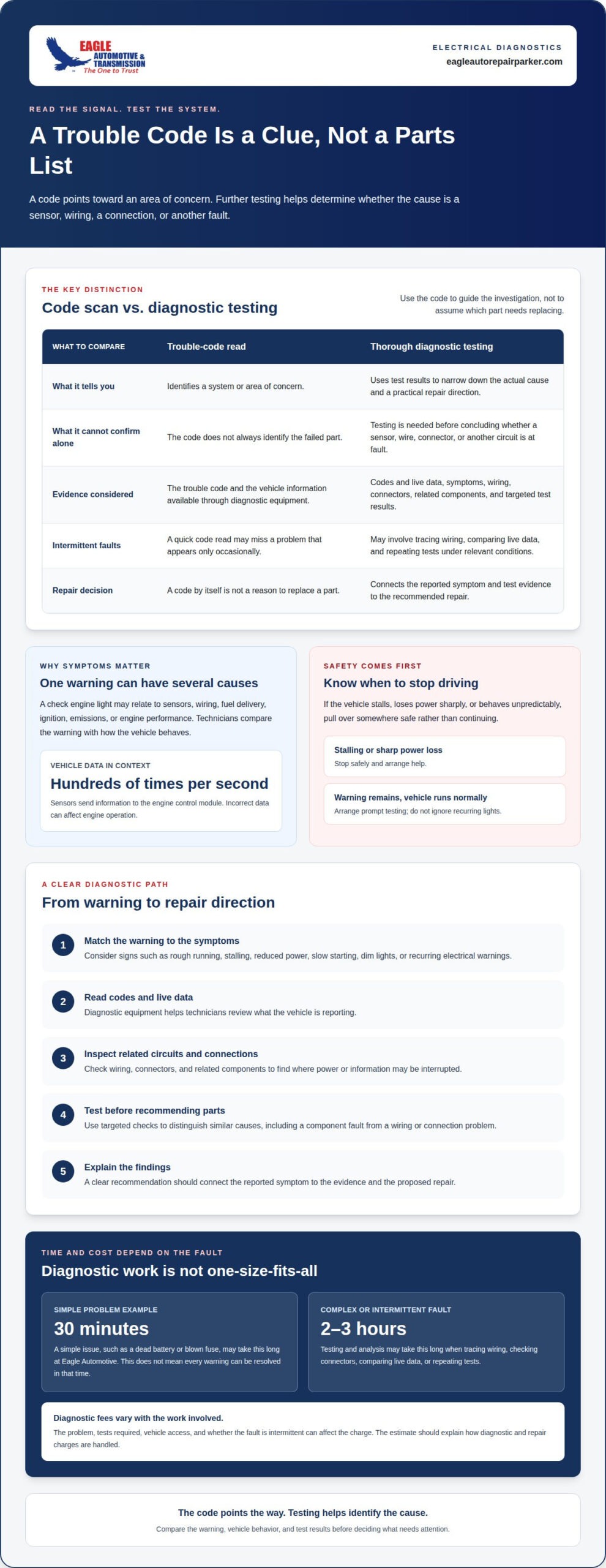
It’s natural to expect a trouble code to identify the failed part. Usually, though, a code points to an area of concern, not a part to replace. The next step is testing the system and checking the information the vehicle is reporting.
This guide explains how to decide whether to keep driving, what trouble codes can and can’t tell you, and how technicians trace electrical faults. You’ll also learn what a thorough diagnostic process involves and when professional testing can turn an uncertain warning into a clear repair direction.
Key Takeaways
- Warning lights call for attention, but symptoms such as stalling, power loss, or unpredictable operation can make continued driving unsafe.
- Trouble codes point technicians toward a system or concern; further testing helps determine the actual cause before parts are replaced.
- A check engine light can relate to several systems, including sensors, wiring, fuel delivery, ignition, emissions, or engine performance.
- Diagnostic equipment helps technicians read trouble codes and live data, then narrow down the fault through targeted testing.
- A careful diagnostic process connects the warning, vehicle symptoms, and test results to a practical repair direction.
Can I keep driving if my warning light is on?
Whether you can continue depends on the warning and how the vehicle behaves. Technicians diagnose electrical faults by reading vehicle data and inspecting wiring, connectors, and related components. Incomplete diagnosis can miss the underlying fault and lead to the wrong repair.
Dashboard Warning Light Assessment
A dashboard warning is a starting point, not a complete diagnosis. Sensors send information to the engine control module hundreds of times per second, and incorrect data can affect engine operation. Technicians compare the warning with symptoms such as stalling, rough running, or reduced power. If your vehicle behaves unpredictably, pull over safely instead of continuing to drive.
Battery and Charging System Checks
A weak battery, failing alternator, or charging fault can cause slow starting, dim lights, or repeated electrical warnings. Technicians assess the battery and charging system together because a discharged battery may be the result of another fault. Repeated deep discharges from a parasitic drain can shorten battery life and eventually cause damage beyond recovery. Battery age matters too: check it after 3 years and consider replacement by year 5.
Wiring and Module Faults
Alternator output problems, damaged wiring, loose connectors, or a control module fault can cause similar symptoms. A technician checks connections and related circuits to find where power or information is interrupted. For example, a loose connection may trigger an intermittent warning, while a charging fault can affect several electrical systems. Replacing a module without tracing its wiring may leave the underlying problem unresolved.
Watch for changes beyond the dashboard. A vehicle that clicks instead of starting may have a battery, starter, or connection problem; dim headlights can accompany a charging issue. Flickering lights, recurring warning messages, or accessories that stop working can also indicate electrical trouble. One symptom alone doesn’t identify the failed part, so technicians compare several clues before determining the cause.
Driving risk depends on whether the fault affects reliable operation. If the engine stalls, power drops sharply, or essential systems behave erratically, stop somewhere safe and arrange help rather than continuing. If the vehicle runs normally but a warning remains, prompt testing can identify the issue before it worsens. Don’t ignore recurring lights, even if restarting temporarily clears them.
If the warning remains, arrange an electrical diagnostic rather than relying on the light alone. During a professional car electrical diagnostic service, technicians connect equipment to the vehicle’s onboard system to read trouble codes and live data. This information can help assess the fault alongside the vehicle’s symptoms. A Parker vehicle electrical diagnostic for a simple problem, such as a dead battery or blown fuse, may take 30 minutes at Eagle Automotive; that estimate applies to a simple problem and does not mean every warning can be resolved in that time.
If your battery needs replacement, handle the terminals carefully. Avoid touching both terminals with the same tool, as this can create a dangerous short circuit. If you’re not comfortable working safely, have a technician do the replacement. Even if the car starts again, use diagnostic results and observed symptoms to decide what needs attention rather than assuming the warning has no cause.
Do diagnostic codes tell you exactly what part to replace?
No. A diagnostic trouble code identifies an area of concern, but it doesn’t always identify the failed part. A sensor circuit code, for example, may relate to the sensor, its wiring, a connector, or another circuit fault. Technicians use the code to guide further testing before recommending a repair or replacement.
There isn’t one fixed diagnostic price for every vehicle in the United States. The amount depends on the problem, the tests required, vehicle access, and whether the fault is intermittent. A quote establishes the applicable charge based on the work involved.
Whether a diagnostic fee is applied toward repairs depends on the terms of that service. The estimate should explain how diagnostic and repair charges are handled, so you understand the proposed work before authorizing it.
Electrical diagnosis often intersects with broader automotive repair because systems share wiring, power, and control signals. A starting or charging complaint, for instance, can involve electrical checks alongside other vehicle concerns. Understanding how diagnosis fits into full-service automotive repair at Eagle Automotive can help put related findings in context.
Alternator concerns show why testing matters. A warning or discharged battery may point to the alternator, but technicians also assess charging output, connections, and wiring. If output is low, test results help distinguish an alternator fault from a poor connection or another charging-system problem. The recommended repair may involve wiring repair or alternator replacement.
Complex or intermittent electrical problems may require 2-3 hours of testing and analysis. That work can involve tracing wiring, checking connectors, comparing live data, and repeating tests under relevant conditions. A quick code read may miss a fault that appears only occasionally. Skipping deeper checks can lead to replacing a working part while the original problem remains unresolved.
Clear communication connects the reported symptom to the evidence and repair recommendation. For example, if charging tests point to an alternator fault, the explanation should show how those findings support that conclusion. Ask for a straightforward account of the tests and results. This makes it easier to understand why a repair is recommended and what it is meant to address.
Why did my check engine light turn on?
A check engine light can point to emissions, ignition, fuel delivery, sensors, wiring, or engine performance. Dealership and independent-shop diagnostics can both investigate these systems; compare the testing process and explanation, not the shop label alone.
General Diagnostics and Check Engine Service
General diagnostics investigate a reported problem across vehicle systems, while check engine service focuses on the engine control system and related faults. For example, a no-start concern may involve starting components, wiring, or battery connections; an illuminated check engine light directs attention toward engine data and related systems. The symptom and warning help shape the diagnostic path.
Warning Lights and Communication Faults
Warning lights can appear when a control module detects a problem or receives information outside expected conditions. A system communication fault can also interrupt messages between modules, resulting in multiple warnings or inconsistent readings. Technicians compare dashboard messages with stored codes and live vehicle data. When readings conflict with the vehicle’s behavior, they also inspect wiring and connectors.
Lighting and Accessory Issues
Dimming headlights, flickering interior lights, or unresponsive power windows can point to electrical issues outside the engine system. These symptoms may involve a circuit, connection, switch, or power supply. Technicians identify the affected components, then trace the related circuit and inspect its connections. A check engine light may be a separate concern, so each symptom needs attention.
Check Engine Code Diagnosis
A code guides the next test; it doesn’t automatically name a replacement part. If a code concerns a sensor, technicians assess its data and wiring before deciding whether the sensor itself has failed. Incorrect sensor data can cause poor engine operation or wasted fuel. Diagnosis connects the code with symptoms, circuit checks, and system behavior before a repair is recommended.
Check engine diagnostics are different from simply clearing a warning. Disconnecting the vehicle battery may temporarily erase diagnostic trouble codes, but it won’t fix the underlying fault. If the light returns, the problem remains and needs investigation. Technicians use stored information, current readings, and reported symptoms to narrow down the cause rather than treating a cleared dashboard as a repair.
Give the repair shop a clear account of what happened: when the light appeared, whether it stayed on, and what changed in engine performance. Mention symptoms such as rough running, hesitation, or a recent electrical issue. This timeline gives technicians useful context alongside vehicle data and helps keep the investigation focused on your concern.
There is no universal rule requiring every vehicle to receive a generic diagnostic scan once a year, so a yearly scan is not an automatic requirement. A diagnostic scan can provide stored fault information, but it does not by itself confirm which component has failed; technicians interpret results alongside symptoms and vehicle data.
Diagnostic equipment and ASE-certified technicians
Look for a repair process that combines suitable diagnostic equipment, relevant technician experience, and clear explanations. ASE certification can be one credential to consider, but certification alone doesn’t show how a technician will test your vehicle’s specific electrical fault.
A scan tool lets technicians read trouble codes and live data from the vehicle’s onboard systems. For electrical testing, a digital multimeter can measure voltage, resistance, and continuity in circuits. Wiring diagrams help technicians trace connections between components, while test results show whether a suspected circuit is behaving as expected.
Equipment is useful only when the technician applies it to the reported symptoms. A check engine warning, for example, may involve sensor data, ignition, emissions, wiring, or engine performance. An experienced technician compares the code with live readings and the vehicle’s behavior, then tests the relevant circuit before recommending a repair.
Give the technician details that can help reproduce the fault. Share when the symptom occurs, whether the engine is cold or warm, and which dashboard warnings appear. Mention recent battery work, jump-starts, repairs, or electrical changes. For example, a warning that appears only during startup provides a different clue from one that appears while driving.
Mobile support can help gather symptom details or provide preliminary technical guidance without bringing a vehicle into a shop. Remote advice, however, can’t physically inspect a connector, test a circuit, or observe an intermittent fault firsthand. A complex electrical problem may require hands-on testing with the vehicle and diagnostic equipment together.
ASE certification is one credential readers may weigh alongside practical diagnostic skills. More useful evidence is a clear explanation of the test plan: which system will be checked, how results will narrow the cause, and what findings support the repair recommendation. A technician should distinguish a code or symptom from proof that a specific component has failed.
When assessing a nearby repair option, consider whether its technicians explain the diagnostic steps and connect the findings to the proposed work. A sound process includes recording symptoms, scanning the vehicle, testing related circuits, and reporting the results. This approach helps prevent replacing a working component while leaving damaged wiring or another fault unresolved.
Before authorizing repairs, look for a diagnosis that identifies the problem area and explains the evidence behind the recommendation. If the check engine light accompanies rough running, for example, the technician should relate the engine symptoms to scan data and relevant component tests. That detail makes the next repair decision easier to understand.
Automotive electrical diagnostic process
Reliable diagnosis follows evidence from the driver’s concern to a verified fault. The technician narrows down the problem systematically instead of replacing parts based on a single symptom.
Diagnostic pricing depends on the case and is provided after a quote request. Factors include whether the fault is intermittent, which circuits need testing, vehicle access, and the time required to isolate the cause.
A typical process moves through connected checks:
- Record the concern. The technician notes when the trouble occurs, what systems are affected, and whether it repeats. A charging issue that appears during startup creates a different test direction than one appearing while driving.
- Review vehicle data. Diagnostic equipment connects to the onboard system to read trouble codes and live data. Those readings help identify affected systems, but they do not prove a particular component has failed.
- Test the related circuit. The technician follows wiring and connectors linked to the concern, then checks for interrupted power, poor connections, or inconsistent signals. For charging trouble, the battery, alternator, and connections are considered together.
- Trace intermittent faults. If the problem comes and goes, the technician compares readings and symptoms under relevant conditions. Complex or intermittent electrical problems may require 2-3 hours of testing and analysis.
- Confirm the finding. After identifying a likely cause, the technician checks that the test results support it and explains the recommended repair. A reliable conclusion connects the original concern, the test evidence, and the affected component.
Advanced equipment supports the process, but careful interpretation matters just as much. A trouble code can point to a system while the actual cause lies in its wiring, connector, or another related part. Testing these possibilities helps prevent unnecessary replacement and keeps the repair focused.
You can make the first step more useful by describing the symptom clearly. Note whether a warning appears at startup, during acceleration, or after the vehicle has been running. Mention related changes, such as dim lights or slow cranking, because these details can help technicians connect charging behavior with your concern.
The diagnostic result should give you a clear next step, not just a list of codes. Ask what was tested, what the results showed, and why the proposed repair addresses the fault. This helps you understand the work before authorizing it and gives the repair plan a sound technical basis.
Eagle Automotive: Engine Repair & Service
Eagle Automotive helps drivers address check engine warnings and related engine concerns through its Check Engine Light and Engine Repair & Service offerings. Turn to the shop when a warning returns, engine performance changes, or diagnostic results point to an issue needing further investigation. A trouble code is only one clue; the right repair depends on testing and your vehicle’s symptoms.
Share when the warning appeared and describe any changes in how the engine runs. This information helps connect your concern with the diagnostic findings and determine the next step. If your check engine light or engine performance concerns you, contact Eagle Automotive to discuss the issue.
Choose a Clear Next Step for Your Vehicle
A warning light can leave you weighing whether to keep driving, monitor the symptom, or arrange an inspection. Use diagnostic findings to make that decision with a repair plan suited to your vehicle’s condition. A car electrical diagnostic service is most useful when its results guide the next action, not just identify a code.
Eagle Automotive offers Check Engine Light and Engine Repair & Service for warning and engine concerns. Brake Repair is also available when braking symptoms need attention. Focus on the issue affecting your vehicle, and choose the next step based on what testing reveals.
If a warning returns or a new symptom appears, don’t rely on a temporary change as proof the underlying issue is resolved. Get a clear assessment and discuss the appropriate repair. Contact Eagle Automotive to take the next step with your vehicle.
Frequently Asked Questions
How do vehicle diagnostic systems work?
Vehicle computers receive signals from sensors and other modules, then use those inputs to manage systems such as engine operation. If a reading falls outside expected conditions, the system may store a trouble code and turn on a warning light. The code records a detected condition, not a final repair diagnosis. Technicians interpret it alongside the vehicle’s behavior and test results.
How long does a car diagnostic last?
There isn’t one set duration for every diagnostic. A fault that is easy to reproduce may require less investigation than one that appears only under specific conditions or involves several systems. The diagnostic estimate should describe the testing scope, while repair time is a separate consideration. Sharing when the symptom occurs can help technicians plan an effective test sequence.
What is included in a car diagnostic test?
The scope depends on the concern. For a starting complaint, testing may focus on starting and charging components; for an engine warning, it may focus on engine-related data and circuits. A scan can provide useful direction, but diagnosis may also involve targeted inspections and measurements. Ask what the proposed test covers so its findings are clear and relevant to your concern.
What symptoms indicate a car may need electrical diagnostics?
Repeated no-start events, flickering dashboard lights, accessories that stop working, or several unrelated warnings appearing together can indicate an electrical concern. Note the conditions surrounding the symptom, such as whether it happens at startup or after driving. This detail can help distinguish a recurring circuit issue from a separate component problem. A single symptom alone cannot identify the cause.
Can I diagnose car electrical problems myself, and what are the risks?
A trouble code points to an area of concern, not necessarily the failed part. Without testing wiring, connectors, live data, and related components, an incomplete diagnosis can lead to the wrong repair or replacement.