

Suspension Repair Shop in Parker, CO for Stable, Smooth Driving
Hear a whining or groaning noise when you turn? A suspension repair shop in Parker, CO can assess the concern and determine whether it involves steering, suspension, or another system. The sound alone won’t identify the cause, so start by noting when it occurs and how the vehicle feels.
A new sound can make an ordinary drive feel uncertain. Maybe it happens only during a tight turn, or changes with your speed or the road surface. Those details give a technician useful context without requiring you to guess which part has failed. Diagnosis starts with the symptom, then narrows down its possible source.
This article explains how repair findings, warranty terms, and vehicle condition can shape the next steps. It also covers what a technician may assess when steering feels different, handling changes, or ride comfort suffers. You’ll know what to describe, what to ask about proposed work, and when to arrange a professional inspection.
Key Takeaways
- Turning noises and changes in ride or handling can have more than one cause, so diagnosis should examine the relevant steering and suspension components.
- Colorado Department of Transportation guidance calls for winter-worthy tires to have at least 3/16 inch of tread between September and May.
- Worn shocks or struts can contribute to bouncing, shaking, uneven tire wear, and poor handling.
- Suspension repair may involve different components; the right approach depends on inspection findings and the symptoms.
- Review the warranty terms for any repair, including what work and parts the coverage applies to.
Repair warranty
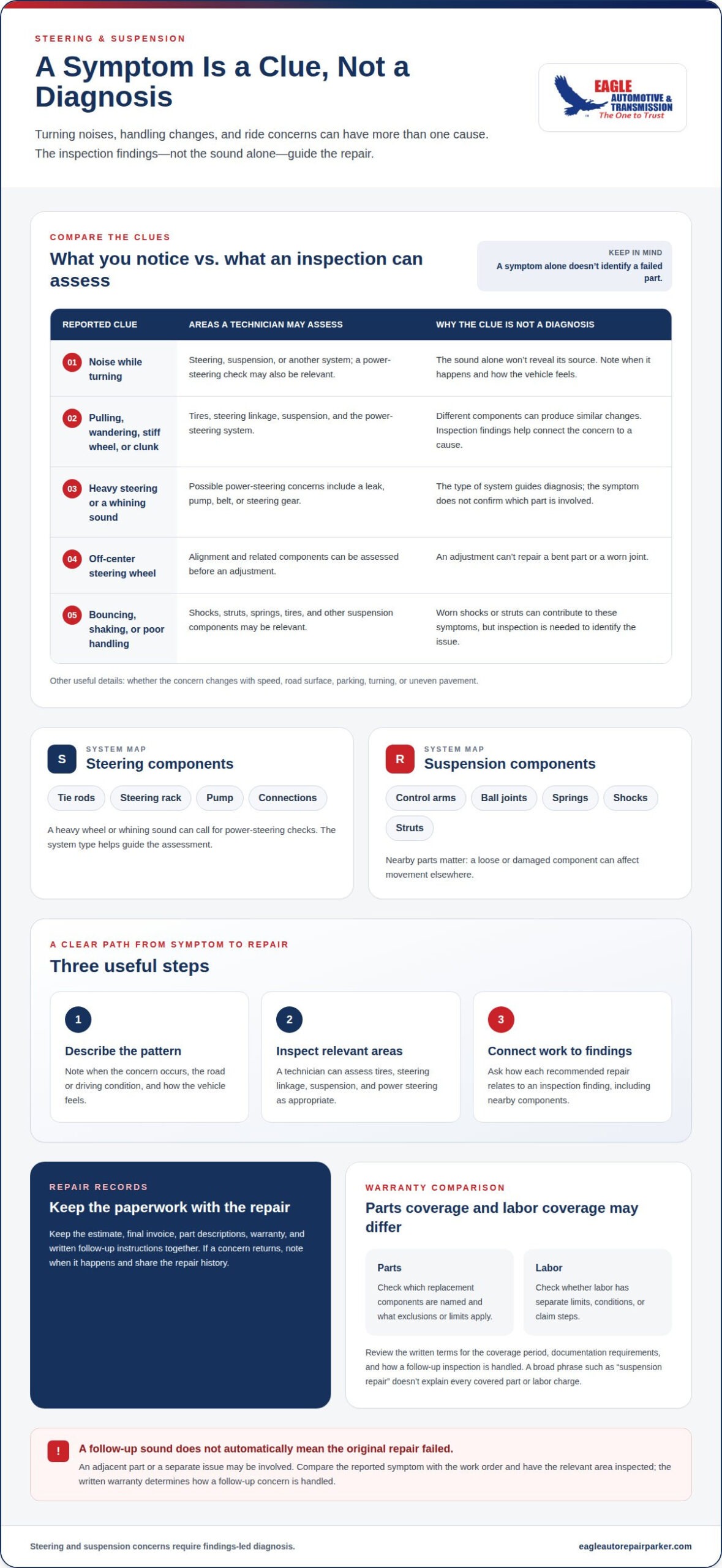
A repair warranty explains what happens if covered work develops a problem after service. For suspension repairs, review the written terms for covered parts, labor, coverage period, and how to request an inspection. Keep the warranty with the estimate and final invoice. Clear paperwork helps connect a later concern to the original repair.
Parts and labor coverage can have different conditions. A replacement component may carry parts coverage, while labor may have separate limits. Look for specific component names and exclusions, not just a broad phrase like “suspension repair.” The paperwork should also explain how a concern is reviewed and whether authorization is needed before additional work begins.
A nationwide parts and labor warranty should explain how covered work is handled if a related problem develops away from the original repair location. “Nationwide” alone doesn’t describe every covered part, labor charge, or claim step. Review the written terms for coverage limits, documentation requirements, and the process for finding an authorized repair facility. Keep invoices and inspection records available.
A noise or handling change after a repair does not automatically mean the original work failed. For example, a new sound after replacing a suspension component could come from an adjacent part or a separate issue. A qualified mechanic can compare the reported symptom with the work order and inspect the relevant area. Warranty terms determine how a follow-up concern is handled.
Warranty coverage is also distinct from routine maintenance. Oil changes, tire condition, and unrelated repairs may fall outside a suspension repair’s coverage. Colorado Department of Transportation guidance calls for winter-worthy tires to have at least 3/16 of an inch of tread between September and May. Tire condition can influence handling, so keep tire-related inspection notes with other vehicle records.
Before authorizing a repair, check that the estimate describes the planned work and that the warranty document identifies applicable coverage. After service, keep the invoice, part descriptions, and written follow-up instructions. If a concern returns, note when it occurs and share that information with the repair shop. Specific details help assess the issue against the repair history.
Terms such as “certified” describe a qualification, not the warranty’s scope. Coverage comes from the written warranty, including its limits and claim process. Whether the work involves suspension, brakes, a transmission, or another repair, review the terms for that job instead of assuming identical coverage across different repairs.
Steering and suspension repair
Steering and suspension repair should begin with an inspection of the symptoms, not an assumed part replacement. Pulling, wandering, a stiff wheel, or a clunk can involve different components. A technician can assess the tires, steering linkage, suspension, and power-steering system, then explain which findings relate to the concern. The right repair depends on that inspection.
Steering adjustments can address alignment or component position, but an adjustment can’t repair a bent part or worn joint. If the steering wheel sits off-center, a technician can assess alignment and inspect related components first. Power-steering concerns need separate checks: a heavy wheel or whining sound may involve a leak, pump, belt, or steering gear. The system type guides diagnosis.
Steering repair may involve tie rods, a steering rack, a pump, or connections; suspension work may involve control arms, ball joints, springs, shocks, or struts. Nearby parts matter because one loose or damaged component can affect movement elsewhere. Ask for an explanation connecting each recommended repair to an inspection finding, rather than accepting a parts list without a clear reason.
Reviews and ratings for suspension repair near Parker, Colorado vary by platform and individual experience. Look for detailed comments about diagnostic explanations, repair communication, and how concerns were handled. A star score alone can’t show whether a reviewer’s vehicle or repair issue matches yours. Focus on relevant details instead of treating any single rating as proof of repair quality.
ASE certification is a specific credential, distinct from a general description such as “certified mechanic.” That description alone does not establish a particular credential. Don’t interpret “certified” as proof of a specific certification. Consider the documented findings and ask what qualifications are relevant to the diagnostic task.
The listed office hours are Monday through Friday, 8:00 a.m. to 6:00 p.m.; Saturday and Sunday are closed. Those hours describe when the office is open, not open appointment slots. Scheduling depends on the shop’s calendar and the work involved. For a steering concern, explain the symptoms and vehicle details when arranging an appointment at Eagle Automotive.
Routine service can also reveal a steering concern before it becomes easy to miss among other symptoms. Note whether the problem occurs while parking, turning, or crossing uneven pavement, and share that pattern during the appointment. For broader Parker automotive repair information, consider how steering and suspension concerns relate to other vehicle systems; a clear description helps keep the inspection focused.
Vehicle stability, handling, and ride comfort
A stable vehicle tracks predictably through a turn, stays composed over bumps, and responds consistently to steering input. Springs support vehicle weight, while shocks and struts control repeated movement after uneven pavement. If one corner keeps bouncing or the body leans noticeably, those symptoms can point to suspension wear, but don’t identify a failed part by themselves.
Handling depends on several systems working together. Tire condition, alignment, steering connections, springs, and dampers all affect how smoothly a vehicle responds. For example, a vehicle that drifts on a straight road may have an alignment issue, tire trouble, or a worn steering component. A technician considers these possibilities together rather than treating every pull as a suspension fault.
Vehicle age and engine type don’t, by themselves, determine whether suspension service is appropriate. The setup and condition matter: a heavier engine can place different loads on front-end components than a lighter configuration. A technician can identify the suspension design, inspect its parts, and base recommendations on their condition, not the model year alone.
Modified vehicles need a closer look at how changes affect suspension geometry. A lift kit can alter ride height and the angles of steering and suspension components. Those changes may affect alignment, tire contact, and handling. An inspection should account for the installed kit, related parts, and current setup before recommending an adjustment or replacement.
Aftermarket wheels or tire sizes can also change how a vehicle behaves. A larger tire may contact surrounding components, while altered wheel offset can affect clearance and steering feel. Share details about installed lifts, replacement springs, or wheel changes so the technician can evaluate the full configuration rather than assume factory ride height.
A useful inspection connects each finding to a driving symptom. For instance, a worn strut may contribute to repeated bouncing, while a loose joint can affect control and produce a clunk. A technician can check component movement, mounting points, tire wear, and visible damage, then explain which condition affects stability. That helps avoid replacing parts the inspection doesn’t support.
For complete auto care, assess stability concerns alongside related systems when symptoms overlap. A rough ride, steering pull, and uneven tire wear may have separate causes or share an underlying issue. Clear findings help determine whether the next step involves adjustment, component repair, or further diagnosis. The goal is a smooth ride and handling suited to the vehicle’s actual condition.
Benefits of replacing worn shocks and struts
Worn shocks or struts can let a vehicle bounce or shake after bumps, contribute to uneven tire wear, and weaken handling. Replacing a component that inspection identifies as worn can help control wheel movement and restore a more settled ride. The improvement depends on the condition of the rest of the suspension, not just the new part.
Shocks and struts manage suspension movement as tires travel over uneven pavement. When damping weakens, the vehicle may keep moving after a bump instead of settling promptly. That repeated motion can make passengers uncomfortable and steering response feel less composed. A mechanic checks the assembly and its mounting points before recommending replacement.
Age and road conditions affect service life. Many vehicles need shocks or struts replaced between 50,000 and 100,000 miles, depending on driving conditions. That range is a general guide, not a diagnosis for an individual vehicle. Leaks, damaged mounts, excess movement, and ride symptoms help determine whether replacement is appropriate.
What changes after replacement? A properly matched part can help control body movement during braking, turns, and rough-road travel. It may also help the tires maintain more consistent contact with the road. Replacing worn parts doesn’t correct every cause of vibration or poor handling, so an inspection should also check for tire, steering, or alignment concerns.
Alignment matters if suspension work changes component position or reveals incorrect wheel angles. A mechanic can assess whether alignment should follow the repair instead of assuming every shock replacement needs the same adjustment. If the vehicle still pulls or wears a tire unevenly afterward, those symptoms call for further diagnosis, not another parts swap.
Winter roads can make a worn suspension feel more noticeable because uneven surfaces and changing traction test how the vehicle responds. Shocks and struts don’t replace suitable tires or careful driving; their role is to control suspension movement. A winter inspection can document visible leaks, loose connections, tire condition, and handling concerns before the next repair decision.
Replacing worn components may also help prevent one unresolved fault from obscuring other suspension issues. That doesn’t mean a new strut prevents all major repairs. An inspection can identify related wear and show whether additional work is needed. A clear estimate should name each affected component and explain how it relates to the reported symptom.
After the repair, note whether the original concern changes during the same type of driving that exposed it. For example, compare how the vehicle settles after a familiar uneven stretch of road. If bouncing, shaking, or poor handling persists, report the specific condition and have the suspension reassessed. That feedback helps distinguish a remaining fault from a separate issue.
Suspension repair
Suspension repair can address shocks, struts, control arms, and ball joints. The right repair depends on inspection findings and the symptoms affecting the vehicle.
Shocks and Struts
Shocks and struts control wheel movement and help support stable handling. Technicians inspect for fluid leaks, damaged mounts, and worn components before recommending replacement. Most vehicles need shocks or struts replaced every 50,000-100,000 miles, depending on driving conditions. That interval is a guide; visible condition and ride symptoms help determine the next step.
Control Arms and Ball Joints
Control arms connect the suspension to the vehicle frame, while ball joints allow parts to pivot as wheels turn and move. A technician checks for looseness, damaged boots, or unusual movement. If a joint or arm is worn, repair can help restore proper component movement. The inspection also considers nearby parts affected by the same wear.
Good diagnostics connect a specific finding to a driver’s concern. A clunk over a driveway entrance, for example, may lead a technician to inspect joints, bushings, mounts, and nearby components. The sound alone can’t identify a failed part. A clear repair explanation names the affected component and explains why its condition matters.
Repair planning also considers how parts work together. Replacing a damaged control arm may require an alignment check afterward, while replacing a strut can affect related mounting points. Technicians should identify required follow-up work in the estimate. That helps vehicle owners understand which repairs address the original symptom and which address related findings.
Reliable service depends on matching replacement parts to the vehicle’s design and current setup. Modified ride height or nonstandard suspension components can change what an inspection needs to consider. Share details about prior repairs or modifications so the technician can evaluate the installed configuration instead of treating a modified vehicle like an unchanged factory setup.
After work is complete, a technician can review the repair record and explain what changed. If the original symptom persists, describe when it occurs, such as during turns or over uneven pavement. That specific feedback gives the service team a useful starting point for further diagnosis, rather than prompting an unsupported parts replacement.
Ask for an estimate that separates confirmed repairs from recommended follow-up. A properly documented job should identify the affected parts, repair steps, and any alignment check. Choose suspension repair based on inspection findings and the vehicle’s needs, not a mileage figure alone. Clear findings make it easier to understand the work before authorizing it.
Eagle Automotive: Steering and Suspension
Eagle Automotive handles steering and suspension concerns that affect control, ride, or tire wear. Turn to its Steering and Suspension service when the vehicle pulls, clunks, bounces, or feels unusually difficult to steer. A focused inspection can identify the affected component and clarify the repair needed.
Describe when the symptom happens, such as during turns, braking, or travel over rough pavement. If the concern comes with a warning light, engine trouble, or braking changes, mention those symptoms too. Eagle Automotive also handles Check Engine Light concerns, Engine Repair & Service, and Brake Repair when relevant.
Contact Eagle Automotive to discuss a steering or suspension concern and arrange the next step.
Take the Next Step Toward a More Confident Drive
Choosing a suspension repair shop in Parker, CO is a practical step when handling changes or unusual ride concerns affect everyday driving. Bring a clear description of what you notice and when it happens. That gives the conversation a useful starting point and keeps the focus on your vehicle’s needs.
Mention any other symptoms, too. Eagle Automotive offers Check Engine Light service, Engine Repair & Service, and Brake Repair, so related concerns can be considered alongside suspension needs.
Move forward with a direct conversation about the symptoms you’re experiencing and the next appropriate step. Contact Eagle Automotive for suspension service, and take the first step toward driving with greater confidence.
Frequently Asked Questions
Can you fix a whining or groaning noise when I turn?
Yes. A technician can inspect the steering and suspension to locate the noise and recommend a repair. A whine during a turn can involve power-steering components, while a groan or clunk may come from another part. The sound alone doesn’t identify the cause. Describe whether it happens while parking, turning slowly, or driving, and mention any change in steering effort.
How Often Should Shocks & Struts Be Replaced?
There isn’t one replacement schedule that fits every vehicle. Driving conditions, component wear, and ride quality all matter. Have the shocks and struts inspected if the vehicle bounces repeatedly, feels unsettled, or shows unusual tire wear. A technician can compare the observed condition with the vehicle’s maintenance guidance and explain whether replacement is warranted or monitoring is appropriate.
Why does my steering wheel shake while driving?
A shaking steering wheel can result from tire or wheel problems, steering wear, suspension faults, or brake issues. Notice whether the vibration happens at particular speeds, over bumps, or mainly during braking. Those details help narrow the inspection. If shaking occurs during braking, mention that clearly, since the brake system may need assessment alongside steering and suspension components.
What should I look for in a suspension repair shop in Parker, CO?
Look for a shop that can inspect steering and suspension concerns, explain its findings, and identify the proposed repair clearly. In Parker, Eagle Automotive provides Steering and Suspension service and free computer diagnostics for every customer. Computer diagnostics are distinct from a physical inspection, so ask how the shop will assess the specific noise, handling change, or ride concern you’re experiencing.
Do suspension repair shops in Parker, CO offer warranties or guarantees?
Warranty terms differ, so read the written coverage before approving repairs. Eagle Automotive lists a 12 Month / 12k Mile Warranty, a 2 Year / 24k Mile Warranty, a 3 Year / 36k Mile Warranty, and a Nationwide Warranty. Confirm which listed option applies to the specific repair and review its written terms, including coverage limits and the process for addressing a concern.
How do I choose a suspension repair shop in Parker, CO?
Choose a suspension repair shop in Parker, CO that connects its diagnosis to your symptoms and explains why each repair is needed. Ask for an estimate identifying the affected parts and proposed work, and review the written warranty terms. A clear explanation should distinguish computer diagnostics from a hands-on inspection and show how the shop will evaluate your vehicle.
What are signs my car needs suspension repair?
Common warning signs include repeated bouncing, shaking, uneven tire wear, poor handling, clunks over bumps, or a vehicle that feels unsettled through turns. These symptoms can have different causes, so none confirms a specific failed part. Note when the behavior occurs and share that pattern with a technician. A physical inspection can connect the symptom to a component.
suspension repair near Parker, CO reviews and ratings
Reviews and ratings for suspension repair near Parker vary by platform and individual experience. Look for detailed comments about diagnostic explanations, repair communication, and how concerns were handled. A star score alone can’t prove repair quality.