

Auto Air Conditioning Service Near Me for Repair and Checks
Can you leave the engine running while adding Freon? Whether the engine should be running during an A/C recharge can depend on the vehicle and the procedure. But recharging shouldn’t be routine upkeep. If you’re looking for auto air conditioning service near me, the key is finding out why the system isn’t cooling, not just adding refrigerant.
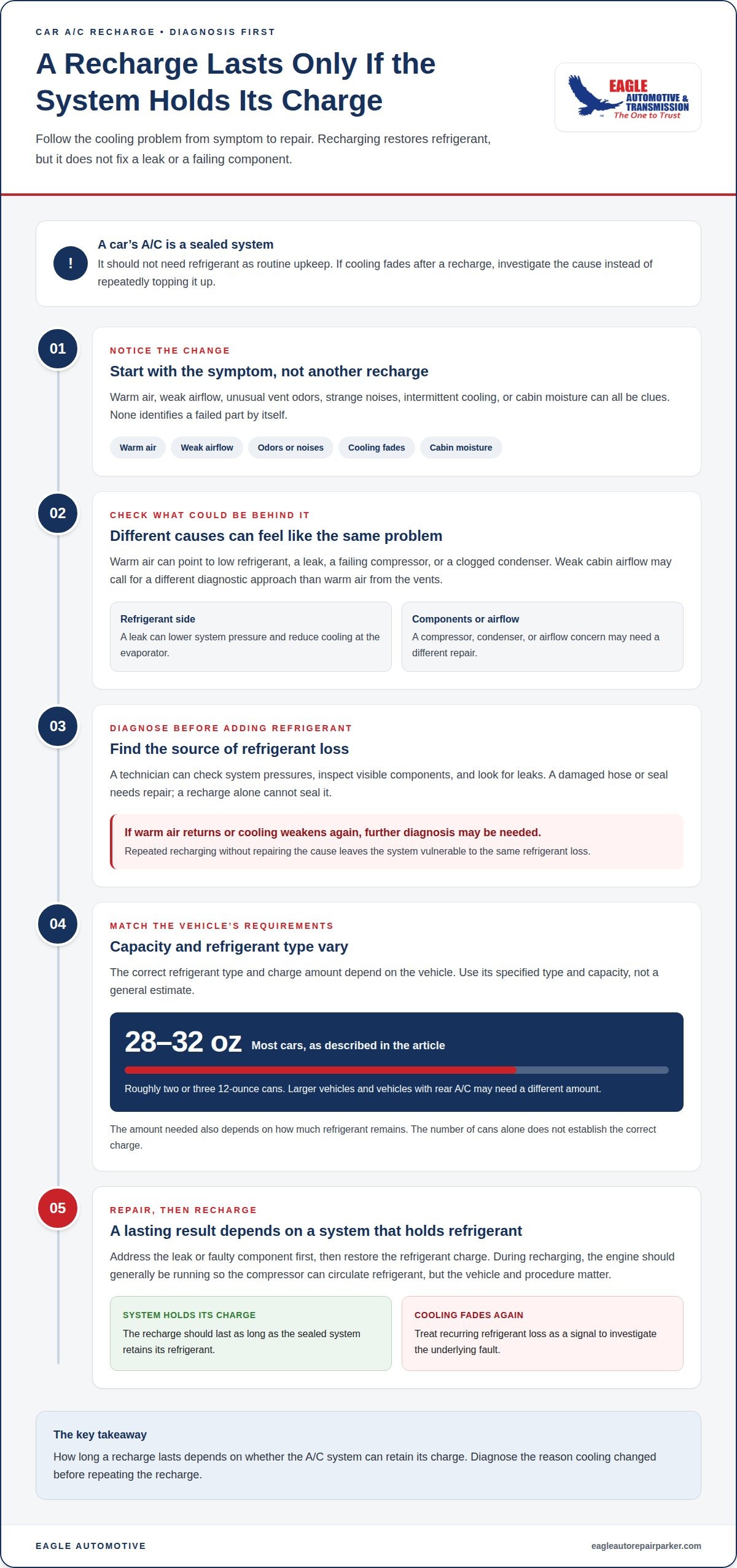
A car’s A/C is a sealed system, so it shouldn’t need more refrigerant unless there’s a leak. If the air turns warm again after a recharge, the leak or another problem may still need attention. This guide explains warning signs, what A/C diagnostics and preventive checks can cover, and what affects how long a recharge lasts. You’ll also learn why weak airflow, unusual smells, or odd noises deserve a closer look, helping you decide what to do next without guessing at the cause.
Key Takeaways
- Adding refrigerant is not routine upkeep; recurring cooling trouble calls for finding the underlying cause.
- Warm air, weak airflow, unusual odors, or cabin moisture can signal different A/C issues, so symptoms need context.
- A thorough inspection can help distinguish refrigerant leaks from airflow, compressor, or electrical concerns.
- Preventive checks can catch developing problems before they interfere with cooling performance.
- Eagle Automotive’s Heating and Air Conditioning service can help address A/C concerns, while Engine Repair & Service, Check Engine Light, and Brake Repair support other vehicle needs.
Do you also handle car heating repair?
Yes. Automotive heating and air conditioning are separate functions, but both affect cabin comfort. A vehicle’s A/C uses refrigerant, a compressor, a condenser, and an evaporator to move heat out of the cabin. The heating system uses engine heat to warm the air. A technician diagnoses the affected system before recommending a repair or replacement.
Warm air with the A/C running can point to low refrigerant, a leak, a failing compressor, or a clogged condenser. The compressor pressurizes refrigerant, while the condenser cools it near the radiator. A diagnostic inspection can distinguish among these causes instead of treating every warm-air complaint with a recharge. Timely repairs can also address a developing problem before it contributes to compressor failure.
Leak detection matters because a recharge alone won’t repair a damaged hose or seal. A technician can inspect the system for leaks, then repair the source before recharging it. If refrigerant leaks again after service, the system needs further diagnosis. A/C systems are sealed, so recurring refrigerant loss calls for finding the leak, not repeatedly topping up the system.
To compare local shops, read reviews for specific examples of A/C diagnosis and repair, not just star ratings. Compare warranty terms and look for relevant technician qualifications, then check what each warranty covers. These details can help you assess whether a shop explains its diagnostic findings and repair options clearly.
Automotive refrigerant handling and recycling can involve state or local requirements. Ask how the shop recovers refrigerant and handles it under applicable rules. Proper recovery is part of responsible A/C service, not a substitute for repairing a leak.
There isn’t one fixed cost for car A/C diagnosis and repair. The findings, affected component, replacement parts, and repair work determine the scope. A recharge’s cost likewise depends on the refrigerant needed and whether leak detection or repairs are necessary. Recharging without fixing an active leak may not restore lasting cooling.
Look for an automotive shop that handles heating and air conditioning, including refrigerant leaks, compressor concerns, and airflow problems. For drivers of European makes with specialized system requirements, working with a dedicated specialist like Euro Performance Auto Shop LLC can help ensure diagnostics and maintenance adhere to manufacturer guidelines. A clear explanation of the suspected fault helps you understand the proposed repair.
Inspection and repair time depends on the diagnostic findings and the work required. Checking system pressures or inspecting visible components differs from locating a leak or replacing a compressor. The shop can explain the expected sequence after identifying the fault and needed repair.
How long should a Freon recharge last?
A recharge should last as long as the sealed A/C system retains its refrigerant. If cooling fades again, consider what caused the loss rather than treating another recharge as routine care.
Refrigerant Leaks and Premature Failure
A leak can lower system pressure and reduce cooling at the evaporator. A damaged hose or seal may let refrigerant escape, while a worn component can also affect performance. Continued operation with an unresolved A/C fault can contribute to compressor failure.
Pay attention to the pattern after service. If warm air returns or cooling weakens again, the original repair may not have addressed the source of the problem. Further diagnostic work can locate a leak that wasn’t found earlier. Recharging repeatedly without repairing the cause leaves the system vulnerable to the same refrigerant loss.
A recharge restores refrigerant, but it can’t seal a damaged connection or repair a failing part. A lasting repair addresses the source first, then restores the refrigerant charge. That distinction explains why the time between recharges depends on system condition, not a routine replacement schedule.
Recharge Guidance and Refrigerant Levels
Refrigerant capacity depends on the vehicle. Most cars use between 28 and 32 ounces, roughly two or three 12-ounce cans, but larger vehicles and those with rear A/C may need different amounts. Refrigerant type varies by vehicle, so use the type specified for yours. Consulting official manufacturer guidance or an authorized dealership like Tom Whiteside Chrysler Dodge Jeep Ram can help verify the exact specifications for your vehicle. Match the refrigerant and charge amount to the vehicle, not a general estimate.
During recharging, the engine should generally be running so its compressor can circulate refrigerant. A professional service checks refrigerant levels and identifies repairs the system needs. The amount required depends on the vehicle’s capacity and how much refrigerant remains, so the number of cans alone doesn’t establish the correct charge.
DIY recharge kits have limits. They may add refrigerant without identifying why the level dropped, and symptoms alone may not reveal how much remains. If the air is still warm afterward or cooling fades again, another recharge may not address the cause. A diagnostic check can guide the next repair instead of repeating the same step.
Treat recurring refrigerant loss as a signal to investigate, not a cue to keep adding refrigerant. Finding and repairing a leak can help the system cool efficiently and reduce strain from an unresolved fault. That’s the practical answer to how long a recharge lasts: it depends on whether the system can retain its charge.
Does my car need air conditioning repair?
Yes, several symptoms can signal that your car’s A/C needs service. Watch for warm air, weak airflow, unusual vent odors, strange noises, intermittent cooling, or cabin moisture. None identifies a failed part by itself, but each gives technicians a useful starting point for diagnosis.
Warm air can have several causes, including low refrigerant, a leak, a failing compressor, or a clogged condenser. The compressor pressurizes refrigerant, and the condenser helps cool it. A vehicle that cools inconsistently may need more than a recharge, so diagnosis should identify why cooling has changed before repairs begin.
Air volume matters, too. If the fan runs but little air reaches the vents, a blower motor problem is one possibility. An airflow restriction can also reduce output, so technicians need to distinguish a weak fan from blocked airflow. If the sound or strength changes between fan settings, note that pattern for the diagnostic inspection.
- Warm or slightly cool air: The A/C may not be removing enough heat, which can involve refrigerant, the compressor, or condenser airflow.
- Weak airflow: A blower motor concern or an airflow restriction may be limiting air from the vents.
- Mildew or mold odor: A musty smell when the A/C runs can indicate an A/C issue that needs inspection.
- Unusual noises: A new sound while the A/C operates is a reason to have the system checked.
- Cabin moisture: Water dripping onto a driver’s foot can point to an A/C drainage concern.
Intermittent cooling deserves attention, even if the air turns cold again later. For example, cooling that works only while the vehicle is moving can point to a problem that changes with operating conditions. A diagnostic check can compare the symptom with system performance instead of assuming one cause.
Before an auto repair appointment, note when the symptom appears: at startup, while idling, or during a drive. Record whether the engine is running, the fan setting, and any odor or noise. These details help technicians reproduce the concern and assess whether the condenser, compressor, blower motor, or another part needs repair or replacement. Prompt diagnosis can help restore dependable cooling and address a fault before it worsens.
A/C diagnostic and inspection services
A diagnostic appointment connects your observations with the air conditioning system’s response. Drivers looking for auto air conditioning service near me can expect inspection findings to guide the next step, not guesswork.
Compressor and Electrical Diagnostics
Compressor and electrical checks help distinguish a mechanical fault from a problem with the controls or connections. Technicians assess whether the compressor engages and whether the electrical system supports its operation. For example, a compressor that doesn’t engage may call for electrical testing before anyone recommends replacement.
The inspection also considers how the system behaves during operation. A clicking sound or cooling that cuts in and out gives technicians useful clues, but neither symptom proves that a specific component has failed. Diagnostic results help narrow the possible causes and explain which repair addresses the actual fault.
Climate-Control System Diagnostics
Climate-control checks consider how cabin settings affect temperature and airflow. Technicians can compare the selected setting with the air delivered through the vents and note whether the fan responds as expected. A temperature that doesn’t change when controls are adjusted may point to a control or electrical issue.
These observations help distinguish a climate-control concern from a refrigerant or compressor fault. Share which settings produce a change and which don’t. That specific detail can make the inspection more focused than a general report that the cabin feels uncomfortable.
Hot Air After a Recharge
If the system still blows hot after a recharge, technicians need to assess its operation rather than assume more refrigerant will solve the problem. The inspection can look for a continuing leak, a compressor concern, or another component fault. A recharge that doesn’t restore cooling is a reason to investigate further.
Describe when the warm air appears and whether cooling changes during the drive. That timeline helps technicians compare the symptom with system behavior and choose the next diagnostic check. The findings should explain why the recharge didn’t resolve the complaint.
The Diagnostic and Repair Appointment
At the appointment, explain when the problem began, what conditions bring it on, and whether previous work changed the symptom. Technicians inspect the system, evaluate relevant components, and discuss their findings before proceeding with a repair. Drivers seeking auto air conditioning service near me can use this conversation to understand the proposed work and its purpose.
Ask which finding supports the recommendation and what repair follows from it. Clear answers help you distinguish a confirmed fault from a possibility still being investigated. The next step should reflect the inspection, whether that means further testing or repairing an identified component.
Preventative A/C checkups
A preventive A/C checkup assesses system performance before a cooling concern disrupts a drive. Routine maintenance can help the system cool efficiently and use less energy. An inspection also gives a technician a chance to assess accessible components and note changes that may need closer diagnosis.
Use routine vehicle visits as a convenient time to mention a change in A/C performance. For example, tell the technician if the system seems less effective during a familiar commute or behaves differently between the start and end of a drive. Specific comparisons give the inspection a useful baseline without guessing at a failed part.
A checkup can focus on practical observations such as:
- Control response: Note whether temperature and fan settings produce the expected changes.
- Vent output: Describe differences between vents or fan settings.
- Operating sounds: Mention a new sound that appears when the A/C is switched on.
- Visible condition: Point out damage or residue noticed near accessible A/C components.
These observations help distinguish a consistent performance change from a one-time impression. A simple record of when a symptom appears, which setting was selected, and whether it recurs can make a later inspection more focused. The broader Eagle Automotive picture can also help place an A/C concern alongside other maintenance needs.
Preventive attention matters because ignored A/C problems can contribute to compressor failure or leaks that affect system performance. A checkup isn’t simply a routine recharge. It evaluates how the system operates and helps identify whether further testing or repair is appropriate for its condition.
Plan around vehicle use, not an arbitrary calendar interval. Before a long drive or a season when cabin cooling will matter more, notice whether the A/C responds as expected and share any changes during maintenance. The technician can use that report to guide inspection of relevant components and decide whether more diagnosis is needed.
Keep the takeaway practical: mention changes early, note when they occur, and include A/C performance in routine maintenance conversations. A properly operating system supports cabin comfort and efficient cooling. If its behavior changes, arrange an inspection while the symptom is still clear and easy to describe.
Eagle Automotive: Engine Repair & Service
Eagle Automotive & Transmission in Parker is a next step when weak cooling, warm air, or an A/C fault needs professional attention. Its Heating and Air Conditioning service addresses vehicle climate concerns, while Engine Repair & Service can help when engine symptoms accompany the cooling complaint. Bring a clear description of what changed and when it happens.
For example, note whether the air turns warm at idle, the airflow drops, or cooling fades during a drive. Those details help frame the diagnostic conversation. If a Check Engine Light is also on, mention it; that warning may point to a separate engine concern that needs attention alongside the A/C issue.
A useful appointment starts with the symptom, not an assumed repair. Describe any recent recharge, recurring loss of cooling, unusual odor, noise, or visible leak. Eagle Automotive & Transmission provides Heating and Air Conditioning service and can explain the repair approach indicated by its findings. A recharge alone may not resolve an active leak.
Keep related vehicle symptoms distinct. An engine warning light and warm A/C air can occur together without sharing one cause. Likewise, a braking concern belongs to Brake Repair, not an A/C diagnosis. Mention both issues clearly so each can be considered on its own terms rather than treated as one problem.
Before arranging service, gather practical details: when the A/C symptom began, whether it changes with driving conditions, and what work has already been done. If the cooling problem returned after a recharge, say so. That history helps focus the discussion on what to inspect and whether further diagnosis or a repair is appropriate.
Use the same straightforward approach for engine concerns. If poor engine performance appears alongside climate-control trouble, Eagle Automotive & Transmission’s Engine Repair & Service can address that separate need. Clear symptoms help keep the conversation focused on the systems involved and the next diagnostic step.
Contact Eagle Automotive when A/C performance changes, a leak is suspected, or cooling trouble returns after service. It can also help with engine concerns, a Check Engine Light, or a separate braking issue through the applicable offering. Contact Eagle Automotive to discuss the symptoms and next step.
Take the Next Step Toward Reliable Cooling
Your next move can be simple: describe what you notice and what you want the vehicle to do differently. A clear account of when the concern appears gives the service conversation a useful starting point, without guessing at a failed part or choosing a repair before diagnosis.
If you’re looking for auto air conditioning service near me, focus on a shop that can investigate the system and explain the recommended next step in plain language. That approach keeps the decision grounded in your vehicle’s symptoms and the inspection findings. You can also mention any other concern you want addressed during the same conversation.
Eagle Automotive in Parker is a practical next step for drivers seeking vehicle service. Share the symptoms, ask about the diagnostic process, and consider the repair recommendation before deciding how to proceed. A straightforward conversation can help you move from uncertainty to a clear plan.
Reach out to Eagle Automotive to discuss your vehicle’s A/C concern. A clear first step can make the road to comfortable driving feel manageable.
Frequently Asked Questions
Can I leave my car running when adding Freon?
Generally, the engine should be running during an A/C recharge so the engine-powered compressor can circulate refrigerant. Follow the recharge equipment’s instructions and use the vehicle’s correct refrigerant type. If the system needs frequent top-ups, don’t treat another can as the fix. Repeated refrigerant loss points to a condition that needs diagnosis.
How many cans of Freon does a car take?
Most cars use between 28 and 32 ounces of refrigerant, roughly two or three 12-ounce cans. That amount is not universal: larger vehicles and vehicles with rear A/C may require a different capacity. Check the vehicle’s specified charge amount before adding refrigerant. Too little or too much can leave the system operating improperly.
How often should Freon be changed?
Freon, or refrigerant, doesn’t have a routine change interval in a sealed A/C system. The system shouldn’t need additional refrigerant unless it develops a leak. If cooling declines or refrigerant needs topping up, the useful next step is locating the cause of the loss. Recharging without addressing a leak only treats the symptom.
Why is my car AC blowing warm air?
Warm air can result from low refrigerant, a refrigerant leak, a failing compressor, or a clogged condenser. The same symptom can have different causes, so it doesn’t identify a failed part by itself. Note whether warm air occurs all the time or under certain driving conditions. That detail helps narrow the diagnostic process.
What auto air conditioning services do nearby repair shops offer?
Nearby shops may inspect A/C performance, check for refrigerant leaks, recharge the system, or repair components such as hoses, compressors, and condensers. In Parker, Eagle Automotive & Transmission offers Heating and Air Conditioning service and free computer diagnostics. Ask for the inspection findings and recommended repair approach so you understand what your vehicle needs before work proceeds.