

Signs of a Blown Head Gasket in Parker and Repair Options
A head gasket failure rarely has one unmistakable symptom. For drivers searching for signs of a blown head gasket and repair in Parker, clues include overheating, unexplained coolant loss, persistent white exhaust smoke, milky-looking oil, or rough engine performance. The gasket seals the space between the engine block and cylinder head, helping keep combustion pressure, coolant, and oil where they belong.
These warning signs deserve attention, but none confirms a failed gasket on its own. A cooling-system problem or cracked cylinder head can cause similar symptoms, so guessing may lead to the wrong repair.
This guide explains what the head gasket does, which symptoms can point to failure, and how professional testing can help distinguish gasket trouble from other engine problems, a key part of automotive repair in Parker.
Key Takeaways
- A head gasket seals the engine block and cylinder head, helping keep combustion pressure, coolant, and oil separated.
- Bubbles in the coolant, persistent white exhaust smoke, milky oil, overheating, or rough running can signal trouble, but no single symptom confirms the cause.
- Similar symptoms can come from other cooling-system problems or a cracked cylinder head, so accurate testing matters before repair decisions.
- Compression testing and checking coolant for exhaust gases can help diagnose a suspected gasket failure; further inspection may be needed to assess engine damage.
- Prompt attention to overheating or unexplained coolant loss can help limit additional engine damage.
What is a Head Gasket?
A head gasket sits between the engine block and cylinder head. It seals each combustion chamber and separates engine oil from coolant. When the seal fails, pressure, coolant, and oil can cross paths. The location of the failure affects which symptoms appear, so one clue alone cannot confirm the damage.
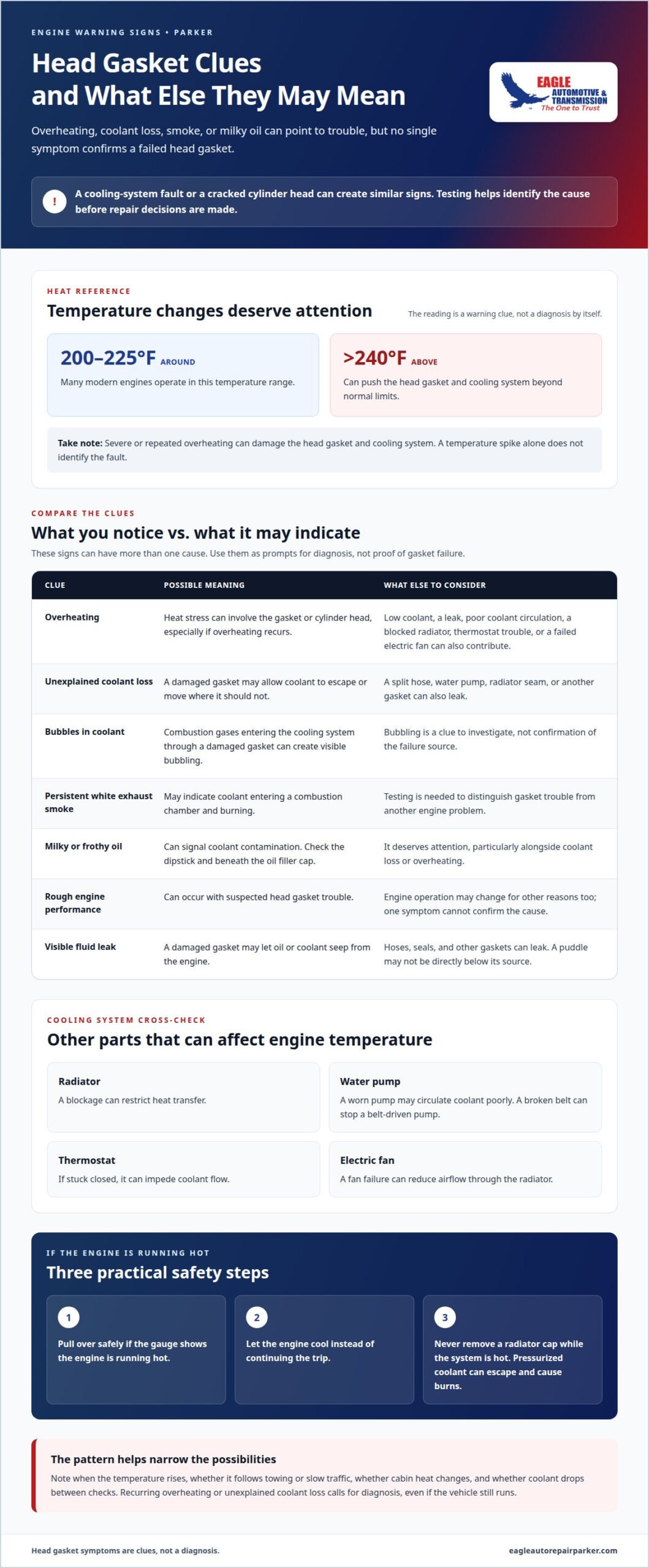
Watch for bubbles in the radiator or coolant reservoir. Combustion gases escaping through a damaged gasket can enter the cooling system and create visible bubbling. Persistent white exhaust smoke can indicate coolant entering a combustion chamber and burning. These signs can have other causes, too, so testing helps distinguish gasket trouble from another engine or cooling-system problem.
External leaks offer another clue. A damaged gasket may let oil or coolant seep from the engine, but hoses, seals, and other gaskets can leak, too. Check fluid levels and condition during routine maintenance, and follow the vehicle manufacturer’s oil-change schedule. Keeping the radiator, water pump, and thermostat in working order also helps the cooling system control engine temperature.
Driving with coolant loss risks overheating and further engine damage. If the temperature gauge rises or the engine overheats, pull over and let it cool instead of continuing the trip. Driving 1,000 miles or more with a failed head gasket can wear away material around coolant jackets. Ongoing coolant loss calls for diagnosis, even if the vehicle still runs.
Head gasket sealer is not a dependable substitute for diagnosing and repairing a failed gasket. If an engine cannot run for 15 minutes without overheating, there is probably less than a 50% chance that chemical sealant can help.
Head-gasket replacement is labor-intensive because the cylinder head must be removed for access. The work depends on engine layout, access, parts, and whether inspection reveals damage to the cylinder head or other components. Before a new gasket is installed, the mating surface needs attention. The United States District Court for the District of Massachusetts describes checking that the seating surface is smooth and clean.
A repair may involve removing the cylinder head, inspecting its surfaces, cleaning the mating area, installing the gasket, and reassembling the engine. Any additional work depends on inspection findings, including whether the head or another component is damaged.
Insurance and vehicle-warranty coverage depend on the policy, warranty terms, cause, and applicable limits. According to the U.S. Government Publishing Office, an express warranty generally does not cover repairs after its applicable time or mileage limits have elapsed. Review the relevant policy or warranty language to understand what coverage applies.
Coolant leaks and overheating
Overheating can start with a cooling-system fault and progress to damage involving the gasket or cylinder head. Low coolant may result from a split hose, failing water pump, or another gasket leak. A broken belt can stop a belt-driven pump from circulating coolant, while an electric-fan failure can reduce airflow through the radiator. Finding the source matters before deciding on a repair.
Temperature readings show how much heat stress the engine faces. Many modern engines operate around 200 to 225 °F, but temperatures above 240 °F can push the head gasket and cooling system beyond normal limits. Severe overheating can damage the head gasket and cooling system. A spike alone does not identify the fault, but repeated overheating raises concern.
Watch the temperature gauge and warning lights while driving. If the gauge shows the engine is running hot, pull over safely and let it cool. Continuing can intensify heat stress and worsen an existing fault. Never remove a radiator cap while the system is hot, since pressurized coolant can escape and cause burns.
Once the engine is cool, visible coolant beneath the vehicle may help locate a leak, though the puddle may not be directly below its source. A hose, radiator seam, water pump, or gasket can release coolant onto nearby parts. An inspection can trace the leak and assess whether engine operation has changed, including whether a new misfire has developed.
Help prevent overheating by checking coolant level and condition during regular maintenance. Follow the vehicle manufacturer’s schedule, and avoid mixing coolant types because incompatible fluids can reduce cooling efficiency or contribute to clogs. Stay within the vehicle’s recommended towing or hauling capacity. Excessive loads can increase engine heat during demanding driving.
The radiator, water pump, and thermostat each affect temperature control. A blocked radiator can restrict heat transfer, a worn pump may circulate coolant poorly, and a thermostat stuck closed can impede flow. Checking these parts during cooling-system maintenance can reveal faults before heat becomes a recurring problem. A failed electric fan also needs prompt attention.
If overheating returns after you add coolant, the underlying leak or circulation problem remains. Repeated top-offs can hide the pattern without fixing its cause. Note when the gauge rises, whether cabin heat changes, and whether coolant drops between checks. Drivers assessing signs of a blown head gasket and repair options in Parker can share these details during diagnosis.
A recurring temperature rise under load may point to a different issue than overheating at idle. For drivers comparing signs of a blown head gasket with repair needs in Parker, the conditions surrounding each episode help narrow the possibilities. Record whether the problem follows towing, slow traffic, or ordinary driving, then have the cooling system and engine inspected.
Milky oil and white exhaust smoke
Milky or frothy engine oil can signal coolant contamination from a failed head gasket. The change may appear on the dipstick or beneath the oil filler cap. Either sign deserves attention, especially alongside coolant loss or rough engine performance. Oil and coolant normally travel through separate passages, so a damaged seal can let them mix.
Contaminated oil may not lubricate engine parts as intended. Bearings and other moving components depend on clean oil to reduce friction and carry heat away. If the oil looks creamy across the dipstick, do not dismiss it as a harmless cosmetic change. A technician can inspect the oil and cooling system to find the source.
White exhaust smoke follows a different path. Coolant entering a cylinder can vaporize during combustion and leave through the exhaust. Persistent smoke with a sweet smell is more concerning than brief vapor on a cold start, which can occur as exhaust moisture dissipates. The pattern matters, but smoke alone cannot identify a failed gasket.
Check the exhaust after the vehicle has warmed up and note whether the white plume continues. Also record coolant loss, rough running, or a misfire. When a gasket leak affects a cylinder, compression can fall and combustion may become uneven. A cracked cylinder head can cause similar symptoms, so these clues point to testing, not a confirmed diagnosis.
Coolant passing through the exhaust can affect more than the engine. Escaping coolant may damage oxygen sensors, and the catalytic converter may also need replacement. That possibility depends on the vehicle’s condition and how much coolant reaches the exhaust. A professional inspection can assess related components before repair work proceeds.
Severe overheating can crack a cylinder head, so distinguishing a head-gasket failure from a cracked head is important. Symptoms may overlap, including white smoke, milky oil, coolant loss, and misfires. Removing the cylinder head is the definitive way to distinguish these problems. A machine-shop pressure test may then help locate cracks in the removed head.
Before any repair, the diagnosis should connect visible clues with test results. A single streak beneath the oil cap or a brief exhaust cloud does not establish the cause. Instead, note whether oil has changed across the dipstick, whether exhaust smoke persists after warm-up, and whether coolant keeps disappearing. These observations help narrow the problem without guesswork.
Professional diagnosis and testing
A professional diagnosis combines symptoms with test results. Overheating, coolant loss, rough running, and white exhaust smoke can point to gasket failure, but other engine problems can produce similar signs. Inspection helps determine whether combustion pressure, coolant, or oil is crossing a seal or passage. The goal is to identify the failure before choosing a repair.
A compression test measures how well each cylinder holds pressure during cranking. Unusually low compression in a cylinder may indicate a sealing problem, including a head-gasket leak. Comparing readings across cylinders helps reveal a pattern, but compression loss can have other causes. Results need to be considered alongside the vehicle’s symptoms and additional tests.
A chemical test checks coolant for exhaust gases. A positive result supports the possibility that combustion gases are entering the cooling system through a failed gasket or damaged head. It does not distinguish between those failures on its own. The technician also inspects for coolant leaks and considers whether an external cooling-system fault could explain the overheating.
When initial tests point to an internal leak, further inspection may be needed. Removing the cylinder head is the definitive way to distinguish a blown gasket from a cracked head. Teardown allows direct examination of the gasket and head surfaces. A machine-shop pressure test may then reveal cracks that are difficult to see.
Severe overheating can affect more than the upper engine. If a cracked head is found, the lower engine should also be checked to determine whether installing a replacement head is appropriate. That assessment matters because replacing one damaged component cannot address other heat-related engine damage. The findings guide the repair decision and identify which parts need attention.
Before authorizing a repair, ask for an explanation of the test results and how they support the proposed work. A clear diagnosis should connect observed symptoms with compression or coolant-test findings and any inspection results. If the head has been removed, the inspection should establish whether it is cracked and whether the engine surfaces can accept a replacement gasket.
Testing also helps prevent treating a symptom as the cause. For example, a misfire may accompany compression loss, while overheating may start with a leaking hose or failed water pump. Those problems need different repairs. A careful diagnostic process follows the evidence from the cooling system and cylinders, then determines whether gasket failure, a cracked head, or another fault best explains it.
Once the cause is established, the repair plan can account for the condition of the head and lower engine. That distinction is central to a sound decision: a failed gasket and a cracked cylinder head can look alike from outside, but they do not call for the same repair.
Common blown head gasket symptoms
Head-gasket symptoms often appear in combinations rather than as one unmistakable warning. For example, coolant loss alongside rough idling and persistent white exhaust smoke points toward an internal engine problem. The same symptoms can result from a cracked cylinder head, so a pattern raises concern but does not prove the cause.
Track which changes occur together. A temperature spike followed by coolant loss suggests a cooling-system or combustion-sealing problem. A misfire combined with reduced power may indicate that a cylinder is not holding compression. If the head gasket fails between a cylinder and a coolant passage, combustion pressure can escape into the cooling system.
Pay attention to how the vehicle runs, not just what you see under the hood. Uneven idling, hesitation during acceleration, and power loss can reflect compression loss. These symptoms can also come from ignition or fuel-system faults. They matter most when paired with coolant loss, overheating, or changes in engine oil.
- Overheating: The temperature gauge rises, especially alongside unexplained coolant loss.
- Coolant loss: The reservoir level drops without an obvious external leak.
- Exhaust changes: Persistent white smoke after warm-up may indicate coolant entering combustion.
- Oil changes: Milky or frothy oil can point to coolant contamination.
- Engine performance: Rough idle, hesitation, or reduced power can signal compression loss.
These clues overlap with other faults. A leaking hose can lower coolant and cause overheating, while a cracked head can mimic gasket failure. A brief plume during a cold start is also less telling than smoke that continues after warm-up. Note whether symptoms began after overheating or appeared gradually during ordinary driving.
Keep a simple record of observable changes: coolant level, temperature-gauge behavior, exhaust appearance, and engine performance. For example, repeated overheating plus a rough idle gives a technician more useful context than saying “the engine feels wrong.” Avoid driving further if the engine is overheating, since additional heat can worsen damage.
The key takeaway is to treat multiple related symptoms as a reason for prompt inspection, not a self-diagnosis. A professional can compare the symptom pattern with compression and coolant tests, then determine whether the problem involves the gasket, cylinder head, or another system. That evidence matters before choosing a repair.
Some warning signs overlap even when the underlying fault differs. A blown head gasket and a cracked engine head can cause similar symptoms, including overheating, low coolant, white tailpipe smoke, bubbling in the radiator or coolant reservoir, unexplained coolant loss, milky oil, and misfires or rough running. Because these signs are shared, their combination cannot distinguish a gasket problem from a cracked head. Report the pattern rather than assuming a diagnosis.
A damaged head gasket can also cause compression loss, power loss, rough idling, and hesitation during acceleration. When these driving changes appear alongside cooling or oil changes, they add context but do not establish which component has failed. Note what changed and when symptoms occur together to give the technician a clear picture during inspection, without treating any one symptom as proof.
Eagle Automotive: Head Gasket Repair
Head gasket failure or related engine damage can cause symptoms such as overheating, coolant loss, persistent white exhaust smoke, or rough running. These symptoms can have other causes, so testing is needed to identify whether the head gasket, cylinder head, or another engine component is at fault.
Share the symptoms you’ve noticed, including whether the check engine light is on, with a qualified repair professional. This information can help guide the inspection and diagnosis.
For head gasket concerns in Parker, discuss your vehicle’s symptoms and repair needs with an automotive repair shop.
Make the Next Repair Decision With Confidence
A major engine repair is easier to approach when the decision is based on clear findings, not one alarming symptom. Ask what the tests show, whether the cylinder head or lower engine needs attention, and which work addresses the confirmed cause. This helps you understand the repair plan before moving forward.
If you’re weighing signs of a blown head gasket and repair options in Parker, focus on the vehicle’s diagnosis and condition. A careful assessment can clarify whether gasket replacement is appropriate or whether additional engine damage changes the decision.
For help deciding what to do next, contact Eagle Automotive about your diagnosis. Bring the symptoms you’ve observed and any test results you already have. A clear next step can help you move forward with a better understanding of your vehicle’s repair needs.
Frequently Asked Questions
What are the common signs of a blown head gasket?
Symptoms can develop together or at different times, so keep track of when each change occurs. Note whether rough running begins after a temperature rise or whether fluid changes continue between drives. A timeline gives a technician useful context and can help distinguish a developing engine problem from an isolated symptom. No single warning light or unusual sound identifies a gasket failure by itself.
How can you confirm a blown head gasket versus another engine problem?
Confirmation means matching evidence from the engine and cooling system, not relying on one symptom or warning code. A technician considers whether the findings indicate a leak between a cylinder, coolant passage, or oil passage. If the cylinder head is removed, its condition and the gasket’s failure pattern can guide the repair decision. This distinction matters because damage may involve the head as well as the gasket.
Can a car be driven with a blown head gasket, and what are the risks?
Continuing to drive is a poor gamble if you suspect a gasket failure, because engine condition can worsen during operation. A vehicle that still starts or moves is not necessarily safe to keep using. Do not treat a short trip or temporarily normal temperature reading as proof that the problem has gone away. The safer choice is to stop using the vehicle until the cause is assessed.
How can you prevent head gasket failure and overheating?
Prevention focuses on avoiding engine conditions that place excess heat and stress on the gasket. Keep up with scheduled maintenance, respond promptly to cooling-system changes, and address recurring temperature problems rather than letting them become routine. Use the coolant specified for the vehicle, and avoid overloading it beyond its recommended capacity. These habits reduce preventable strain, though they cannot rule out every mechanical failure.