

Car Maintenance Checklist: What to Check and When
What if the most useful car maintenance checklist isn’t a long list of repairs, but a simple routine for noticing when something changes? Checking your tires, fluid levels, lights, and dashboard warnings can help you spot routine needs without turning every unfamiliar sound into a crisis.
It’s reasonable to feel unsure about what to check and when. Maintenance schedules can differ by vehicle, and a warning light or new vibration can have more than one cause. Your owner’s manual is the best guide to your car’s recommended service intervals, while a technician can investigate concerns that a quick visual check can’t explain.
This checklist separates practical observations you can make yourself from work that calls for professional inspection. You’ll learn what to look at regularly, which seasonal checks matter, and what warning signs deserve attention. The goal is a clear routine, not guesswork, so you can decide when to keep an eye on something and when to get it checked.
Key Takeaways
- Use your car maintenance checklist to track visible changes, not to diagnose a mechanical problem.
- Check tire condition, pressure, lights, wipers, and visible leaks during a routine walk-around.
- Sort warning signs by urgency, and treat dashboard lights as a reason to investigate rather than proof of a specific failure.
- Adjust your checks when seasons or driving habits change, and use your owner’s manual for the vehicle’s service schedule.
- When a concern needs diagnosis, share what you noticed, when it began, and any relevant maintenance records with a technician.
How to Use a Car Maintenance Checklist Without Guessing at Service Intervals
A car maintenance checklist is an observation and planning aid, not a diagnosis or a universal repair schedule. It helps you record what you can see, note changes in how the vehicle behaves, and decide what deserves follow-up. A checklist shouldn’t tell you to replace a part simply because a generic list includes it.
Your owner’s manual is the source for your vehicle’s recommended service schedule and specifications. Age, mileage, driving patterns, and manufacturer guidance all influence maintenance needs. A vehicle used mostly for short trips may have different maintenance considerations from one regularly driven on longer journeys. Use your checklist to stay organized, then refer to the manual for scheduled service guidance.
What belongs on a general car maintenance checklist?
Keep your list focused on observations you can make safely without taking components apart or making adjustments. Record what you see and what has changed. Don’t treat every task you encounter online as necessary for every vehicle.
- Visible condition, such as tire wear or damage and fluid spots beneath a parked vehicle.
- Dashboard indicators, including when a warning appears and whether it stays on.
- Changes in how the vehicle sounds, smells, handles, or responds.
- Follow-up notes, such as when you noticed a concern and whether it happens repeatedly.
These notes help you recognize patterns and explain a concern clearly. They don’t identify its cause. A warning light, unusual sound, or visible change can have more than one explanation, so record the clue without guessing which component is at fault.
Why the owner’s manual matters more than a generic schedule
Find the maintenance section of your owner’s manual and use it to check the schedule and specifications for your make and model. It provides the vehicle-specific guidance for recommended services. If you don’t have the printed manual, look for official owner resources from the manufacturer.
Maintenance intervals vary by vehicle and use. An online checklist can help you remember what to observe, but it can’t replace manufacturer recommendations. Even familiar maintenance tasks may have different requirements from one vehicle to another. A general overview of car servicing can provide background on common tasks, but follow your own manual for your vehicle’s schedule.
Keep observation separate from repair. Looking for a visible leak is different from identifying its source; noticing a change in braking is different from adjusting or replacing brake components. If you find something you can’t safely assess, document what you noticed and seek a professional inspection. That keeps your checklist useful without turning it into a reason to guess at repairs.
The Routine Car Checks Drivers Can Observe Between Service Visits
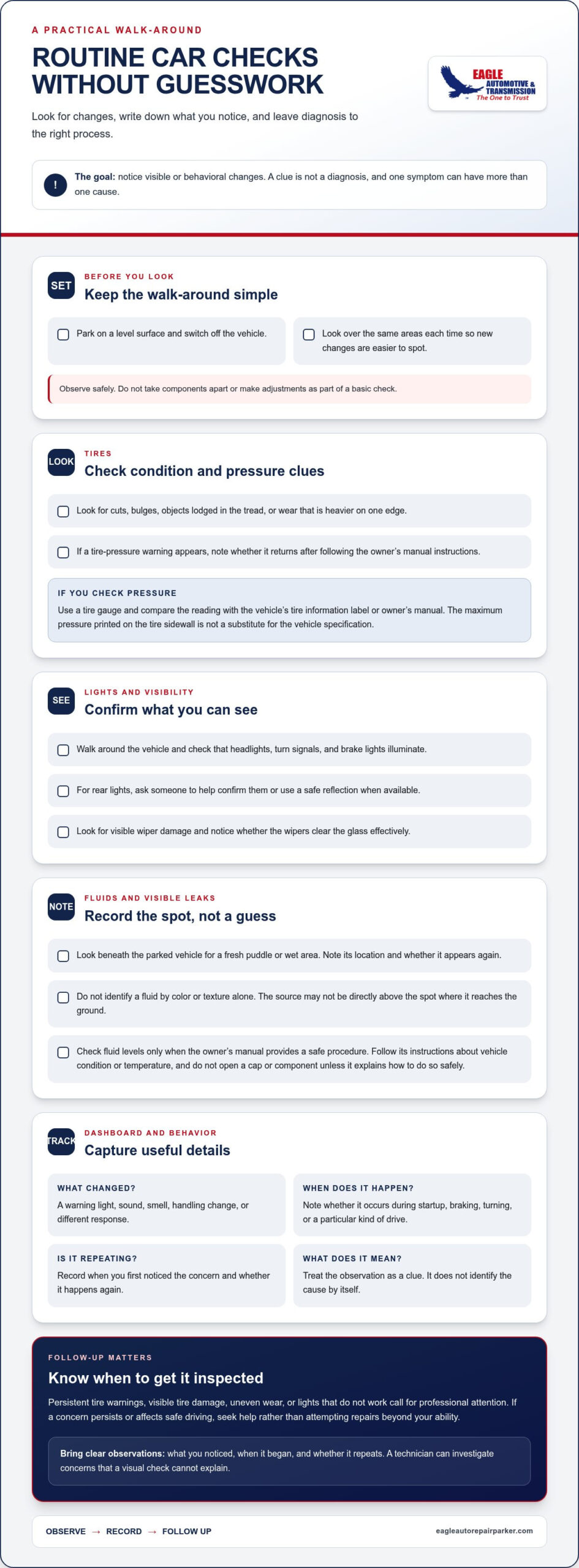
A repeatable walk-around helps you catch visible changes without turning a basic check into a repair attempt. Park on a level surface, switch off the vehicle, and look over the same areas each time. You’re gathering clues, not diagnosing the cause. Add findings to your car maintenance checklist so you can spot what’s new and describe it clearly if follow-up is needed.
Tires, lights, and visibility checks
Start with the tires. Look for cuts, bulges, objects lodged in the tread, or wear that appears heavier on one edge than another. If your vehicle displays a tire-pressure warning, note whether it returns after you’ve followed the manual’s instructions. To check pressure, use a tire gauge and compare the reading with the pressure specified on the vehicle’s tire information label or in the owner’s manual. Don’t use the maximum pressure printed on the tire sidewall as a substitute for the vehicle’s specification.
Walk around the vehicle and check that the headlights, turn signals, and brake lights illuminate. Ask someone to help confirm the rear lights, or use a safe reflection when available. Look over the windshield wipers for visible damage, and notice whether they clear the glass effectively. Persistent tire warnings, visible tire damage, uneven wear, or lights that don’t work call for professional attention. Don’t attempt adjustments or repairs beyond your ability.
Fluids, leaks, and unusual changes
Look beneath the parked vehicle for a fresh puddle or wet area. Its location and appearance may be useful to report, but don’t identify a fluid by color or texture alone. A leak’s source isn’t always directly above the spot where fluid reaches the ground. Write down where you saw it and whether it appears again.
Only check fluid levels if your owner’s manual gives a safe procedure for your vehicle. Follow its instructions carefully, including any guidance about the vehicle’s condition or temperature. Don’t open a cap or component unless the manual says how to do so safely. A level that appears different from a previous check is a reason to record the change, not to top up an unknown fluid or take something apart.
One symptom can have multiple possible causes, so treat it as a clue, not a diagnosis. Note unusual sounds, smells, dashboard warnings, or changes in handling. Include when the issue occurs, such as during startup, braking, turning, or a particular kind of drive. Those details can help a technician narrow down what needs inspection.
For longer drives or changing conditions, Ready.gov’s emergency car preparedness guidance can help you think beyond the vehicle’s visible condition. Keep routine checks simple: observe, record, and get help when a concern persists or affects safe driving.
How to Prioritize Warning Signs Instead of Treating Every Check Equally
A useful car maintenance checklist helps you sort observations by urgency. A small change that doesn’t affect how the vehicle operates may be worth recording and monitoring. A sudden change in braking, steering, or stability needs faster attention. The point isn’t to diagnose the fault yourself. It’s to decide whether to keep watching, arrange an inspection, or stop driving because the vehicle no longer feels safe to control.
| Priority | Examples | What to do |
|---|---|---|
| Routine observation | A minor change that doesn’t affect safe operation, such as an occasional sound. | Record when it happens and watch for a pattern. Mention it at scheduled service if it continues. |
| Prompt inspection | A persistent warning light, visible leak, new or worsening noise, or a change in braking or steering response. | Arrange a professional assessment. Don’t assume the symptom identifies the failed part. |
| Urgent safety concern | You can’t reliably control the vehicle, or braking, steering, or stability changes suddenly and severely. | Stop driving as soon as it’s safe to do so. Don’t continue a trip in a vehicle you can’t safely control. |
Which changes should move to the top of your list?
Prioritize anything that affects control. If the brake pedal feels different, the vehicle pulls or wanders unexpectedly, or steering becomes difficult, arrange a prompt inspection rather than waiting for routine service. A change in braking can have more than one explanation, so avoid guessing at the cause or trying a repair without the right assessment.
A warning light that stays on, a fresh leak, or a noise that grows louder or more frequent also deserves follow-up. Check the owner’s manual for guidance about the specific indicator, and note when it appears. If you’re unsure you can safely control the vehicle, pull over when it’s safe and stop driving.
What a checklist cannot diagnose
A sound, smell, leak, or dashboard indicator is a clue, not a verdict. A warning light can relate to different components, while a noise may come from more than one system. Even a symptom that seems tied to braking may require inspection of the brake system and related parts before its source is clear. Record what happened and leave the diagnosis to appropriate testing and inspection.
Diagnosis takes more than matching one symptom to one possible fault. A technician can consider when the issue occurs, inspect relevant components, and use appropriate tests to narrow down the cause. Share what changed, when you first noticed it, whether it’s getting worse, and any warning messages. Clear observations help guide the inspection without turning a guess into a repair plan.
A Practical Car Maintenance Checklist for Changing Seasons and Driving Needs
Refresh your checklist when your routine or the conditions around your vehicle change. A seasonal shift, a longer commute, or a new pattern of frequent short trips can affect what you notice during regular walk-arounds. These changes don’t automatically alter the manufacturer’s service schedule. Use your owner’s manual for vehicle-specific maintenance recommendations, and keep your checklist focused on observations unless the manual describes a clear, safe procedure you can perform.
Adjust observations to your driving routine
What’s different now? Consider commute length, whether the vehicle is parked outside more often, and how frequently you take longer drives. Note these changes, then check the manual for any maintenance guidance tied to your vehicle’s use. Local weather and terrain may affect what you observe, but they aren’t a substitute for manufacturer-specific service advice or a reason to adopt a generic interval.
- Note the change. Record shifts in season, commute length, parking conditions, or the frequency of extended drives. This gives your checklist a clear purpose instead of adding tasks without context.
- Review the manual. Look for maintenance guidance related to driving conditions or vehicle use. Follow recommendations for your make and model rather than applying a schedule written for a different vehicle.
- Choose relevant observations. If the vehicle is parked outdoors more often, for example, note visible changes such as new tire damage or a dashboard warning. Don’t adjust or repair components unless the manual provides a safe owner-level procedure.
- Reassess when your routine changes again. If frequent short trips give way to regular extended drives, update your notes and review the manual’s guidance. Keep visual observations separate from scheduled service tasks.
Seasonal observations aren’t a substitute for a dedicated winter-preparation plan. Use this checklist to record changes you notice in the vehicle, and refer to a winter-specific guide for a fuller look at cold-weather preparation. Similarly, for tips on protecting your vehicle’s exterior against harsh weather and environmental wear, Vanguard Motors Dubai offers helpful guides on long-term vehicle care and preservation.
Use a record to spot patterns over time
Keep a simple log of dates, odometer readings, warning indicators, and observed changes. Add useful context. “Handling feels different during turns” gives a clearer starting point than “something feels wrong.” If the vehicle pulls, bounces, or feels unstable, note when it happens and arrange an inspection rather than trying to identify the cause yourself. A consistent record can help a technician understand when the concern began and whether it has changed.
Bring those notes to a professional if a concern needs diagnosis. A clear timeline helps connect your observations with the inspection and any maintenance history. Keep the checklist practical, update it when your driving needs shift, and use the owner’s manual to guide service decisions.
When to Take Your Car Checklist to a Parker Technician
A checklist observation is ready for professional attention when it persists, returns, or requires tools and knowledge beyond a safe visual check. Arrange an inspection for a warning that remains on, a leak that reappears, or a change that affects how the vehicle performs. Don’t try to identify a failed part by matching one clue to a guess. If a safety concern makes the vehicle difficult to control, stop driving when it’s safe to do so.
What information helps a technician assess a concern?
Bring a clear timeline. Note when you first noticed the issue, whether it happens every time or only in certain conditions, and whether it’s becoming more frequent. Record dashboard messages as they appear, rather than relying on memory later.
- Timing: When the concern began and whether it has changed.
- Conditions: What the vehicle was doing when it occurred, such as starting, turning, or slowing down.
- Recent work: Relevant maintenance records and whether the symptom appeared before or after a service visit.
- Driving changes: Any recent change in commute, trip length, or vehicle use.
This information helps direct an inspection, but it doesn’t confirm the cause. A technician still needs to assess the vehicle and determine what testing or repair, if any, is appropriate. Describe what you observed plainly, even if you’re unsure whether a detail matters.
From routine observation to the next maintenance step
Use your notes to distinguish a scheduled maintenance item from a concern that needs diagnosis. If the owner’s manual indicates routine service is due, an oil change or other preventative maintenance may be the next step. If a warning or performance change has no clear explanation, diagnostics can help identify what needs attention before parts are adjusted or replaced.
Eagle Automotive provides diagnostics and preventative maintenance in Parker and serves all makes and models. Bring your vehicle’s records and describe the changes you’ve noticed. A professional inspection can connect those observations to the right next step, whether that means routine upkeep or further evaluation. Keep your checklist current, but leave repairs that require specialized knowledge to a technician. That way, you can act on real concerns without treating every minor change as an emergency.
Make Your Next Check Easier to Act On
Turn your car maintenance checklist into a useful record, not another task to second-guess. Keep it with your vehicle’s service notes, and add observations as they happen. At your next maintenance visit, you’ll have a clearer starting point for discussing what’s changed and what deserves a closer look.
That steady habit can help you separate a passing observation from a pattern worth investigating. You don’t need to identify the cause or plan a repair yourself. Bring your notes forward, follow the vehicle’s manual for service guidance, and let a technician assess concerns that go beyond a visual check. If a safety issue affects your ability to control the car, stop driving when it’s safe and seek assistance.
Ready to take the next step with a concern or maintenance need? Arrange automotive repair or maintenance in Parker. Start with what you’ve noticed, and move forward with a clear plan for your vehicle.
Frequently Asked Questions
Is a car maintenance checklist the same for every vehicle?
No. A general checklist can help you organize observations, but the owner’s manual is the guide for service intervals and vehicle-specific specifications. Design, age, mileage, and driving conditions can all affect recommended care. For example, don’t assume a schedule written for a different model applies to your car. Use the manual to plan maintenance, and use a general list to keep track of changes you notice.
Can I do basic car maintenance checks myself?
Yes, many drivers can make basic observations, such as checking whether exterior lights work or looking for visible tire damage. Keep the vehicle parked safely, and don’t reach under it or open a component unless the manual explains a safe procedure. If a check requires tools, adjustment, or a repair you’re not comfortable performing, stop there. A technician can inspect the concern without relying on guesswork.
Does a dashboard maintenance reminder cover every check my car needs?
Not necessarily. A maintenance reminder may refer to a scheduled service or a particular vehicle system, while some changes are only noticeable during a walk-around or while driving. Look up the specific reminder in your owner’s manual instead of assuming what it means. If a warning appears unexpectedly or returns after service, share that detail with a technician so the vehicle can be assessed.
Should I keep records of routine car maintenance?
Yes. A well-organized record can help you compare what was done with what your vehicle’s manual recommends. Keep service receipts in date order and note the odometer reading beside each visit. If a new symptom appears, record whether it started before or after recent work. This timeline gives a technician useful context and can help you avoid relying on memory when describing the vehicle’s history.
What should I do if I find a leak during a car check?
Arrange an inspection rather than trying to identify the fluid or source from the spot alone. Note where the puddle sits and whether it appears again. If safe, take a photo from outside the vehicle and share it with the technician; don’t crawl underneath or touch unknown fluid. Parker drivers can bring leak concerns to Eagle Automotive for diagnostics. If the vehicle feels unsafe or shows a serious warning, don’t continue driving.