

Affordable Car Repair in Parker, CO: Choosing the Right Fix
What if the lowest repair estimate costs more in the long run because it doesn’t address the real problem? An unexpected repair can strain your household budget, and estimates that list different parts or labor can be difficult to compare. Finding truly reliable service and affordable car repair Parker CO drivers can feel confident about starts with a clear diagnosis, not simply the smallest number.
It’s reasonable to ask whether a recommended repair is necessary and what can wait. A code scan or quick guess may not identify the cause, while delaying a safety-related problem or one that could cause further damage may lead to bigger trouble. The goal is to make a sound repair decision that fits your budget without gambling on your vehicle.
This guide explains what to look for in an estimate and how to compare quotes based on the work included. You’ll also learn how to prioritize repairs when funds are limited and which questions can clarify a diagnosis. From brakes and engine concerns to transmissions and routine maintenance, get practical guidance for choosing trusted automotive repair in Parker across different makes and models.
Key Takeaways
- Judge affordability by whether the recommended work addresses the diagnosed problem, not by the estimate total alone.
- Use a diagnostic process to distinguish a likely cause from symptoms that can have several explanations.
- Compare estimates by checking whether diagnosis, parts, labor, repair scope, and exclusions line up.
- Prioritize repairs based on safety, drivability, and maintenance needs, using the inspection findings to guide timing.
- Explore affordable car repair Parker CO options with a shop that works across makes, models, and common vehicle systems.
What affordable car repair in Parker, CO should actually mean
Affordable repair means fixing the diagnosed problem with work suited to the vehicle, not automatically choosing the smallest estimate. A lower total can be good value if it includes the right diagnosis and repair. Estimates are useful comparisons only when they address the same concern and cover a similar scope of work.
The right recommendation depends on the vehicle, its symptoms, and the inspection findings. A warning light, noise, or change in how the car drives can have several possible causes. Replacing a part based on a guess may not solve the underlying issue. Before approving extensive mechanical work, look for a clear explanation of what was found, why the proposed repair addresses it, and which tasks the estimate includes.
Why the cheapest estimate may not be the best value
A lower estimate isn’t automatically a sign of poor work. It may reflect a different repair approach or cover only part of the work included in another estimate. Compare the diagnosis, parts, labor, and stated exclusions before comparing totals. The key question is what each estimate covers and whether that work fits the problem identified during inspection.
For example, one estimate may include diagnosis and replacement of a failed component, while another may cover only the suspected part. If the work differs, the totals won’t show which recommendation best fits the problem. Ask for the findings and proposed work to be explained in plain language. You should understand what each repair step is intended to address before deciding.
How a diagnosis makes repair decisions more useful
Diagnosis involves investigating a vehicle’s symptoms and inspection findings to identify a likely mechanical cause. A noise during braking, for instance, could have more than one explanation. The sound alone doesn’t confirm which component is responsible. Inspection and appropriate testing help narrow the possibilities before parts are replaced or a larger repair is approved.
That process gives you a better basis for making a practical decision. Eagle Automotive provides diagnostics alongside repair work, connecting the findings to the next step instead of treating a symptom as a confirmed cause. Ask how the recommended work relates to the condition found and whether any other observations are separate concerns.
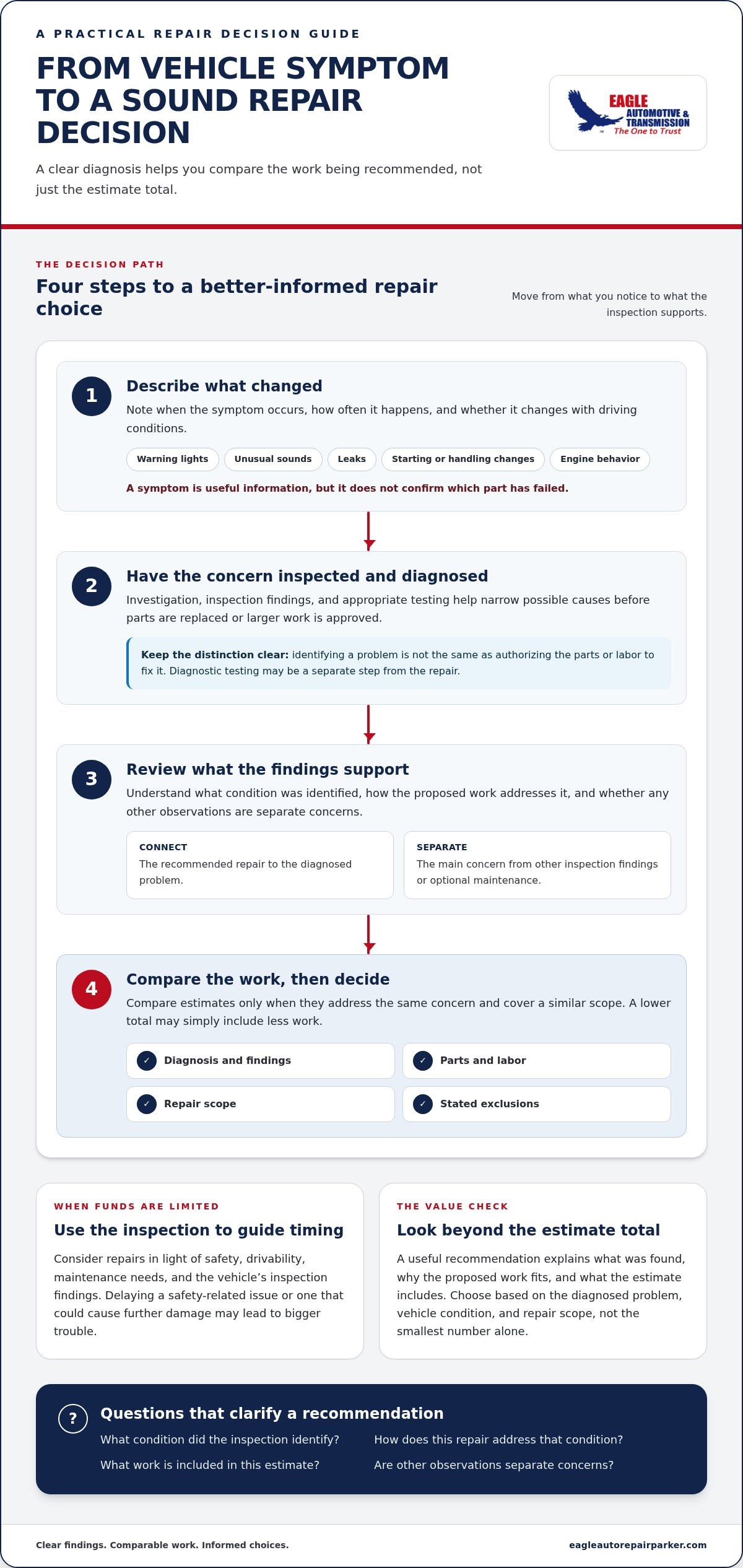
A useful decision sequence is straightforward:
- Describe when the symptom occurs and whether it changes.
- Have the vehicle inspected and the concern diagnosed.
- Review the findings and how they support the recommended work.
- Decide which repair addresses the diagnosed problem.
This approach doesn’t mean approving every recommendation without question. It means weighing the proposed repair against the evidence, the vehicle’s condition, and the work included. When comparing affordable car repair Parker CO options, focus on whether each estimate explains the problem and proposes a suitable repair scope. A well-supported recommendation helps you avoid paying for work that doesn’t address the cause and makes it easier to understand what your vehicle needs.
How diagnosis helps control car repair decisions and spending
A warning light or new noise tells you something has changed, but it doesn’t identify the cause. Several mechanical issues can produce similar symptoms, so replacing a part based on a guess can leave the original problem unresolved. Diagnosis helps narrow the possibilities before you decide what work makes sense.
Diagnosis connects a vehicle’s symptoms to informed repair choices. It involves investigating the concern and reviewing what the inspection reveals. The findings give you a clearer basis for deciding whether a repair is needed and what work it should include.
Use a simple sequence: record what you notice, have the vehicle inspected, allow the concern to be diagnosed, review the findings, and then decide how to proceed. Diagnostic testing may be a separate step from the repair itself. Identifying a problem is not the same as authorizing parts or labor to fix it, so make sure you understand which work an estimate covers.
What to note before bringing a car in
Write down when the symptom occurs, how often it happens, and whether it changes with driving conditions. Note warning lights, unusual sounds, visible leaks, or changes in starting, handling, or engine behavior. Details such as whether a sound happens during braking or turning help describe the concern, but they don’t prove which component has failed.
Share these observations during the inspection. A checklist can help you explain what you’ve noticed, but it can’t replace professional diagnosis. Avoid assuming that a warning light or noise points to one specific repair.
What happens after a problem is identified
Once the cause is understood, the next decision depends on the findings and repair scope. Ask what condition was identified, which work addresses it, and whether any other observations are separate from that concern. This helps distinguish a needed repair from optional maintenance or an unrelated finding, so you can consider each item on its own.
For example, an engine concern may require engine diagnostics before the appropriate repair can be determined. A separate inspection finding may involve brakes, steering, or another system. Eagle Automotive handles diagnostics and a range of mechanical repairs, including engine work, brakes, transmissions, and preventative maintenance, connecting findings with relevant repair options.
Keep the decision grounded in the evidence. If the explanation is unclear, ask for the diagnosed condition and proposed work to be described in plain language before approving the repair. For drivers weighing affordable car repair Parker CO options, understanding what the diagnostic step covers makes estimates easier to assess and can help prevent spending on work that hasn’t been linked to the reported problem.
How to compare car repair estimates without overlooking important work
Two estimates can have different totals because they describe different work. Compare the condition each proposal addresses and the tasks included, not just the final amount. If one estimate covers a broader repair scope or includes diagnostic work that the other leaves out, the totals aren’t an apples-to-apples comparison.
Use these details as comparison points:
- Diagnosis: Does the estimate identify the same concern or diagnosed condition?
- Listed work: Which repair steps and components are included?
- Parts: Does each estimate describe the parts needed for its proposed repair?
- Labor: Is labor tied to the same work, or are tasks left out of one estimate?
- Exclusions: Does either estimate state that related work, inspection, or other items aren’t included?
These details show what each total represents. A short description may be clear to the shop but vague to you. If a term or exclusion is unclear, ask what it covers before treating the estimates as equivalent. A lower total may reflect a narrower scope, while a higher one may include additional work. Neither figure is meaningful without the details behind it.
Which estimate details help make an apples-to-apples comparison
Match the diagnosed concern first, then compare the specific repair proposed. Check whether both estimates address the same components and tasks. If one includes an additional part or labor step, note the difference rather than assuming both proposals cover identical work. Keep diagnostic work distinct from repair work, too. Investigating a concern and replacing a component are separate tasks, and estimates may list them differently.
Make a short side-by-side list of what’s included in each proposal. Note differences in parts, labor, and exclusions, then ask for unclear descriptions to be explained. This gives you a clearer basis for comparing repair options and deciding which estimate matches the condition found during inspection.
How to review additional recommended work
Separate the repair for the immediate concern from other findings and routine maintenance. A recommendation for another system may need attention, but it should be explained as its own item, with a reason for the work. This lets you review each finding clearly instead of judging a combined total without knowing what it covers.
Safety and drivability concerns can affect priority. Discuss findings involving braking, steering, or the vehicle’s ability to operate in light of the inspection. Don’t assume a repair can safely wait, and don’t treat every recommendation as equally urgent. Ask what condition was found and how it affects the vehicle.
Compare estimate totals only after you understand the work behind them. A useful comparison shows which problem each proposal addresses, what tasks are included, and where the scopes differ. That clarity helps you make a practical decision without overlooking important work.
How to prioritize car repairs when your budget is limited
When several repairs compete for a limited budget, don’t treat every recommendation as equally urgent. Start with immediate safety concerns, then consider problems affecting drivability, and plan routine maintenance around those needs. This is a framework, not a diagnosis. A technician should assess urgency based on the vehicle’s condition and inspection findings.
Repair priority should follow the diagnosed risk to safety and drivability, not the order items happen to appear on an estimate. Ask which finding needs attention first, what could happen if it’s left unaddressed, and which items are maintenance recommendations rather than repairs for a diagnosed problem. Clear answers help you make a considered decision without assuming that every item must be handled at once.
When a symptom may need prompt attention
Changes in braking or steering deserve prompt attention because they can affect your ability to control the vehicle. Severe engine symptoms can also signal a concern that needs assessment. A single noise, warning light, or handling change doesn’t identify a specific failed part, so avoid guessing at the cause or deciding urgency from the symptom alone.
If the vehicle seems unsafe to operate, stop in a safe place and seek professional guidance before continuing to drive. Describe what changed and when it happens. That information can help a technician assess the concern, but the vehicle’s actual condition determines the next step.
Planning maintenance around necessary repairs
Preventative maintenance is planned care intended to support ongoing vehicle upkeep. A repair addresses a diagnosed mechanical problem. Oil changes and tune-ups are examples of maintenance Eagle Automotive performs, while an identified brake or engine concern calls for a recommendation based on its specific findings. Keeping these categories separate makes an estimate easier to review.
When discussing recommendations, ask which items address a current problem, which are maintenance, and how the technician assesses their urgency. Don’t assume a maintenance item can be postponed without considering the vehicle’s condition, and don’t let routine work obscure a safety or drivability concern.
Keep a written record of symptoms, inspection findings, recommendations, and your decisions. Note which work you approved, which items need follow-up, and any guidance about timing. This gives you a practical reference when you revisit the plan and helps keep separate concerns from blending together.
For affordable car repair Parker CO drivers can plan around, base the order of work on the technician’s assessment of the vehicle rather than guesswork. A clear priority list helps you make the next decision with care.
Choosing affordable car repair in Parker, CO with Eagle Automotive
Affordable repair depends on understanding what your vehicle needs and choosing work that fits the diagnosed concern. Eagle Automotive is a Parker repair shop serving all makes and models, with diagnostic and repair capabilities across several major systems. That range is useful when symptoms are unclear or a vehicle has concerns involving more than one area.
A local shop should connect an inspection finding with a relevant repair option. Start by describing what you’ve noticed, then use the diagnostic findings to understand what the vehicle needs. For affordable car repair Parker CO drivers can evaluate with confidence, clear explanations and an appropriate repair scope matter more than a broad promise or a low estimate on its own.
A local shop for more than one kind of repair
Eagle Automotive handles engine repair, brake work, transmissions, and steering and suspension concerns. The shop also provides heating and air conditioning service, starter and alternator replacement, oil changes, tune-ups, and preventative maintenance. This range covers repairs for diagnosed mechanical problems as well as routine care.
Similar symptoms can lead to different inspection findings. A change in handling, for example, needs assessment before anyone can determine whether the issue involves steering, suspension, or another factor. The repair recommendation should follow what the inspection and diagnosis show, not a guess based on one symptom.
Having a range of services at one local shop can make it practical to discuss related findings together. Keep the immediate concern distinct from separate maintenance recommendations, and ask how each item relates to the vehicle’s condition. That way, you can understand what the proposed work addresses and make decisions in a clear order.
Take the next step with a clear repair concern
Before arranging a repair, note when the problem occurs and what has changed in the vehicle’s behavior. Mention warning lights, unusual sounds, leaks, or changes in braking, steering, starting, or engine performance. These details help describe the concern, but they don’t confirm the cause. A professional diagnosis should guide the repair decision.
Once the findings are explained, review which work addresses the diagnosed issue and which recommendations are separate. If you’re managing a limited budget, discuss the urgency of each finding based on the vehicle’s condition, especially if safety or drivability may be affected. A written list of symptoms, findings, and decisions can help you track what needs follow-up.
Bring your vehicle concern to Eagle Automotive for diagnostics and repair in Parker.
Move forward with a repair plan that fits
Taking time to make an informed choice can help you feel prepared for the road ahead. You don’t need to have every mechanical answer before starting a conversation. Bring your questions, explain what matters most for your daily driving, and ask for a clear explanation of what the inspection found and what the recommended work addresses.
Eagle Automotive serves drivers in Parker, Colorado, with repairs for all makes and models. Contact Eagle Automotive about your vehicle’s diagnostic or repair needs.
Frequently Asked Questions
How much does affordable car repair in Parker, CO cost?
There isn’t one standard cost for affordable car repair Parker CO drivers may need because the amount depends on the vehicle and work involved. A repair on one model may require different parts or labor than the same type of job on another. Ask whether the estimate is based on your vehicle’s exact year, make, model, and configuration, and whether additional findings could change the proposed scope.
Can I prioritize car repairs if I cannot afford to fix everything at once?
Yes. If several items are identified, ask the technician to explain whether the vehicle is suitable to keep driving and what conditions would mean you should stop using it. You can then make a plan that accounts for your transportation needs and budget. If the vehicle’s behavior changes after an assessment, share that update before relying on earlier guidance.
What should I compare between two auto repair estimates?
Check that both estimates identify the same vehicle and concern, and note whether each is based on an inspection or an initial description. Also look at the estimate date and any assumptions about the work. If either proposal says the scope may change after further inspection, understand what would prompt a revised estimate before deciding between the options.
Is it worth repairing a car if the repair may cost more than its value?
It can be, depending on the car’s condition and what replacing it would mean for your household. Consider the vehicle’s overall reliability, whether other major needs are known, and the time and expense involved in finding another car. Compare the repair decision with realistic replacement options, not just a value estimate. A repair plan may make sense if it supports your transportation needs and the vehicle is in sound overall condition.
Can one symptom have several possible causes in a car?
Yes. A slow-starting engine, for example, could relate to the battery, starter, charging system, or another issue. The symptom gives a technician a starting point, but it doesn’t identify which component is responsible. If the problem happens intermittently, note whether it occurs after the car has been parked or following a drive. Those details can help narrow the inspection without turning a guess into a parts replacement.