

What Does the Check Engine Light Mean? A Guide
A check engine light can point to anything from a loose gas cap to an engine problem that needs prompt attention. So, what does the check engine light mean when it comes on? It means your vehicle’s computer has detected an issue, but the warning alone can’t tell you exactly which part has failed. A diagnostic trouble code is a clue, not a verdict.
It’s understandable to wonder whether you can keep driving or risk making the problem worse. This guide explains what the warning can and can’t tell you, how to recognize signs that call for a safer, more urgent response, and why a code needs follow-up testing. A steady light generally calls for inspection soon; a flashing light or symptoms such as shaking, loss of power, or unusual noises deserve more immediate attention. Professional diagnostics help narrow down the cause before parts are replaced based on a code alone, so you can make a clear, informed decision about what to do next.
Key Takeaways
- To understand what does the check engine light mean, remember that it signals a detected issue, not a confirmed failed part.
- Possible causes range from a fuel cap concern to a sensor, ignition, or emissions-system problem.
- A steady warning generally calls for timely inspection; a flashing light or severe symptoms calls for a more cautious response.
- Note changes in how the vehicle runs and when the warning appears to help narrow down the cause.
- A diagnostic code points technicians toward further testing, but it doesn’t prove which component needs replacement.
What Does the Check Engine Light Mean?
The check engine light means your vehicle’s onboard system has detected a condition that needs attention. If you’re asking what does the check engine light mean, the key point is that the warning identifies a concern, not its exact cause. It can relate to engine performance, emissions controls, or another system monitored by the vehicle.
The light alone doesn’t confirm that the engine is damaged or that a particular part has failed. It’s a signal to gather more information, not a diagnosis. The Check Engine Light overview explains the warning’s general purpose and how steady and flashing lights differ.
What systems can trigger the check engine light?
On many vehicles, the On-Board Diagnostics II system, or OBD-II, monitors certain operating conditions and stores diagnostic trouble codes when it detects a problem. Depending on the vehicle, monitored areas can include engine operation and emissions-related systems. The exact components and conditions monitored vary, so the same warning can relate to different systems in different vehicles.
A stored code gives a technician a direction to investigate. It doesn’t automatically identify the failed component. That distinction matters: a code may describe a condition the system detected, while the cause behind that condition still needs to be tested.
Why the warning does not point to one specific repair
Different faults can create similar symptoms or trigger related codes. For example, a household smoke alarm signals smoke, but it can’t tell you whether the source is burnt toast or a larger problem. A vehicle warning works similarly: it alerts you to a detected condition, but more checks are needed to find its source.
A technician compares the code with the vehicle’s symptoms and other test results to identify the root cause. Replacing a part based only on a code can miss the real problem. Further testing helps distinguish a detected condition from the fault that may need repair.
Common Check Engine Light Causes and What Diagnostic Codes Mean
Possible causes range from a fuel cap that isn’t sealing properly to a sensor concern, an ignition fault, or an emissions-system issue. The warning’s cause depends on the code and how the vehicle is running. A code helps point the investigation in the right direction, but it isn’t an automatic instruction to replace a part.
Common systems that may be involved
Several systems can be involved, and a warning alone can’t tell you which one is at fault. Possibilities include:
- Fuel vapor controls: A loose or faulty fuel cap can contribute to an evaporative emissions system code.
- Sensors: Oxygen or mass airflow sensor concerns may affect how the engine runs, but a related code doesn’t prove the sensor itself has failed.
- Ignition: Spark plugs or other ignition components may be involved in an engine performance issue, such as a misfire.
- Emissions equipment: A code related to catalytic converter efficiency points toward an emissions condition that needs investigation, not a confirmed failed converter.
Symptoms and operating conditions add useful context. Whether the engine runs rough at idle, hesitates during acceleration, or behaves differently after starting can help narrow the possibilities. These details don’t diagnose the problem by themselves, but they help guide the next checks.
What an OBD-II code can and cannot tell you
A diagnostic trouble code, or DTC, identifies a system or condition the vehicle’s onboard diagnostics has detected. For instance, a lean-mixture code describes a condition involving the air-fuel mixture. Possible causes can include an air leak, a sensor issue, or a fuel delivery concern. The code narrows the search; it doesn’t settle it.
A stored diagnostic code identifies a condition the vehicle detected; it does not confirm which part has failed. Additional checks help distinguish between possible causes. As described in Automotive Diagnostics for Check Engine Lights, diagnosis involves more than retrieving a code. A technician can compare the code with symptoms and test results before recommending a repair. That measured approach helps avoid replacing a component simply because its name appears connected to a code.
Steady vs. Flashing Check Engine Light: How Urgent Is It?
Whether the light stays on or flashes can help you judge how cautiously to respond, but it can’t identify the cause by itself. A steady warning generally calls for timely diagnosis. A flashing warning may signal an active misfire or another urgent condition, so take it seriously, especially if the vehicle’s performance changes.
| Light behavior | Possible urgency | Recommended response |
|---|---|---|
| Steady | Needs diagnosis, even if the vehicle seems normal | Note any changes and arrange an inspection |
| Flashing | May indicate an active misfire or another urgent condition | Use caution; if severe symptoms occur, stop safely and seek help |
What should you do if the check engine light is steady?
Pay attention to how the vehicle behaves. Note any change in engine performance, unusual noise or smell, or other warning lights. A car that seems to run normally can still have a condition that needs attention, so don’t treat a steady light as proof that everything is fine. Arrange diagnosis if the warning remains on. The light’s behavior alone can’t tell you how long it’s safe to drive.
What should you do if the check engine light is flashing?
A flashing warning deserves a more cautious response. It may indicate an active engine misfire, but other urgent conditions are possible, and the light alone can’t confirm the cause. If the engine shakes, power drops, or you notice other severe symptoms, pull over somewhere safe and seek help rather than continuing to drive. Don’t assume every flashing light has the same cause or leads to the same outcome.
Use the warning as a signal to assess the vehicle, not as a diagnosis. A steady light still warrants attention; a flashing light raises the urgency, particularly when paired with clear performance problems. In either case, the next step is to have the cause properly identified rather than guessing from the dashboard alone.
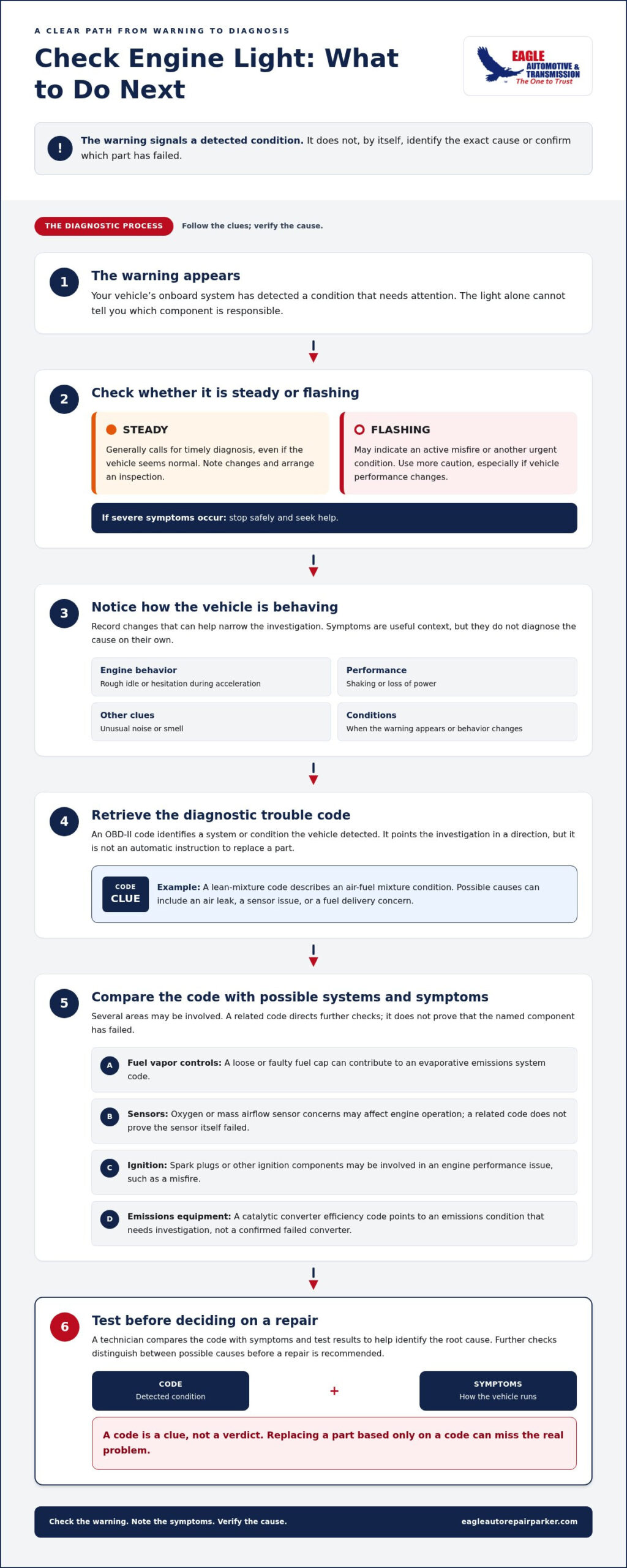
What to Do When Your Check Engine Light Comes On
Start by checking how the warning appears and how the vehicle is running. A flashing light or severe symptoms call for a more cautious response than a steady light with no noticeable change. Either way, gather useful details and arrange diagnosis instead of guessing at the cause.
- Assess the warning. Note whether it’s steady or flashing, and check for other dashboard warnings.
- Notice symptoms. Pay attention to shaking, unusual sounds or smells, overheating, or a sudden loss of power.
- Record what happened. Note when the light came on, what the vehicle was doing, and whether you fueled up recently.
- Arrange diagnosis. Avoid clearing stored codes before inspection. That information may help guide the investigation.
Which symptoms call for stopping safely?
If the light is flashing, or the vehicle is shaking severely, overheating, smoking, or losing power, find a safe place to stop. Don’t troubleshoot while driving, and don’t continue driving with severe symptoms. The warning and symptoms don’t confirm a specific fault, but they’re reasons to put safety first and seek help.
What details should you record before diagnosis?
Write down whether the light was steady or flashing and when you first noticed it. Record changes in performance, unusual noises or smells, and any other dashboard warnings. If the warning appeared after refueling, note that too. It’s a useful observation, not proof that the fuel cap or another part caused the issue.
Keep the details simple and specific. For example, “the engine hesitated during acceleration” gives more useful context than “the car felt strange.” Don’t erase stored codes before they can be read; they may help a technician connect the warning with the symptoms and decide what to test. A code is only one part of the diagnosis, so resist replacing a component based on a guess.
For local check engine light troubleshooting in Parker, Eagle Automotive can assess the warning and investigate the cause for all makes and models.
How Check Engine Light Diagnostics Find the Cause in Parker
Finding out what the check engine light means takes more than plugging in a scanner and reading a code. A sound diagnosis connects the warning to the vehicle’s symptoms, checks the systems involved, and uses test results to narrow down the underlying cause. That process helps separate a reported condition from a confirmed fault.
Why a code scan is only the starting point
A diagnostic scan retrieves stored codes that help direct the investigation. The technician then considers those results alongside your description of the problem and how the vehicle behaves. Depending on the findings, relevant tests can help determine whether a sensor reading, wiring concern, engine condition, or another issue is contributing. A scan alone doesn’t prove which component should be replaced.
The general process is straightforward: review the symptoms, retrieve the codes, perform tests related to the reported condition, and assess the results together. One result may lead to another check. That’s how diagnosis moves from a broad warning toward a better-supported explanation, instead of relying on a guess or replacing a part simply because it appears in a code description.
When to arrange check engine light service in Parker
Arrange diagnosis if the warning stays on, returns after going out, or appears alongside an unexplained change in how your vehicle runs. Share when the light appeared, whether it was steady or flashing, and any sounds, smells, or performance changes you noticed. Those details help put scan results in context.
Eagle Automotive provides check engine light troubleshooting and engine diagnostics in Parker, Colorado, for all makes and models. The goal is to investigate the warning and assess the findings before determining what repair may be appropriate. If your check engine light is persistent or your vehicle’s performance has changed, arrange a diagnosis with Eagle Automotive to take the next informed step.
For additional automotive repair information, visit Parker Transmission Repair.
Take the Next Step Toward a Clear Diagnosis
Understanding what does the check engine light mean starts with one key point: the warning signals a detected condition, but it doesn’t identify the failed part. A diagnostic code is a starting clue. Technicians use it alongside your vehicle’s symptoms and further testing to investigate the underlying cause. Light behavior also matters. A steady warning still deserves attention, while a flashing light or severe symptoms call for a more cautious response.
Don’t rely on guesswork or replace parts based on a code alone. Note when the warning appeared, how the vehicle was running, and any other changes you noticed. Those details can help make diagnosis more focused.
Eagle Automotive is a Parker, Colorado auto repair shop providing check engine light troubleshooting and engine diagnostics for all makes and models. If the warning persists or your vehicle’s performance has changed, arrange check engine light diagnosis with Eagle Automotive. Take the next step with clear information, and move forward with confidence.
Frequently Asked Questions
Is it safe to drive with the check engine light on?
It depends on the warning and how the vehicle is behaving, so the light alone can’t confirm that driving is safe. A steady light with no obvious symptoms still needs timely diagnosis. If the light flashes or the vehicle shakes severely, overheats, smokes, or loses significant power, stop somewhere safe and seek help. Don’t rely on a guaranteed safe driving distance.
Can a loose gas cap turn on the check engine light?
Yes, a loose or faulty gas cap can contribute to an evaporative emissions system warning because the cap helps seal fuel vapors in the system. If the light appears after refueling, note that timing and check that the cap is fitted securely when it’s safe to do so. The warning may have another cause, so arrange diagnosis if it stays on or returns.
What does a flashing check engine light mean?
A flashing check engine light may indicate an active engine misfire or another condition that needs prompt attention. It doesn’t confirm the exact cause. If the vehicle is shaking, losing power, or showing other severe symptoms, stop in a safe place and seek help rather than continuing to drive. A technician can assess the warning and symptoms to determine what testing is needed.
Does a check engine code tell me exactly which part to replace?
No. A check engine code points to a monitored system or condition, but it doesn’t automatically confirm which component has failed. Similar codes can have different underlying causes, so technicians compare the code with vehicle symptoms and test results before determining the next step. Eagle Automotive provides check engine light troubleshooting and engine diagnostics in Parker, Colorado, for all makes and models.